

Maddy summaryHRES 1378 is a symbolic resolution passed by the U.S. House of Representatives expressing the chamber's stance on the July 13, 2024, attempted assassination of former President Donald Trump. It condemns the attack as an "abhorrent act of cowardice" that must be universally rejected and asserts that political disputes should only be resolved through elections, not violence. The resolution does not create new laws or affect any specific group; it is a non-binding statement intended to promote civility in political discourse. It was introduced by Republican members of Congress and passed without amendment.
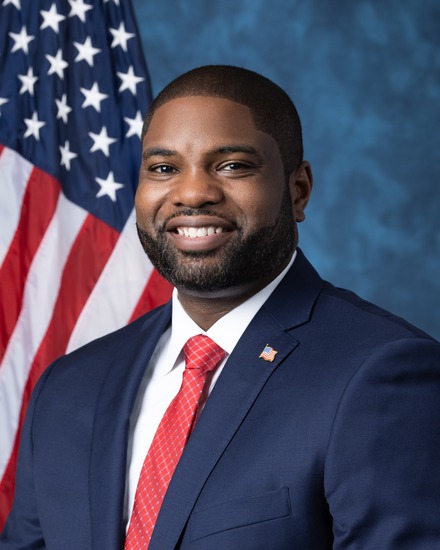
Rep. Byron Donalds
Sponsored bills
Maddy summaryThis bill requires the VA to send veterans letters explaining educational benefits under the Veteran Readiness and Employment (VR&E) program and provide a clear comparison of these benefits against the GI Bill (Chapter 33). It directly affects veterans transitioning from military service who are eligible for VR&E benefits. The key mechanism mandates that each letter include a side-by-side comparison of program benefits, with the same comparison also posted on a publicly accessible VA website. This aims to improve veterans' understanding of available education assistance options.
Maddy summaryThe SAVE Act (HR 8281) requires U.S. citizens to provide documentary proof of citizenship when registering to vote in federal elections. It defines acceptable proof as documents like passports, REAL ID-compliant IDs, military IDs, or birth certificates, and mandates that states verify citizenship using information from government agencies like DHS and Social Security. States must establish processes for voters without required documentation to provide an attestation under penalty of perjury. The law also requires states to remove noncitizens from voter rolls when verified evidence shows they're not citizens. This bill directly affects all applicants registering to vote in federal elections and state election officials who must implement these requirements.
Maddy summaryThis bill requires the HUD Inspector General to provide annual testimony before the House Financial Services Committee and Senate Banking Committee by October 1 each year. The testimony must cover specific areas: efforts to detect fraud/waste, audit and investigation capabilities, program improvement opportunities, and ongoing oversight activities. It directly affects HUD's Inspector General and the designated congressional committees by establishing a formal reporting requirement. The bill does not change HUD programs but mandates regular transparency about oversight work.
Maddy summaryHRES 1365 is a non-binding House resolution calling for the immediate termination of Kimberly Cheatle as U.S. Secret Service Director. It directly addresses the Secret Service Director and the executive branch, though it has no legal force to remove her from office. The resolution’s sole provision is a formal request for her termination, reflecting the sponsors' position on her leadership. As a symbolic gesture, it does not change her employment status or require any action from the President or Secret Service.
Maddy summaryThe Secret Service Readiness Act of 2024 requires the Secret Service to establish uniform fitness standards for Special Agents and Uniformed Division Officers that apply equally to all applicants, regardless of gender. These standards must be at least as rigorous as the current fitness requirements for male applicants and existing personnel. The Director of the Secret Service must implement these standards within 90 days of the bill’s enactment and submit a report on the process to Congress within 180 days. This bill directly affects Secret Service personnel by standardizing fitness requirements to ensure consistency and maintain current performance expectations.
Maddy summaryHJRES 164 is a congressional resolution seeking to block a rule issued by the Department of Commerce regarding firearms license requirements. It directly targets the rule published in the Federal Register (89 Fed. Reg. 34680), which would have revised licensing procedures for firearms dealers. If passed, the resolution would prevent this rule from taking effect by invoking the congressional disapproval process under federal law. The bill does not create new regulations but aims to halt an existing rule affecting gun license applicants and dealers.
Maddy summaryThis bill restricts the release of non-detained immigrants under the Alternatives to Detention program, requiring that all detention beds be filled and no other detention options exist before release. It mandates continuous GPS tracking during all immigration proceedings (including appeals) and a nightly curfew (10 p.m. to 5 a.m.) at a designated home address. Immigrants who fail to comply with these conditions face automatic removal without a hearing, as the bill adds a new provision allowing immigration judges to order removal in absentia based on an officer's affidavit. The policy directly affects non-detained immigrants under ICE supervision who would previously qualify for release.
Maddy summaryHR 4848, the Censorship Accountability Act, allows individuals to sue federal employees who, while acting in their official capacity, deny others their First Amendment rights (such as free speech or assembly). It directly affects federal employees (excluding the President/Vice President) who may restrict protected expression under federal law. Key provisions create a private right of action for victims to seek legal redress in court, with courts able to award attorney fees to the winning party. The bill explicitly excludes lawsuits against the federal government for employment-related conduct and clarifies that unconstitutional sections won’t invalidate the rest of the law.
Maddy summaryHR 8941, the "No Tax on Tips Act," creates a new tax deduction for workers who receive cash tips. It allows employees to deduct the full amount of cash tips they report to their employer (via statements required under tax law) from their taxable income, reducing their overall tax burden. This deduction applies to both itemizing and non-itemizing taxpayers and is exempt from standard limitations on miscellaneous deductions. The provision takes effect for taxable years beginning after December 31, 2024, directly benefiting service industry workers like servers and bartenders who rely on cash tips.