

Maddy summaryThe FOCA Act of 2023 requires federal agencies to stop mandating or banning contractor agreements with labor organizations (like union contracts) in construction project bids and contracts. It directly affects federal contractors, subcontractors, and agencies managing construction projects funded by the government. The bill prohibits favoring or penalizing contractors based on their labor affiliation status, aiming to promote fair competition and reduce costs. It also mandates updates to federal contracting rules within 60 days of enactment to implement these changes.
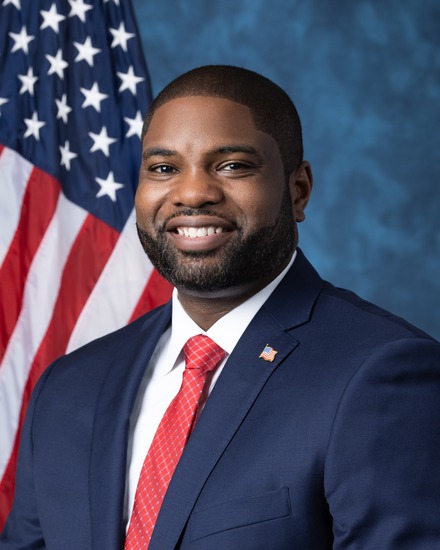
Rep. Byron Donalds
Sponsored bills
Maddy summaryThis bill modifies Social Security Number (SSN) requirements for claiming the Child Tax Credit and Earned Income Tax Credit. It specifies that qualifying SSNs must be issued to U.S. citizens (or under specific Social Security Act provisions) and issued before the tax return due date. The changes apply to tax years beginning after December 31, 2024, and update related tax code references to use "social security number" instead of "taxpayer identification number." These are technical adjustments to eligibility criteria, not new benefits or funding.
Maddy summaryThe Responsible Use of Seafloor Resources Act of 2024 directs the President to coordinate federal agencies in supporting U.S. development of seafloor nodule collection and domestic processing for critical minerals used in defense and clean energy. It mandates annual reports analyzing the environmental, social, and economic impacts of seafloor minerals compared to land-based mining, including job creation and ecosystem effects. The reports will assess how U.S. sourcing aligns with security goals and international standards, while tracking benefits like supply chain diversification and reduced reliance on foreign sources.
Maddy summaryThe Maximum Pressure Act (HR 6114) is a legislative proposal that would maintain and expand U.S. sanctions against Iran. The bill would codify existing sanctions, require Iran to meet 12 specific conditions before sanctions could be lifted (including ending support for terrorism, releasing hostages, and ending nuclear enrichment), and expand sanctions on Iran's Revolutionary Guard Corps and missile programs. It also establishes new reporting requirements for the U.S. government to monitor Iran's activities and the impact of sanctions. The legislation would require congressional review before any sanctions could be lifted or modified, preventing the executive branch from unilaterally easing restrictions.
Maddy summaryThe Revoke Iranian Funding Act of 2023 would cancel all existing U.S. licenses and exemptions allowing funds to be released to Iran for humanitarian purposes, including a $6 billion transfer from South Korea. It also rescinds a specific waiver issued in September 2023 that permitted such transfers. The bill requires the Treasury to submit a 30-day report to Congress detailing Iranian assets blocked by the U.S. and current sanctions exemptions related to Iran. This legislation directly restricts U.S. financial access for Iran and its designated entities, aiming to prevent funds from being diverted to support terrorism.
Maddy summaryThis bill, titled "Freezing HAMAS Act" (though it concerns Iran sanctions, not Hamas), reinstates U.S. sanctions on Iran that were previously waived or suspended under agreements with Iran. It specifically targets sanctions from the 2012 Iran Freedom and Counter-Proliferation Act and the 2012 National Defense Authorization Act, including a September 2023 waiver related to fund transfers. The bill prohibits the U.S. government from releasing funds or assets to Iran or granting further waivers related to these sanctions. It directly affects U.S. government actions regarding Iran financial transactions and enforcement of existing sanctions.
Maddy summaryHR 5713, the Homeland Security Fentanyl Enforcement Act, authorizes Homeland Security Investigations (HSI) agents and designated state/local officers to enforce drug laws related to fentanyl trafficking under the Controlled Substances Act for five years. It requires the Government Accountability Office (GAO) to review and report on coordination between the Drug Enforcement Administration (DEA) and HSI in drug investigations within 18 months, including whether investigations followed established coordination policies. The bill mandates the Homeland Security Secretary and Attorney General to address any coordination failures found in the GAO report, prioritizing existing interagency task forces. This bill focuses on improving interagency coordination to combat fentanyl smuggling by transnational criminal organizations, without altering DEA's core authorities or creating new drug penalties.
Maddy summaryThis bill amends the Affordable Care Act and Medicaid/CHIP programs to deny health insurance subsidies, coverage, and related benefits to individuals with Deferred Action for Childhood Arrivals (DACA) status. Specifically, it excludes people lawfully present only due to the 2012 DHS memo granting deferred action from eligibility for ACA subsidies, Medicaid, and the State Children's Health Insurance Program (CHIP). The bill requires states to remove DACA recipients from enrollment in health plans and rescind any existing waivers that allowed such coverage. It directly affects approximately 800,000 DACA recipients who currently qualify for ACA subsidies and Medicaid/CHIP under existing rules.
Maddy summaryThis bill amends the Social Security Act to require U.S. passport revocation for individuals with child support arrears exceeding $2,500, replacing previous options to restrict or limit passports. It directly affects parents who owe significant unpaid child support, specifically those with arrears above this threshold. The key mechanism removes "restrict" or "limit" as enforcement options and mandates that the individual be notified before any passport revocation occurs. The change streamlines enforcement by making revocation the sole action permitted for qualifying cases.
Maddy summaryThe International Nuclear Energy Act of 2023 establishes a White House office to coordinate U.S. international nuclear energy policy and creates a Nuclear Exports Working Group to develop a 10-year strategy for promoting U.S. nuclear exports. It provides $50 million annually for five years to assist "embarking civil nuclear nations" (countries developing nuclear programs) with technical capacity building, financing, and regulatory framework development for civil nuclear energy projects. The bill also requires a biennial conference on nuclear safety, security, and sustainability, and includes provisions to support the development and export of U.S. small modular reactor technology. It aims to strengthen U.S. competitiveness in the global nuclear energy market while promoting nuclear safety standards and nonproliferation. The legislation requires coordination across multiple federal agencies to support U.S. nuclear energy exports to partner nations.