

Maddy summaryHR 473, the SHOW UP Act of 2025, requires federal executive agencies to return to pre-pandemic telework policies within 30 days of enactment, limiting work-from-home options to those in place on December 31, 2019. Agencies must then conduct a 6-month study analyzing pandemic-era telework impacts - including effects on mission performance, costs from underused office space, and employee productivity tools - and submit a plan to Congress if they seek to expand telework beyond these baseline levels. The plan requires certification from the Office of Personnel Management confirming it will improve mission performance, reduce real estate costs, lower locality pay expenses, and ensure secure remote work capabilities without increasing agency costs. This bill directly affects all federal executive agencies (excluding the Government Accountability Office) and their employees by restricting telework flexibility and imposing strict requirements for any future expansion.
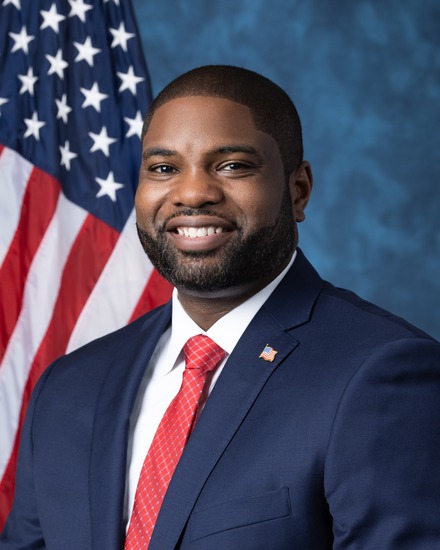
Rep. Byron Donalds
Sponsored bills
Maddy summaryThis bill creates a new tax deduction for cash tips received by workers in specific service occupations that traditionally accepted tips before 2024 (like servers, barbers, and beauticians). It allows a deduction of up to $25,000 per year for qualified tips included on employer statements, but excludes employees who earned over a certain threshold ($220,000 in 2023) from the same employer the previous year. The deduction applies to taxable years beginning after December 2024 and is designed to reduce taxable income for eligible workers. It directly affects service industry workers in qualifying tip-dependent jobs who receive cash tips, not the general public.
Maddy summaryHR 551, the "Make the Migrant Protection Protocols Mandatory Act of 2025," would require U.S. border officials to apply the Migrant Protection Protocols (MPP) to all eligible asylum seekers at the southern border, rather than allowing discretion. The bill amends the Immigration and Nationality Act to change the language from "may" to "shall" in Section 235(b)(2)(C), meaning officials must send asylum seekers back to Mexico to await their immigration hearings. This directly affects asylum seekers who would no longer have the option of remaining in the U.S. during processing. The key mechanism is a technical legal change to make the existing MPP policy mandatory for all applicable cases.
Maddy summaryHR 470, the Red Snapper Act of 2025, blocks the U.S. Secretary of Commerce from implementing area or bottom closures in the South Atlantic for snapper-grouper fisheries until two conditions are met: the completion of the South Atlantic Great Red Snapper Count survey and integration of its data into the next official stock assessment. This directly affects recreational and commercial fishermen in the South Atlantic region, particularly in Florida, where red snapper fishing supports significant economic activity ($14 billion annually). The bill aims to delay management changes pending new scientific data to avoid potential economic harm during a period of record fish stock abundance. It does not alter fishing seasons or quotas but specifically targets the timing of area closure decisions.
Maddy summaryHR 485, the Muhammad Ali Congressional Gold Medal Act, authorizes Congress to award a gold medal in recognition of Muhammad Ali's lifetime contributions to sports, civil rights, and humanitarian causes. The bill directs the Treasury Secretary to strike the medal and present it to Ali's widow, Lonnie Ali, following his death in 2016. It also permits the sale of bronze duplicates to cover costs, with proceeds going to the U.S. Mint. This is a commemorative measure with no policy impact, solely honoring Ali's legacy through a symbolic medal.
Maddy summaryHR 404, the "Hearing Protection Act," reclassifies firearm silencers (devices that reduce gunfire noise) as firearms for federal tax and regulatory purposes. It imposes a 10% federal tax on silencers, requires the destruction of all existing federal silencer registration records within one year, and preempts state laws that tax or regulate silencers. The bill clarifies that silencers are treated as firearms under federal law, including for licensing and marking requirements, and defines "firearm silencer" to include specific components. Note: The bill’s title is misleading - it addresses firearm silencer regulation, not hearing protection for people.
Maddy summaryThis bill expands U.S. entry restrictions for immigrants suspected of security-related activities. It denies entry to anyone who engages in, or is suspected of engaging in, activities violating U.S. espionage/sabotage laws (even if done abroad), evading export controls, or seeking to oppose the U.S. government by force. It also bars spouses or children of such individuals if the security-related activity occurred within the last five years. The law applies to all potential immigrants, including those seeking visas or entry, without changing existing waiver processes.
Maddy summaryHR 342, the Honor Inauguration Day Act, requires the U.S. flag to be flown at its highest peak on every presidential Inauguration Day, overriding any conflicting laws. This procedural bill directly affects all federal buildings and properties where the flag is displayed on that specific day. It mandates a ceremonial flag display to "commemorate and celebrate" the presidential election process, as stated in the congressional findings. The bill makes no substantive policy changes but establishes a specific flag protocol for Inauguration Day.
Maddy summaryThis bill designates the U.S. Postal Service facility at 290 NW Peacock Boulevard in Port St. Lucie, Florida, as the "Trooper Zachary Fink Post Office Building." It updates all official U.S. government references (including laws, maps, and documents) to use this new name for the facility. The bill directly affects the postal facility and any federal records mentioning its location. As a naming resolution, it has no policy or funding provisions beyond the official designation.
Maddy summaryHR 256, the SAVE Act, prohibits the sale of petroleum products drawn from the U.S. Strategic Petroleum Reserve (SPR) to entities headquartered in specific countries listed under federal regulations or to any entity based in Russia. This law directly affects SPR sales by blocking transactions with companies from designated nations (as defined in 22 CFR §126.1) and all Russian entities. The key mechanism adds Section 170 to the Energy Policy and Conservation Act, requiring the Secretary to enforce this sales ban across all SPR-related transactions. The bill makes no changes to SPR stockpiling or other reserve operations, focusing solely on restricting sales to the specified entities.