

Simplifying Grants Act of 2022 This bill sets forth procedures for simplifying the grant process for nonurbanized areas, for both existing and new grant programs. Each agency must make publicly available a checklist for covered local governments with respect to each grant program of the agency for which such governments are otherwise eligible that includes each requirement for every step of the grant process. The Office of Management and Budget must report to Congress (1) within 270 days of this bill's enactment, evaluating the extent to which agencies have simplified the requirements and made the checklist available; and (2) each April 1st, evaluating the amount of technical assistance provided and the amount of funds awarded.
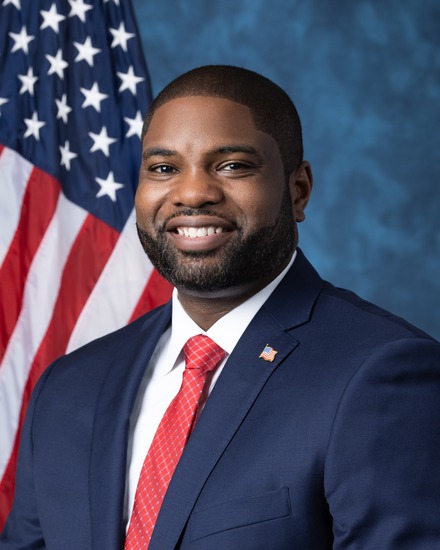
Rep. Byron Donalds
Sponsored bills
This bill designates the facility of the United States Postal Service located at 3900 Crown Road Southwest in Atlanta, Georgia, as the John R. Lewis Post Office Building.
International Nuclear Energy Act of 2022 This bill addresses cooperation with ally or partner nations on nuclear energy-related issues. For example, the bill requires (1) the Department of State to meet with ally or partner nations with the aim of enhancing nuclear energy cooperation, (2) the Department of Energy to establish a program to increase the production of certain types of low-enriched uranium by U.S. nuclear energy companies, and (3) the State Department to provide financial assistance to qualifying countries that are developing civil nuclear programs.
Nuclear Assistance for America's Small Businesses Act This bill provides assistance to eligible small businesses that seek to engage in the research, development, and deployment of advanced nuclear reactors. Upon the request of small businesses, the Nuclear Regulatory Commission must delay collecting a certain portion of application fees for construction permits, operating licenses, or combined licenses for advanced nuclear reactors.
Educational Choice for Children Act This bill allows individuals and corporations a new tax credit after 2022 for charitable contributions to tax-exempt organizations that provide scholarships to elementary and secondary school students. Such students must be members of a household with incomes not greater 300% of the area median gross income and be eligible to enroll in a public elementary or secondary school. The bill excludes from the gross income of taxpayer dependents any scholarship amount for the elementary or secondary education expenses of eligible students. It also prohibits governmental control over scholarship granting organizations.
Credit Access and Inclusion Act of 2022 This bill allows for the reporting of certain positive consumer-credit information to consumer reporting agencies. Specifically, a person or the Department of Housing and Urban Development may report information related to a consumer's performance in making payments either under a lease agreement for a dwelling or pursuant to a contract for a utility or telecommunications service. However, information about a consumer's usage of any utility or telecommunications service may be reported only to the extent that the information relates to payment by the consumer for such service or other terms of the provision of that service. Furthermore, an energy-utility firm may not report a consumer's outstanding balance as late if the firm and the consumer have entered into a payment plan and the consumer is meeting the obligations of that plan. Specified provisions that establish civil liability with respect to furnishers of information to consumer reporting agencies shall not apply to any violation of the bill. The Government Accountability Office must report on the consumer impact of such reporting.
Protecting Kids from Fentanyl Act This bill allows states and local educational agencies to use unexpended COVID-19 elementary and secondary school emergency relief funds for additional purposes. In particular, these funds may be used for (1) purchasing naloxone or other opioid antagonists; (2) providing training to school nurses, teachers, school administrators, and school resource officers on how to administer naloxone or other opioid antagonists; and (3) providing fentanyl awareness classes or materials to students.
Preserving the Gulf Test Range to Ensure Military Readiness Act This bill establishes a moratorium on energy development (e.g., offshore wind development) in specified areas of the Gulf of Mexico until June 30, 2032. Until that date, the Department of the Interior may not conduct certain energy development activities in any area east of the Military Mission Line in the Gulf of Mexico. The moratorium also applies to other areas of the Outer Continental Shelf—the South Atlantic Planning Area, the Straits of Florida Planning Area, or any area west of the Military Mission Line in the Gulf of Mexico—if energy exploration, leasing, or development in that area has been identified as having any adverse effect on national security, military readiness, or the Department of Defense's testing capabilities. However, Interior may issue leases in those areas for environmental conservation purposes, including the purposes of shore protection, beach nourishment and restoration, wetlands restoration, and habitat protection.
Clean Slate Act of 2021 This bill establishes a framework for sealing records related to certain federal criminal offenses. Courts must automatically seal records related to (1) a conviction for simple possession of a controlled substance or for any nonviolent offense involving marijuana, or (2) an arrest for an offense that does not result in a conviction. Additionally, an individual who meets certain criteria may petition to seal records related to a conviction for other nonviolent offenses.
TCJA Permanency Act This bill makes permanent provisions affecting individual and business taxpayers that were enacted in 2017 by the Tax Cuts and Jobs Act and are scheduled to expire at the end of 2025. The bill makes permanent reductions in individual and capital gain tax rates. The bill increases the standard tax deduction for individual taxpayers. It also increases and modifies the child tax credit and raises the contribution base for the tax deduction for charitable contributions. The bill allows additional contributions to ABLE accounts (tax-exempt accounts designed to enable individuals with disabilities to save and pay for disability-related expenses). It exempts from taxation combat zone benefits of members of the Armed Forces serving in the Sinai Peninsula of Egypt and limits the deduction for moving expenses to active duty members of the Armed Forces. Additionally, the bill expands the types of elementary and secondary school expenses eligible for payment from qualified tuition programs (529 programs); lowers to $750,000 the amount of mortgage debt eligible for an interest expense tax deduction; reinstates after 2023 the exclusion of income from the gross income of student loan borrowers for loan debt discharged due to death or total and permanent disability; makes permanent the limitation on the tax deduction for state and local taxes and denies a deduction for foreign real property taxes; makes permanent the tax deduction of the income of certain pass-through business entities; repeals the tax deduction for personal tax exemptions and the exclusion of employer-provided bicycle commuter fringe benefits; terminates certain miscellaneous itemized tax deductions; doubles the estate and gift tax exemption amount; and makes permanent the increase of the alternative minimum tax exemption amount for individual taxpayers.