

Protecting Financial Privacy Act of 2021 This bill prohibits a federal agency from creating, implementing, or administering a program that requires financial institutions or individuals to report on the balances of, transactions involving, or transfers into and out of financial accounts. This prohibition does not apply to laws or regulations in effect on September 1, 2021, or to the Bank Secrecy Act (laws that require financial institutions and other entities to report on certain financial transactions to prevent money laundering, the financing of terrorism, and other criminal activity). This prohibition does apply, however, to regulations issued under the Bank Secrecy Act after September 1, 2021.
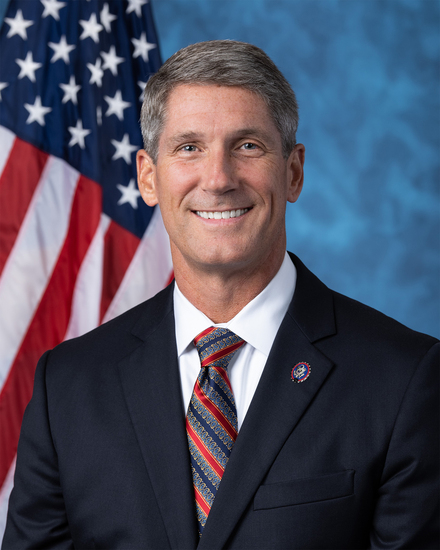
Rep. Scott Franklin
Sponsored bills
Israel Relations Normalization Act of 2021 This bill requires the Department of State to take certain actions promoting the normalization of relations between Israel, Arab states, and other relevant countries and regions. Specifically, the State Department must develop a strategy on expanding and strengthening the Abraham Accords (the term used to refer collectively to agreements between Israel and the United Arab Emirates and between Israel and Bahrain marking the public normalization of relations between the two Arab countries and Israel). The strategy must include a description of how the U.S. government will encourage further normalization of relations with Israel. In addition, the State Department must report on options for U.S. international efforts to promote the strengthening of ties between Israel, Arab states, and other relevant countries and regions. The State Department must also report on the status of the normalization of relations with Israel, including information on (1) laws that punish individuals for people-to-people relations with Israelis (i.e., anti-normalization laws), and (2) evidence of steps taken by Arab governments toward permitting or encouraging normalized relations between their citizens or residents and Israeli citizens.
Preventing the Recognition of Terrorist States Act of 2021 This bill imposes sanctions related to the Taliban and addresses other related issues. The President must impose sanctions on foreign individuals and entities that knowingly provide significant support to the Taliban or senior Taliban members. The bill also repeals an exception to existing sanctions against certain entities related to energy, shipping, and shipbuilding in Iran. Specifically, the bill repeals a provision authorizing the President to exempt certain entities involved in the reconstruction of Afghanistan from such sanctions. No federal department or agency may take any action that states or implies recognition of the Taliban's claim of sovereignty over Afghanistan. The bill also bars the Department of State, the U.S. Agency for International Development (USAID), and the Department of Defense from using federal funds to prepare or implement any policy that extends diplomatic recognition to the Taliban-controlled government in Afghanistan. The State Department must designate (1) the government of Afghanistan as a state sponsor of terrorism, and (2) the Taliban as a foreign terrorist organization. Furthermore, USAID must take appropriate steps to ensure that certain foreign assistance provided in or for certain countries, including Afghanistan and Pakistan, is not going to or through any individual or entity involved in terrorist activity. The bill also prohibits using certain federal funds to provide direct assistance to any country where the duly elected head of government has been deposed in a coup or decree in which the military played a decisive role.
No Support for Terror Act This bill establishes measures to prevent the allocation or use of certain funds to support genocide or terrorism. Specifically, the bill requires the Department of the Treasury to instruct the U.S. Executive Director at the International Monetary Fund (IMF) to oppose the allocation of Special Drawing Rights (a currency support tool) to any country that is a perpetrator of genocide or a state sponsor of terrorism and to advocate that the IMF adopt a rule prohibiting such allocation. Further, the bill requires Treasury, the Department of State, and the U.S. Agency for International Development to jointly review and report on assistance provided to nongovernmental organizations and international organization to ensure such assistance is not being provided to the Taliban or other terrorist organizations. Each prime awardee of this assistance must provide evidence that all subawardees are complying with U.S. anti-terrorism financing laws.
This bill provides $1 billion in appropriations for the Department of Defense to provide to the government of Israel for the procurement of the Iron Dome defense system to counter short-range rocket threats.
Re-using Equipment for Environmental Fortification Act or the REEF Act This bill requires the Department of the Navy to notify Congress of the pending retirement of vessels that are viable candidates for artificial reefing (intentionally sinking a vessel to promote marine life). Specifically, the Navy must provide such notice not later than 90 days before the viable candidate's retirement from the Naval Vessel Register.
Guaranteeing Healthcare Access to Personnel Who Served Act This bill addresses the administration and provision of health care to veterans through the Department of Veterans Affairs (VA) and non-VA providers. First, the bill provides statutory authority for the eligibility thresholds for when a veteran must receive non-VA care under the Veterans Community Care Program (VCCP) for primary care, mental health care, noninstitutional extended care services, specialty care, or specialty services. Additionally, the bill establishes access to care standards for non-VA care under the VCCP, meaning a veteran's appointment must be within specified distances and time frames. Among other requirements, the VA must also implement an 18-month pilot program to allow certain veterans to use a website or mobile application to request, schedule, and confirm medical appointments with VCCP providers; ensure that VCCP third party administrators and credentials verification organizations comply with specified requirements to help ensure that certain health care providers are excluded from providing non-VA health care services; develop a strategic plan to ensure the effectiveness of the telehealth technologies and modalities delivered by the VA; and establish an online health care education portal for veterans. The bill requires the Government Accountability Office to report on (1) the VA program under which third parties provide transportation for veterans who are seeking VA services or benefits, (2) VA telehealth services, and (3) the VA's Foreign Medical Program. Finally, the Paperwork Reduction Act does not apply to the voluntary collection of information during research conducted by the Veterans Health Administration.
Improving Veterans Access to Congressional Services Act of 2021 This bill requires the Department of Veterans Affairs (VA) to permit a Member of Congress (upon request) to use a VA facility to meet with constituents. The VA and the General Services Administration must jointly identify available spaces in VA facilities for such purposes. The VA must prescribe regulations regarding such use of a VA facility by a Member of Congress.
This resolution opposes the enactment of any federal law that voids state laws that prohibit employers from requiring workers to join a union as a condition of employment.
Curriculum Review of Teachings Transparency Act or the CRT Transparency Act This bill requires a local educational agency, in order to receive certain federal education grants, to post on a publicly accessible website the curriculum for each grade level of its elementary and secondary schools.