

Protecting Family and Small Business Tax Cuts Act of 2022 This bill makes permanent provisions affecting individual and business taxpayers that were enacted in 2017 by the Tax Cuts and Jobs Act and are scheduled to expire at the end of 2025. The bill makes permanent provisions that reduce individual and capital gain tax rates. The bill increases the standard tax deduction for individual taxpayers. It also increases and modifies the child tax credit and raises the contribution base for the tax deduction of charitable contributions. The bill allows additional contributions to ABLE accounts (tax-exempt accounts designed to enable individuals with disabilities to save and pay for disability-related expenses). It exempts from taxation combat zone benefits of members of the Armed Forces serving in the Sinai Peninsula of Egypt and the moving expenses of servicemembers. Additionally, the bill lowers to $750,000 the amount of mortgage debt eligible for an interest expense tax deduction; excludes from the gross income of student borrowers income attributable to the discharge after 2025 of loan debt due to death or disability; makes permanent the limitation on the tax deduction for state and local taxes and denies a deduction for foreign real property taxes; makes permanent the tax deduction of the income of certain pass-through business entities; repeals the tax deduction for personal tax exemptions and the exclusion of employer-provided bicycle commuter fringe benefits; terminates certain miscellaneous itemized tax deductions; doubles the estate and gift tax exemption amount; and makes permanent the increase of the alternative minimum tax exemption amount for individual taxpayers.
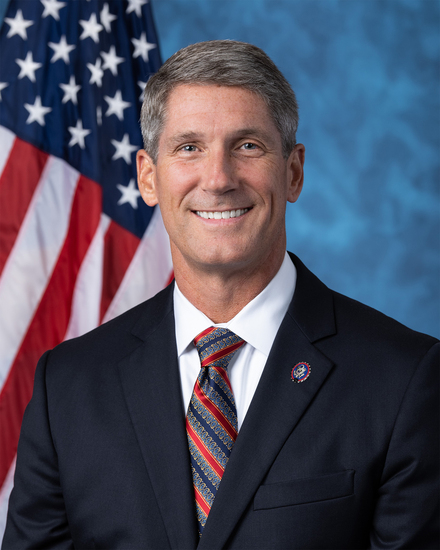
Rep. Scott Franklin
Sponsored bills
Eliminating Abusive and Rampant Neglect of Interactive Technologies Act of 2022 or the EARN IT Act of 2022 This bill revises the federal framework governing the prevention of online sexual exploitation of children. The bill establishes the National Commission on Online Child Sexual Exploitation Prevention. The commission must develop best practices for interactive computer services providers (e.g., Facebook and Twitter) to prevent, reduce, and respond to the online sexual exploitation of children. Additionally, the bill limits the liability protections of interactive computer service providers with respect to claims alleging violations of child sexual exploitation laws. The bill replaces various statutory references to child pornography and material that contains child pornography with child sexual abuse material . Finally, the bill makes changes to the reporting requirements for electronic communication service providers and remote computing service providers (providers) who report apparent instances of crimes involving the sexual exploitation of children to the National Center for Missing and Exploited Children. Among the changes, the bill requires providers to report facts and circumstances sufficient to identify and locate each minor and each involved individual. The bill also increases the amount of time that providers must preserve the contents of a report.
Federal Information Security Modernization Act of 2022 This bill addresses federal information security management, notification and remediation of cybersecurity incidents, and the roles of the Office of Management and Budget (OMB) and the Cybersecurity and Infrastructure Security Agency (CISA). CISA must perform, on an ongoing and continuous basis, assessments of federal risk posture. The bill requires evaluation by each agency of whether additional cybersecurity procedures are appropriate at least once every three years. An agency, as expeditiously as practicable and without unreasonable delay, and within 45 days after it has a reasonable basis to conclude that a breach has occurred, must (1) determine whether notice to any individual potentially affected by the breach is appropriate based on a risk assessment; and (2) as appropriate, provide written notice to each individual potentially affected. Notification may be delayed under specified circumstances. Each agency must provide any information relating to a major incident to CISA, the OMB, the Office of the National Cyber Director, the agency's office of inspector general, the Government Accountability Office, and Congress. An agency's contractors and grant recipients must notify the agency of an incident involving federal information within a specified time frame. Each agency shall develop training for individuals at the agency with access to federal information or information systems on how to identify and respond to an incident. CISA must establish a program to provide ongoing, hypothesis-driven threat-hunting services on the network of each agency. The bill establishes specified pilot programs to enhance federal cybersecurity.
VA Same-Day Scheduling Act of 2022 This bill requires the Department of Veterans Affairs (VA) to ensure that when a veteran enrolled in the VA health care system contacts the VA by telephone to schedule an appointment for care or services at a VA facility, the scheduling for the appointment occurs during that telephone call.
Supply Chain Security Training Act of 2021 This bill requires the Federal Acquisition Institute to develop a training program for officials with supply chain risk management responsibilities at federal agencies (defined to include the legislative and judicial branches, as well as the executive branch, of the federal government). The program shall be designed to prepare such personnel to perform supply chain risk management activities and identify and mitigate supply chain security threats that arise throughout the acquisition life cycle, including for the acquisition of information and communications technology. The Office of Management and Budget shall (1) promulgate guidance to federal agencies requiring executive agency adoption and use of the program, and (2) make the guidance available to federal agencies of the legislative and judicial branches.
Irresponsible Olympic Collaboration Act or the IOC Act This bill eliminates the tax exemption for any organization or entity whose primary purpose is the promotion of international, multi-sport, athletic competitions, and that has gross receipts in in excess of $100 million for any of the 3 preceding taxable years (e.g., the International Olympic Committee).
Keep Kids in Schools Act This bill prohibits a local educational agency (LEA) from obligating federal COVID-19 relief funds during any period when one or more elementary or secondary schools served by the LEA do not provide full-time, in-person instruction. This prohibition does not apply with respect to a school that does not provide full-time, in-person instruction due to following quarantine or isolation guidelines issued by the Centers for Disease Control and Prevention.
Accelerating Access to Critical Therapies for ALS Act This bill establishes grant programs to address neurodegenerative diseases, such as amyotrophic lateral sclerosis (also known as ALS or Lou Gehrig's disease), and contains other related provisions. The Department of Health and Human Services (HHS) shall award grants to eligible entities for scientific research utilizing data from expanded access to investigational ALS treatments for individuals who are not otherwise eligible for clinical trials. The Food and Drug Administration (FDA) shall award grants to public and private entities to cover the costs of research and development of drugs that diagnose or treat ALS and other rare neurodegenerative diseases. HHS shall also establish the Public-Private Partnership for Neurodegenerative Diseases between the National Institutes of Health, the FDA, and at least one eligible entity (generally, an institution of higher education or a nonprofit organization). The partnership shall support the development and regulatory review of drugs that address ALS and other rare neurodegenerative diseases. The FDA shall publish on its website a five-year action plan for fostering the development of drugs that improve or extend the lives of people living with rare neurodegenerative diseases. The Government Accountability Office must report to Congress about the grants provided under this bill, including an analysis of the impact of such grants on research and development of treatments for ALS.
Land and Water Conservation Fund Water Amendments Act of 2021 This bill authorizes the Department of the Interior to provide financial assistance for water quality improvement projects from amounts made available under the Land and Water Conservation Fund. Interior shall only provide such financial assistance to projects that seek to improve water quality by improving, restoring, remediating, or developing natural hydrological systems, such as wetlands and living shorelines. To be eligible for assistance, a state's comprehensive statewide outdoor recreation plan shall identify any body of water within the state for which a water quality control plan has been developed pursuant to the Federal Water Pollution Control Act, and any proposed water quality project to be conducted with respect to such body of water.
Protecting Our Democracy by Preventing Foreign Citizens from Voting Act This bill prohibits federal funds from being made available to state or local governments that allow noncitizens to vote in federal, state, or local elections.