

Maddy summaryThe SAVE Act (HR 8281) requires U.S. citizens to provide documentary proof of citizenship when registering to vote in federal elections. It defines acceptable proof as documents like passports, REAL ID-compliant IDs, military IDs, or birth certificates, and mandates that states verify citizenship using information from government agencies like DHS and Social Security. States must establish processes for voters without required documentation to provide an attestation under penalty of perjury. The law also requires states to remove noncitizens from voter rolls when verified evidence shows they're not citizens. This bill directly affects all applicants registering to vote in federal elections and state election officials who must implement these requirements.
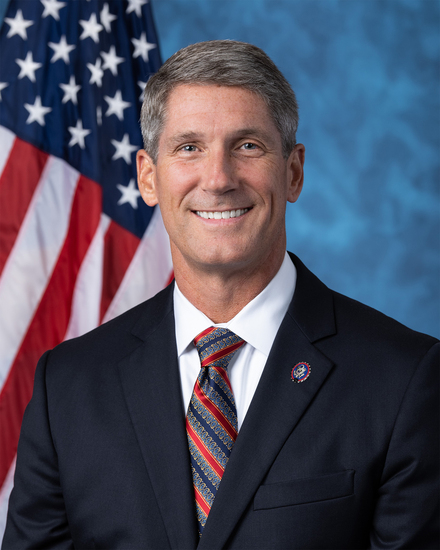
Rep. Scott Franklin
Sponsored bills
Maddy summaryHRES 1365 is a non-binding House resolution calling for the immediate termination of Kimberly Cheatle as U.S. Secret Service Director. It directly addresses the Secret Service Director and the executive branch, though it has no legal force to remove her from office. The resolution’s sole provision is a formal request for her termination, reflecting the sponsors' position on her leadership. As a symbolic gesture, it does not change her employment status or require any action from the President or Secret Service.
Maddy summaryThis is a commemorative resolution (HRES 1369) honoring Corey Comperatore, a volunteer firefighter, U.S. Army Reserves veteran, and community leader from Sarver, Pennsylvania, who died on July 13, 2024. The resolution formally mourns his passing and celebrates his life, noting he left behind his wife, Helen, and two daughters, Allyson and Kaylee. It recognizes his service to the Buffalo Township Volunteer Fire Department, his military service, and his role as a devoted member of Cabot Methodist Church. As a ceremonial resolution, it has no policy impact or direct effect on legislation or constituents beyond this formal acknowledgment.
Maddy summaryThis resolution honors Corey Comperatore, a former Buffalo Township Volunteer Fire Department chief from Pennsylvania, who was killed shielding his family during the July 13, 2024, attempted assassination of former President Donald J. Trump at a rally in Butler. It recognizes his service and sacrifice, specifically noting he died protecting his wife and two daughters. The resolution also condemns the assassination attempt and political violence in all forms. As a commemorative resolution, it has no binding policy effect.
Maddy summaryHJRES 164 is a congressional resolution seeking to block a rule issued by the Department of Commerce regarding firearms license requirements. It directly targets the rule published in the Federal Register (89 Fed. Reg. 34680), which would have revised licensing procedures for firearms dealers. If passed, the resolution would prevent this rule from taking effect by invoking the congressional disapproval process under federal law. The bill does not create new regulations but aims to halt an existing rule affecting gun license applicants and dealers.
Maddy summaryThis bill prohibits federal funding for elementary and secondary schools that partner with Chinese government-funded programs, including Confucius Institutes, Confucius Classrooms, or other entities receiving support from China's government (e.g., through teaching materials, personnel, or funds). It directly affects schools with these specific ties to the People's Republic of China. The prohibition takes effect one year after enactment, with the Education Secretary required to notify schools and provide compliance guidance within 90 days of enactment. The policy change blocks federal education funds for schools meeting the defined criteria, without altering existing educational content or curriculum standards.
Maddy summaryThis bill (HR 2365, Public Law 118-66) directs the U.S. Department of Health and Human Services (HHS) to establish the National Parkinson’s Project. It requires HHS to create and update a coordinated national plan for preventing, diagnosing, treating, and researching Parkinson’s disease and related disorders (including multiple system atrophy and progressive supranuclear palsy), while coordinating federal research and care efforts across agencies like the NIH, CDC, and VA. The law mandates annual progress assessments, an advisory council with patient advocates and diverse experts, and annual reports to Congress on federal Parkinson’s programs and recommendations for improvement. It affects federal agencies managing Parkinson’s-related programs and aims to improve care coordination and research efficiency for patients and caregivers, with the law sunsetting in 2035.
Maddy summaryHR 8903, the UPRISERS Act, would revoke the student visas of international students on F, J, or M visas who are convicted of assaulting a police officer or participating in riot-related violence. It specifically targets offenses like inciting riots, organizing riots, committing violence during riots, or aiding others in such activities. The bill amends immigration law to make these convictions grounds for visa revocation and deportation. This policy directly affects international students holding these specific visa types who face criminal charges for the listed violent acts.
Maddy summaryHR 8902, the FAFSA Act of 2024, terminates federal student aid eligibility for individuals convicted of assault against police officers or specific riot-related offenses (including inciting, organizing, or participating in riots involving violence). It requires affected individuals to repay any grants received under Title IV of the Higher Education Act, converting those grants into unsubsidized loans that accrue interest from the grant award date. These converted loans are ineligible for any forgiveness, cancellation, or repayment assistance programs under federal law. The bill applies to aid received for programs of study ongoing at the time of the conviction.
Maddy summaryHR 8206 prohibits Big Cypress National Preserve in Florida from being designated as wilderness or added to the National Wilderness Preservation System. This means the preserve will not receive wilderness protections, which typically restrict activities like off-road vehicle use and logging. The bill directly affects future management decisions for the preserve by legally blocking federal wilderness designations. It is a specific policy change preventing new restrictions on land use within the preserve.