

Maddy summaryHJRES 144 is a congressional disapproval resolution targeting a specific rule issued by the Bureau of Alcohol, Tobacco, Firearms, and Explosives (ATF) on April 19, 2024. The resolution seeks to block the ATF's rule that redefined the term "engaged in the business" for firearm dealers, which would have affected how federal licensing requirements apply to certain sellers. If enacted, this resolution would nullify the rule, preventing it from taking effect under procedures in Title 5 of the U.S. Code. The bill directly impacts firearm dealers operating under the current regulatory framework and the ATF's enforcement authority.
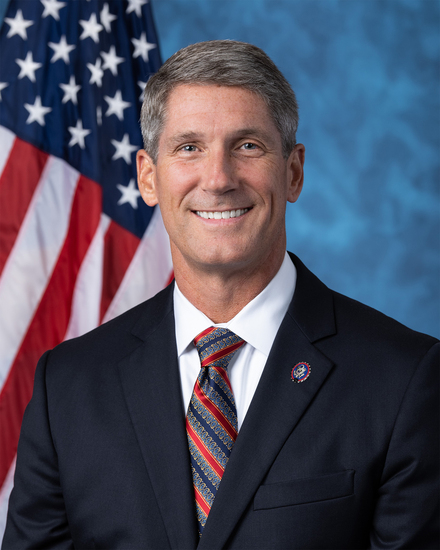
Rep. Scott Franklin
Sponsored bills
Maddy summaryHR 9699, the Pay Our Troops Act, ensures military personnel and key support staff continue receiving pay during government funding gaps in fiscal year 2025. It appropriates funds to cover pay and allowances for active-duty troops, Department of Defense civilians, and qualifying contractors supporting military operations, if regular appropriations aren't enacted. The funding remains in effect until the earliest of: a new appropriations law, a funding resolution without such funding, or January 1, 2026. This bill does not change pay rates or create new policies - it guarantees existing pay continuity during budget transitions.
Maddy summaryThis bill (HJRES 163) is a congressional disapproval resolution targeting an Environmental Protection Agency (EPA) rule finalized on May 9, 2024. The EPA rule established new emissions standards for greenhouse gases from fossil fuel power plants (both new and existing) and repealed a previous rule called the Affordable Clean Energy Rule. The resolution would block this EPA rule from taking effect by invoking the Congressional Review Act (Chapter 8 of Title 5, U.S. Code). If passed, it would prevent the EPA rule from being enforced, directly affecting fossil fuel power plant operators and the EPA’s regulatory authority over emissions.
Maddy summaryThis bill mandates sanctions against five specific Chinese Communist Party Politburo members (He Lifeng, Zhao Leji, Cai Qi, Ding Xuexiang, and Li Xi) within 180 days of enactment. It authorizes the President to impose asset freezes and bar entry to the U.S. for any senior CCP official found to have engaged in activities like disinformation campaigns, intellectual property theft, threats to Taiwan's sovereignty, or religious persecution. The sanctions include blocking U.S. assets and revoking visas, with penalties for violations. The bill requires the President to implement these measures by a specific deadline, though it expires on January 1, 2026.
Maddy summaryThis bill adds the Secretary of Agriculture to the Committee on Foreign Investment in the U.S. (CFIUS) for transactions involving agricultural land, biotechnology, or agriculture-related infrastructure (like transportation, storage, or processing). It requires the Secretary to notify CFIUS about transactions where a foreign person from China, North Korea, Russia, or Iran acquires U.S. agricultural assets, as defined by existing law. CFIUS then decides whether to review such transactions or take other action. The provisions apply only to transactions involving those four countries and sunset once they are removed from the official list of "foreign adversaries" in federal regulations.
Maddy summaryThe context provided for HR 9146 does not include the full text of the amendment or the specific language added to Section 1703(d)(2) of title 38, U.S. Code. Without the actual provisions of the new subparagraph (F) titled "Continuity of care," it is impossible to describe the bill's key mechanisms, who it affects, or its concrete policy changes. The bill's title suggests it relates to veterans' health care continuity under the Veterans Community Care Program, but the details are omitted in the provided excerpt. Therefore, a complete and accurate summary cannot be generated from the available information.
Maddy summaryHR 8282, the "Illegitimate Court Counteraction Act," imposes U.S. sanctions on foreign individuals or entities supporting the International Criminal Court (ICC) in investigating or prosecuting "protected persons." Protected persons include U.S. military personnel, officials, and allied personnel (from non-ICC member countries) who are not under ICC jurisdiction. The bill requires the President to block assets and deny visas to targeted foreign persons and their immediate family members within 60 days of the ICC attempting such actions. It mandates congressional notification of sanctions and allows termination if the ICC ceases all such efforts against protected persons. The law focuses on restricting U.S. economic and travel access to ICC supporters targeting specific U.S. and allied personnel.
Maddy summaryThe CREATE AI Act of 2023 establishes a National Artificial Intelligence Research Resource (NAIRR) to improve access to AI research tools, computational resources, data, and educational materials for researchers and students across the United States. The NAIRR will provide computational resources, curated datasets, educational tools, and access to AI testbeds, with special emphasis on supporting groups historically underrepresented in STEM fields. Governed by a Steering Subcommittee chaired by the Director of the Office of Science and Technology Policy and managed by a Program Management Office within the National Science Foundation, the NAIRR includes specific requirements for ethical AI development, privacy protections, and security measures. The resource will be accessible to researchers at U.S. institutions of higher education, nonprofits, government agencies, and certain businesses, with priority given to projects addressing privacy, ethics, civil rights, and AI safety.
Maddy summaryHR 9498, the TAME Extreme Weather Act, directs the National Oceanic and Atmospheric Administration (NOAA) to develop and use artificial intelligence (AI) for improved weather forecasting and extreme weather response. The bill requires NOAA to create comprehensive AI training datasets, build AI-based weather models (Section 3), and explore AI applications to enhance forecasts, fire prediction, and emissions monitoring (Sections 4-7). It mandates technical assistance for forecasters and emergency managers on using AI models alongside traditional methods (Section 5), and establishes programs to predict wildfires and monitor greenhouse gas emissions (Sections 6-7). The legislation also requires public data sharing under open licenses where feasible, while safeguarding national security and intellectual property (Section 10). This primarily affects NOAA, federal agencies coordinating on weather and fire response, and the broader weather enterprise including private sector partners.
Maddy summaryHR 8656, the Modernizing Wildfire Safety and Prevention Act of 2024, creates new training programs for wildland firefighters including a Middle Fire Leaders Academy and wildfire workforce grants to improve response capabilities. It establishes a Wildland Fire Management Casualty Assistance Program to support families of injured or deceased firefighters and develops a National Smoke Monitoring and Alert System to improve public health responses to wildfire smoke. The bill creates a Joint Office of the Fire Environment Center to coordinate wildfire data and technology across federal agencies and requires federal agencies to process wildfire-related assistance payments within 90 days of approval. This legislation directly affects federal wildland firefighters, wildfire response organizations, communities in wildfire-prone areas, and public health agencies.