

Maddy summaryHR 1995, the Securing American Agriculture Act, requires the Secretary of Agriculture to annually assess U.S. dependency on critical agricultural inputs that could be exploited by China, such as fertilizers, feed, veterinary drugs, seeds, and equipment. The assessment must detail current domestic production, supply chain vulnerabilities, and recommend ways to reduce reliance on China, including legislative changes to encourage domestic production. It protects confidential business data by prohibiting the use of submitted information for purposes beyond aggregate reporting and ensuring no identifiable details are disclosed. The bill directly affects the Department of Agriculture, which must report these findings to Congress annually, without mandating new regulations or actions.
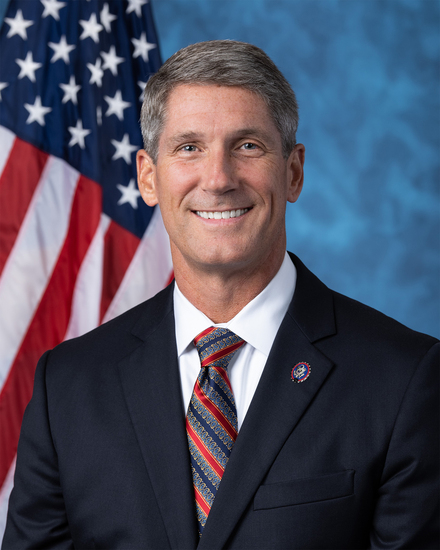
Rep. Scott Franklin
Sponsored bills
Maddy summaryHR 1923, the Modernizing Wildfire Safety and Prevention Act of 2025, establishes training programs for wildfire professionals and improves retirement benefits for firefighters. It creates a National Smoke Monitoring and Alert System to protect public health during wildfire events and requires payment for wildfire recovery programs within 90 days of application approval. These provisions directly affect federal firefighters, wildfire response organizations, and communities in wildfire-prone areas. The bill also includes mechanisms for workforce development, casualty assistance, and data sharing to enhance wildfire management and public safety.
Maddy summaryThis bill amends the Food and Nutrition Act of 2008 to change work requirements for SNAP (Supplemental Nutrition Assistance Program) recipients. It adds new exemptions for individuals under 18, over 65, medically certified as unfit for work, parents with children under 7, or pregnant women. It also allows states to request waivers from work requirements in counties with unemployment rates exceeding 10%. These changes directly affect SNAP participants who may qualify for exemptions or live in high-unemployment areas.
Maddy summaryThe CAPE Canaveral Act (HR 2422) would require the National Aeronautics and Space Administration (NASA) to relocate its headquarters to Brevard County, Florida, within one year of the bill becoming law. This bill directly affects NASA by mandating a physical move of its central administrative operations from its current location. The key provision sets a strict one-year deadline for the transfer, without altering NASA's missions or programs. The bill focuses solely on changing the headquarters location, not on policy or funding changes.
Maddy summaryThe SHORT Act (HR 2395) redefines federal firearm definitions to exclude antique and collector firearms from being classified as firearms, and removes distinctions between short-barreled rifles and shotguns in federal regulations. It prevents state laws from imposing taxes or registration requirements on short-barreled rifles and shotguns, requiring state rules to align with federal compliance instead. The bill also mandates the federal government to destroy specific records related to these firearms within one year of enactment.
Maddy summaryThe Freedom from Unfair Gun Taxes Act of 2025 would prohibit states and local governments from imposing taxes on the sale of firearms, ammunition, or firearm parts during interstate or foreign commerce. This bill directly affects state tax policies and manufacturers or dealers selling these items across state lines. It explicitly states that the bill does not change the existing federal tax on firearms and ammunition that funds wildlife conservation programs. The key provision bans state-level taxes for these sales in interstate transactions while preserving current federal funding mechanisms.
Maddy summaryHR 2387, the "No Harm Act," prohibits federal funding for certain medical treatments for minors that the bill defines as "sex-trait altering treatments," including puberty blockers, hormone therapy, and gender reassignment surgeries (except for specific medical conditions like disorders of sex development). The bill directly affects minors receiving such care, healthcare providers, medical institutions, and schools, requiring parental consent for any treatment and banning federal funds for facilities or schools that provide these treatments without parental approval. Key provisions include banning federal funds for any promotion or facilitation of these treatments, mandating a 72-hour parental consultation period before treatment, and creating civil lawsuits for violations. The bill defines "sex" as biological sex at birth and "gender" as social aspects, excluding only treatments for medically verified conditions.
Maddy summaryThe Cellphone Jamming Reform Act of 2025 allows state and federal correctional facilities to operate jamming systems that block cell signals from entering or leaving the facility, specifically targeting contraband devices used by inmates. It directly affects prisons and jails by enabling them to disrupt unauthorized wireless communications without FCC approval, provided the jamming is limited to housing areas within the facility. Key requirements include state facilities covering all costs themselves, consulting with local law enforcement before implementation, and notifying the Bureau of Prisons. The law aims to address security risks from smuggled phones while restricting jamming to only necessary areas and requiring transparency.
Maddy summaryHR 2297, the Taxpayer-Funded Union Time Transparency Act, requires federal agencies to publicly report detailed annual spending on union-related activities. Agencies must disclose the total cost of "official time" (when employees use work hours for union duties), including per-employee data on pay, benefits, hours worked, and costs for negotiations, grievances, and dispute resolution. It also mandates reporting on free or discounted agency property and real estate used by unions, along with related expenses. These reports, submitted to Congress and posted online by June 30 each year, directly affect all federal agencies and their employees covered by collective bargaining agreements. The bill aims to provide transparency into how taxpayer funds are used for union activities under existing labor laws.
Maddy summaryHR 2257 authorizes the U.S. Mint to produce three commemorative coins (a $5 gold coin, a $1 silver coin, and a half-dollar) to honor fallen firefighters, with specific quantity limits and specifications. The bill requires a surcharge ($35 for gold, $10 for silver, $5 for half-dollar) on each coin sold, which is directed entirely to the National Fallen Firefighters Foundation to support its programs. The coins must be issued in 2026, will be legal tender, and the government must recover all costs through sales before distributing funds to the Foundation. This is a commemorative coin program, not a direct legislative policy change affecting broader public programs.