

Maddy summaryThis bill designates 34 miles of the Myakka River in Sarasota County as part of the National Wild and Scenic Rivers System, classifying specific segments as "wild," "scenic," or "recreational" river areas. It establishes cooperative management between the U.S. Department of the Interior and Florida's existing Myakka River Management Coordinating Council, with the council developing and updating a comprehensive management plan. The bill explicitly prohibits federal land acquisition by condemnation, ensures no federal control over privately owned lands, and confirms the river will not become part of the National Park System. This protects the river's natural state while maintaining existing state and local land management authority under Florida law.
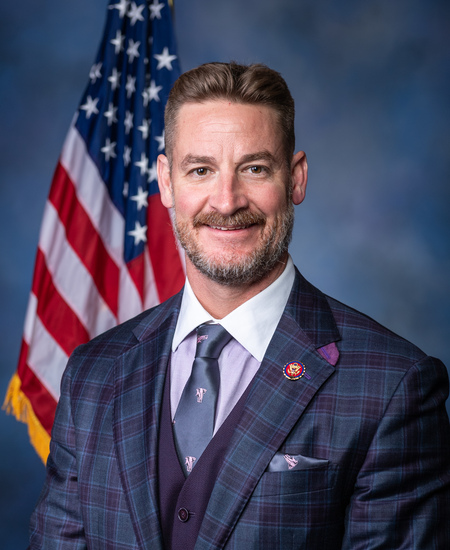
Rep. W. Gregory Steube
Sponsored bills
Maddy summaryThis bill establishes a commission to study whether the Weitzman National Museum of American Jewish History in Philadelphia should be transferred to the Smithsonian Institution. The commission, composed of 8 members appointed by congressional leaders with expertise in Jewish American history and museum administration, will examine the museum's collections, financial status, governance, and feasibility of transfer within two years. The commission must submit a report detailing findings, a fundraising plan, and legislative recommendations for any potential transfer. The bill does not transfer the museum but creates a process to evaluate the possibility.
Maddy summaryThis bill allows livestock producers and their employees to take black vultures (Coragyps atratus) that are harming or threatening livestock, bypassing the usual protections under the Migratory Bird Treaty Act. It directly affects ranchers and farm workers in areas where black vultures cause livestock deaths or injuries. The key provision requires annual reporting to the U.S. Fish and Wildlife Service about any vultures taken, using a simplified form similar to existing reporting for permitted bird take. This creates a specific, limited exception to federal bird protections for livestock protection, with no new restrictions on vulture populations.
Maddy summaryThis bill reinstates a pre-American Rescue Plan Act (ARP) tax reporting rule for gig economy platforms. It requires third-party payment platforms (like Uber or DoorDash) to report transactions to the IRS only if a gig worker earns over $20,000 in total or completes more than 200 transactions in a year. This directly affects gig workers whose income falls below these thresholds, exempting them from the reporting requirement. The provision effectively reverses a change made by the ARP, reducing administrative burden for both platforms and lower-earning gig workers. The bill amends IRS Code Section 6050W to restore these specific de minimis payment thresholds.
Maddy summaryThis bill authorizes the awarding of a Congressional Gold Medal to Daniel Penny for his actions on May 1, 2023, when he restrained a man with 42 prior arrests on a New York City subway, protecting passengers. The medal, to be struck by the U.S. Mint, will be presented posthumously to Penny, a Marine Corps veteran. Duplicate bronze medals may be sold to cover production costs, with proceeds deposited into the U.S. Mint fund. As a commemorative act, it has no policy impact beyond honoring Penny's actions.
Maddy summaryThe STAND Act would temporarily halt federal funding for non-defense foreign aid (including bilateral, multilateral, and humanitarian assistance) by the State Department and USAID for 60 days after a natural disaster is declared under the Stafford Act. This means no such aid spending could occur during that period, directly affecting how these agencies allocate taxpayer funds in disaster response. The freeze could only be lifted if Congress passes a joint resolution that the President signs into law. The bill focuses on pausing foreign aid to prioritize domestic disaster relief efforts in the immediate aftermath of events.
Maddy summaryThis bill modifies tax law to exclude certain health professional education payments from taxable income. It makes loan repayments under specific federal programs (like Public Health Service Act sections 338B(g), 846(a), and 738(a)) and qualifying state programs for underserved areas tax-free. It also expands tax exclusions for scholarships from programs including the Public Health Service Act's section 846 and the Native Hawaiian Health Care Improvement Act. The bill directly affects health professionals receiving these payments or scholarships, increasing their net compensation by removing tax liability on these funds. This is a concrete tax policy change with no advocacy or speculation about outcomes.
Maddy summaryThis bill designates the Department of Veterans Affairs medical center in West Palm Beach, Florida, as the "Thomas H. Corey VA Medical Center." The change updates all federal references - including laws, regulations, maps, and documents - to reflect the new name. It directly affects the facility's official identity and veteran services documentation. The bill is procedural and does not alter healthcare services or funding.
Maddy summaryThe Working Dog Commemorative Coin Act (HR 807) directs the U.S. Treasury to mint three types of commemorative coins honoring working dogs' service: $5 gold coins, $1 silver coins, and half-dollar coins with specific weight and composition requirements. Each coin will carry a surcharge ($35 for $5 coins, $10 for $1 coins, $5 for half-dollars) that will be paid directly to America's VetDogs to support their programs providing service dogs for veterans, the disabled, and others. The coins will be issued in 2027 with designs reflecting working dogs' roles in military, detection, therapy, and assistance work. The legislation specifies that all surcharge revenue must fund America's VetDogs' operations without creating new government programs. This is a commemorative measure focused on honoring working dogs' contributions through coin sales, with all surcharge funds going to a specific nonprofit organization.
Maddy summaryThis resolution urges Ukraine to reverse its 2022 suspension of adoptions by foreign nationals, including U.S. citizens. It specifically asks Ukraine to review its decision and resume such adoptions, prioritizing cases where U.S. prospective parents had already completed Ukrainian adoption requirements before the suspension or where children were part of pre-existing Ukrainian hosting programs. The resolution does not change U.S. law but formally requests Ukraine address mutual concerns to protect children's best interests. It directly affects U.S. families seeking to adopt Ukrainian children and Ukraine's adoption policies.