

Maddy summaryThis bill amends Medicare eligibility rules to clarify that beneficiaries needing occupational therapy *or* speech therapy qualify for home health services. It updates two sections of the Social Security Act (Parts A and B) to replace "need occupational therapy or speech therapy" with "need occupational, or speech therapy," ensuring both therapies are explicitly covered. The change directly affects Medicare beneficiaries requiring either therapy for home-based care, removing potential confusion about eligibility. The updated rules will take effect for services provided on or after January 1, 2026.
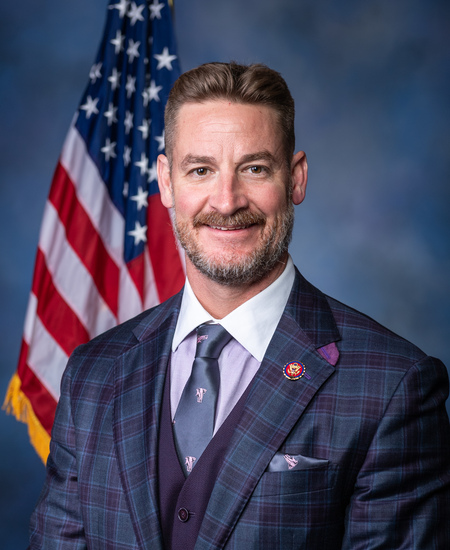
Rep. W. Gregory Steube
Sponsored bills
Maddy summaryHR 2014 modifies the tax code to change how certain stock purchases from employee stock ownership plans (ESOPs) are counted toward a business's tax obligations. It treats stock bought from an ESOP (where employees participate) by the business itself as "outstanding voting stock" for tax calculations, but only if this doesn't push holdings above 49%. This specifically applies to stock purchased on or after January 1, 2020, from ESOP distributions, and excludes purchases during the first 10 years of an ESOP's existence. The bill directly affects businesses using ESOPs that repurchase employee-owned shares, altering how these transactions impact their tax liability under Section 4943.
Maddy summaryHR 1940, the Tanning Tax Repeal Act of 2025, removes a federal excise tax on indoor tanning services. It directly affects tanning salons and businesses providing these services by eliminating the tax they previously paid. The bill repeals Chapter 49 of the Internal Revenue Code, which imposed the tax, and the change takes effect for services provided after the bill becomes law. This is a straightforward tax repeal with no new requirements or funding mechanisms.
Maddy summaryHR 966, the Veterans Cannabis Use for Safe Healing Act, prevents the Department of Veterans Affairs (VA) from denying benefits to veterans participating in state-approved medical marijuana programs. It requires VA doctors to discuss cannabis use with enrolled veterans, adjust treatment plans as needed, and document it in medical records. The bill also authorizes VA health providers to give recommendations about state cannabis programs to eligible veterans. This would directly affect veterans enrolled in VA healthcare who live in states with legal medical marijuana programs. The law aims to align VA care with state medical marijuana laws while maintaining federal compliance.
Maddy summaryThis resolution formally censures Representative Al Green (D-TX) for disrupting President Trump's address during a joint session of Congress on March 4, 2025. It requires him to appear in the House chamber for the public reading of the censure resolution, which states his actions violated decorum rules and brought disrepute to Congress. As a procedural resolution, it does not enact policy changes but serves as a formal reprimand for conduct during a congressional session.
Maddy summaryHR 1844 (PAGER Act) restricts U.S. military aid to Lebanon until the Secretary of State certifies Lebanon has ended political recognition of Hezbollah and allied groups, disarmed Hezbollah per UN Resolution 1559, and severed military ties with Iran/Hezbollah. It also prohibits U.S. funding for UN programs supporting Lebanese security forces’ livelihoods. The bill mandates quarterly reports on Hezbollah and Iran’s influence in Lebanon’s government and military. These provisions apply to all U.S. funding for Lebanon’s armed forces and internal security forces, with certification required before aid resumes.
Maddy summaryThis bill transfers administration of the H-2A temporary agricultural worker visa program from the Department of Labor to the Department of Agriculture. It directly affects agricultural employers and temporary farmworkers who rely on the H-2A program for work visas. The key provision amends the Immigration and Nationality Act to change the responsible agency (replacing "Secretary of Labor" with "Secretary of Agriculture") and requires a 60-day transfer of personnel, funding, and materials. This is a procedural change in agency management, not a modification to program rules or eligibility criteria.
Maddy summaryHR 1879, the "No Tax Breaks for Sanctuary Cities Act," denies tax-exempt status for bonds issued by jurisdictions classified as "sanctuary jurisdictions." A sanctuary jurisdiction is defined as a city or state that either restricts sharing immigration status information with federal authorities or fails to comply with federal detainer requests under immigration law. The bill requires the Treasury Secretary to publish an annual list of such jurisdictions within 180 days of enactment. This policy directly affects local governments meeting the definition by removing a key funding tool - tax-exempt municipal bonds - used for public projects like schools or infrastructure. The law applies to bonds issued after enactment and does not alter existing sanctuary policies themselves.
Maddy summaryThis bill modifies tax reporting rules for gig economy platforms (like Uber or DoorDash) by reinstating a pre-American Rescue Plan threshold. It requires third-party payment platforms to report income to the IRS only if a gig worker earns over $20,000 in a year or completes more than 200 transactions. This directly affects low-earning gig workers who would no longer receive tax forms for smaller earnings. The change simplifies reporting for platforms and reduces administrative burden on workers with minimal income from these platforms.
Maddy summaryHR 967, the Modern GI Bill Act, allows veterans using Post-9/11 GI Bill benefits to apply those funds toward repaying federal student loans. It sets an annual cap of $15,900 (adjusted yearly based on Social Security increases) and limits total repayment to 36 months. Payments would be made directly to lenders, and the benefit cannot be transferred to others. This applies specifically to federal student loans under Title IV of the Higher Education Act.