

Maddy summaryHR 3894, the SAFE Cities Act, requires the Attorney General to publish and update every 180 days a list of jurisdictions (states or local governments) that refuse to stop violence and property destruction, based on specific criteria like blocking police intervention or defunding law enforcement. The bill directs the Office of Management and Budget to issue guidance restricting federal grant eligibility for these jurisdictions, to the extent permitted by law. It would directly affect local or state governments meeting the defined criteria, potentially limiting their access to federal funding. The law focuses on creating a federal mechanism to identify and financially disfavor jurisdictions with policies deemed insufficient for public safety.
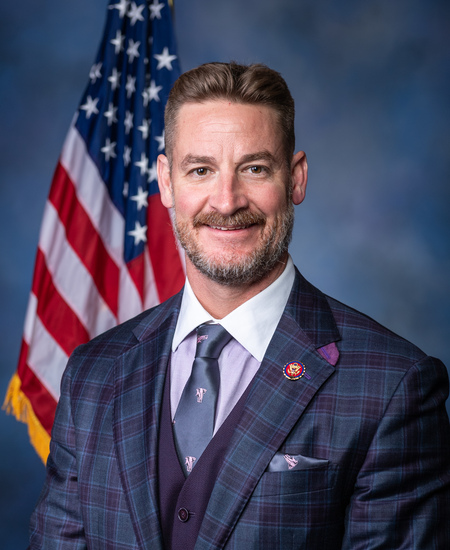
Rep. W. Gregory Steube
Sponsored bills
Maddy summaryHR 3853, the Federal Government Reform Act of 2025, makes several changes to federal employment practices and agency operations. It mandates the closure of the Federal Executive Institute in Virginia and extends probationary periods for many new federal employees, requiring agency certification for continued employment after the first year. The bill also requires agencies to review regulations imposing criminal penalties without clear statutory authority and prohibits new regulations with criminal penalties unless specifically authorized by law. Additionally, it directs the Federal Register to digitize systems, meet strict publication deadlines, and improve Treasury payment systems to reduce reliance on outdated technology.
Maddy summaryHR 3739, the "No Loan Forgiveness for Terrorists Act of 2025," amends the Higher Education Act to exclude certain organizations from qualifying for federal public service loan forgiveness (PSLF). It defines "public service job" to exclude employment with organizations that engage in specific illegal activities, including aiding immigration law violations (like illegal border crossings), materially supporting terrorism (including funding cartels or violent acts), facilitating child abuse (such as chemical castration or trafficking children), engaging in illegal discrimination, or violating state tort laws (like trespassing or vandalism). This change directly affects borrowers working for organizations meeting these criteria, barring them from PSLF eligibility. The bill creates a concrete policy exclusion based on employer conduct, not individual employee actions.
Maddy summaryHR 3660, the "Make Autorail Great Again Act," requires the Washington Metropolitan Area Transit Authority (WMATA) to rename itself as the "Washington Metropolitan Authority for Greater Access" (or "WMAGA") and its Metrorail system as the "Trump Train" to continue receiving federal funding. The bill ties all federal funding to amending the governing Compact (the Washington Metropolitan Area Transit Regulation Compact) to reflect these new names. It directly affects WMATA, the regional transit agency serving Washington, D.C., and surrounding areas, by conditioning its primary funding source on this renaming. The bill contains no substantive policy changes beyond this renaming requirement and is purely procedural in nature.
Maddy summaryHR 3659, the Valid Benefits Act, requires federal agencies to verify the eligibility of individuals aged 105 or older for federal benefits twice a year, starting in 2025. It directly affects seniors receiving benefits like Social Security or veterans' payments who reach this age. The bill mandates agencies to implement verification processes but does not change benefit amounts or create new programs. It specifies that agencies may issue regulations to carry out this requirement, with all verification applying to benefits paid on or after December 31, 2025.
Maddy summaryHR 3608, "Connor’s Law," requires commercial motor vehicle operators (like truck and bus drivers) to read and speak English well enough to converse with the public, understand English traffic signs, respond to officials, and complete reports. The bill adds this language requirement to existing federal safety rules for commercial drivers. Drivers found noncompliant with this rule would face an "out of service" order, meaning they cannot operate their vehicle until they meet the requirement. This directly affects commercial drivers operating in the U.S. under federal safety regulations.
Maddy summaryHRES 444 is a symbolic House resolution calling on all Americans to observe Memorial Day 2025 by honoring military personnel who died in service. It does not create new laws or affect specific groups, as it is a non-binding expression of national remembrance. The resolution states that Americans should commemorate the sacrifices of over one million service members who died pursuing freedom and peace, framing Memorial Day as a day to express respect for their ultimate sacrifice. This is a routine ceremonial resolution with no policy changes or concrete mechanisms beyond urging public observance.
Maddy summaryHR 3583 requires funeral honors details presenting a folded U.S. flag to military members or veterans at funerals to recite the 13 specific "Folds of Honor" with their symbolic meanings (e.g., "The 1st fold is a symbol of life"). This applies to flag presentations under federal law for deceased service members or veterans, directly affecting military funeral honors teams. Families may opt out of the recitation if they choose, per the bill's exception clause. The bill adds this requirement to U.S. Code without changing existing funeral procedures.
Maddy summaryHR 3575, the ANTE Act, prevents companies from evading U.S. tariffs on goods from nonmarket economy countries (like China or Russia, as defined under U.S. trade law) by moving production to third countries. It targets entities controlled by such countries or with significant state ownership (25%+ equity held by state-linked entities). The U.S. Trade Representative can investigate these entities and impose duties on goods made in third countries equal to the original tariffs, either for ongoing production or planned future production. This applies to countries listed on the Special 301 Priority Watch List, ensuring tariffs remain effective even if production shifts.
Maddy summaryThe DEFIANCE Act of 2025 creates a new civil legal remedy for victims of non-consensual intimate digital forgeries (synthetic images or videos manipulating real people into sexual contexts without consent). It allows affected individuals to sue perpetrators in federal court for damages up to $250,000, injunctions to remove content, and privacy protections like pseudonyms. The bill specifically covers cases where forgeries are created or shared with intent to disclose, including scenarios involving sexual assault or harassment. It expands existing federal protections under 15 U.S.C. 6851 to address digital forgeries while ensuring state laws remain in effect.