

Born-Alive Abortion Survivors Protection Act This bill establishes requirements for the degree of care a health care practitioner must provide in the case of a child born alive following an abortion or attempted abortion. Specifically, a health care practitioner who is present must (1) exercise the same degree of care as would reasonably be provided to any other child born alive at the same gestational age, and (2) ensure the child is immediately admitted to a hospital. Additionally, a health care practitioner or other employee who has knowledge of a failure to comply with the degree-of-care requirements must immediately report such failure to law enforcement. A health care practitioner who fails to provide the required degree of care, or a health care practitioner or other employee who fails to report such failure, is subject to criminal penalties—a fine, up to five years in prison, or both. An individual who intentionally kills or attempts to kill a child born alive is subject to prosecution for murder. The bill bars the criminal prosecution of a mother of a child born alive under this bill and allows her to bring a civil action against a health care practitioner or other employee for violations.
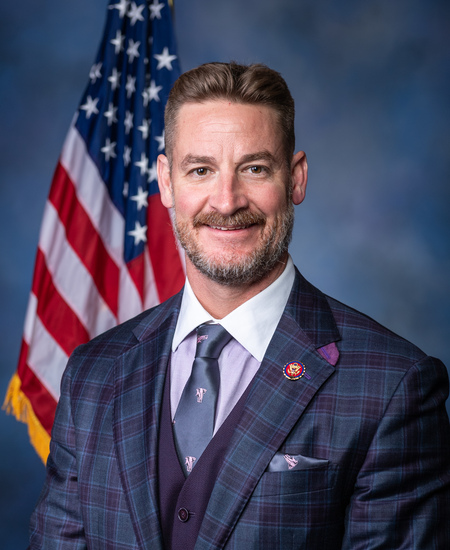
Rep. W. Gregory Steube
Sponsored bills
States' Education Reclamation Act of 2021 This bill abolishes the Department of Education (ED) and repeals any program for which it has administrative responsibility. The Department of the Treasury shall provide grants to states, for FY2021-FY2029, for elementary, secondary, and postsecondary education purposes permitted by state law. The level of funding is set at the amount provided to states for federal elementary and secondary education programs and the amount provided for federal postsecondary education programs, respectively, for FY2021, minus the funding provided for education programs that the bill transfers to other federal agencies. States must contract for an annual audit of their expenditures or transfers of grant funds. Program administrative responsibility and delegation of authority are transferred as follows: ED's job training programs to the Department of Labor, each special education grant program under the Individuals with Disabilities Education Act to the Department of Health and Human Services (HHS), ED's Indian education programs to the Department of the Interior, each Impact Aid program under the Elementary and Secondary Education Act of 1965 to the Department of Defense, the Federal Pell Grant program and each federal student loan program to Treasury, and programs under the jurisdiction of the Institute of Education Sciences or the D.C. Opportunity Scholarship Program to HHS.
Whole Milk for Healthy Kids Act of 2021 This bill revises requirements for milk provided by the National School Lunch Program of the Department of Agriculture (USDA). Currently, schools participating in the program must provide milk that is consistent with the most recent Dietary Guidelines for Americans; USDA regulations require milk to be fat-free or low-fat and allow only fat-free milk to be flavored. The bill removes these restrictions and instead permits schools to offer students whole, reduced-fat, low-fat, and fat-free flavored and unflavored milk.
Transparency for Confucius Institutes Act This bill requires an institution of higher education (IHE) that participates in federal student-aid programs to enter into a program participation agreement if a Confucius Institute operates on the IHE's campus. (Confucius Institutes are Chinese government-funded centers for language education and cultural programming at IHEs.) The agreement must be entered into with the Office of Chinese Language Council International (i.e., Confucius Institute Headquarters, Hanban) and be made publicly available online. Among other requirements, the Confucius Institute must be physically located apart from the IHE's own Chinese language, history, and cultural programs.
Increasing Access to Quality Cardiac Rehabilitation Care Act of 2021 This bill accelerates and expands certain changes that are scheduled to take effect relating to the coverage of cardiac, intensive cardiac, and pulmonary rehabilitation programs under Medicare. Currently, such programs require physician supervision. Effective January 1, 2024, physician assistants, nurse practitioners, and clinical nurse specialists may also supervise these programs. The bill expedites the effective date of these changes to January 1, 2022, and also allows these practitioners to administer programs in their offices, prepare and sign treatment plans, and prescribe exercise.
No Taxpayer-Funded Checks for Prisoners Act This bill prohibits individuals who were incarcerated in a federal prison on the enactment date of the American Rescue Plan Act of 2021 from receiving the recovery rebates provided by that Act.
Global War on Terrorism Memorial Location Act This bill authorizes the establishment of a National Global War on Terrorism Memorial in the area of the National Mall.
Do Your Job Act of 2021 This bill eliminates the use of official time by federal employees. Official time is paid time off from assigned duties to perform labor-management relations activities.
Healthy Workplaces Act This bill allows tax credits for employer expenses for protecting employees from COVID-19 (i.e., coronavirus disease 2019). Specifically, the bill allows a credit against certain employment taxes equal to 50% of the sum of qualified employee protection expenses, workplace reconfiguration expenses, and education and training expenses paid by the employer during a calendar quarter. The bill also allows a 50% income tax credit for qualified workplace reconfiguration expenses incurred by an employer in 2020. The bill defines qualified workplace reconfiguration expenses to include amounts paid by an employer to evaluate, design, and reconfigure retail space and employee work areas for the primary purpose of preventing the spread of COVID-19. The evaluation, design, and reconfiguration must be completed before January 1, 2022.
Veterans Cannabis Use for Safe Healing Act This bill prohibits the Department of Veterans Affairs (VA) from denying a veteran any VA benefit due to participation in a state-approved marijuana program. For veterans participating in these approved programs, the VA must ensure its health care providers (1) discuss marijuana use with such veterans and adjust treatment plans accordingly, and (2) record such use in the veterans' medical records. Under the bill, the VA shall authorize physicians and other VA health care providers to provide recommendations to veterans who are residents of states with approved programs.