

Global Amphibian Protection Act of 2021 This bill establishes a Highly Endangered Amphibian Species Conservation Fund and requires the Department of the Interior to use the fund to carry out a grant program for the conservation of highly endangered amphibian species. Highly endangered amphibian species means any amphibian species categorized on the International Union for Conservation of Nature (IUCN) Red List of Threatened Species as endangered, critically endangered, or extinct in the wild. The term also means any other amphibian species categorized on such list as data deficient or under a threat category lower than endangered if Interior determines that (1) the most recent IUCN Red List assessment indicates that the population is decreasing, or (2) such species is facing new or emerging threats. The bill establishes the fund as a separate account in the Multinational Species Conservation Fund.
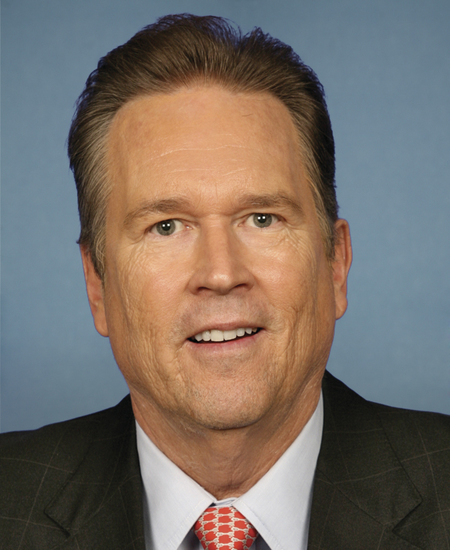
Rep. Vern Buchanan
Sponsored bills
Offshore Accountability Act of 2021 This bill establishes disclosure and reporting requirements for operators of offshore oil or gas facilities after equipment failures of critical systems. Such operators must notify the Department of the Interior and the manufacturers of the equipment of such failures. In addition, the operators must provide equipment failure analyses to Interior and the manufacturers. Interior must post the analyses on its website. Finally, operators must report to Interior on changes made by such manufacturers to the design of critical systems as the result of reported failures and changes in the operators' procedures as a result of reported failures.
Driftnet Modernization and Bycatch Reduction Act This bill addresses certain driftnet fishing. Driftnet fishing is a method of fishing in which a gillnet composed of a panel or panels of webbing, or a series of such gillnets, is placed in the water and allowed to drift with the currents and winds for the purpose of entangling fish in the webbing. Currently, the use of large-scale drift gillnets with a total length of 2.5 kilometers or more is prohibited in the United States.The bill expands the definition of large-scale driftnet fishing to prohibit the use of gillnets with a mesh size of 14 inches or greater. This expanded prohibition does not apply within the U.S. exclusive economic zone for five years. The Department of Commerce must conduct a transition program to facilitate the phase out of large-scale driftnet fishing and to promote the adoption of alternative fishing practices that minimize the incidental catch of living marine resources. Commerce must award grants to program participants. Further, the North Pacific Fishery Management Council may recommend and Commerce may approve regulations to collect fees from charter vessel operators that guide recreational anglers who harvest Pacific halibut.
Prevent All Soring Tactics Act of 2022 or the PAST Act of 2022 This bill addresses the practice of soring horses. The soring of horses includes various actions taken on horses' limbs to produce higher gaits that may cause pain, distress, inflammation, or lameness. Specifically, the bill expands soring regulation and enforcement at horse shows, exhibitions, sales, and auctions, including by establishing a new system for inspecting horses for soring. In addition, the bill increases penalties for violations.
This resolution condemns recent attacks on pro-life facilities, groups, and churches and calls on the current presidential administration to use appropriate law enforcement authorities to support their safety.
Governing Unaccredited Representatives Defrauding VA Benefits Act or the GUARD VA Benefits Act This bill imposes criminal penalties and/or fines on individuals for directly or indirectly soliciting, contracting for, charging, or receiving any unauthorized fee or compensation with respect to the preparation, presentation, or prosecution of any claim for Department of Veterans Affairs benefits. The attempted commission of such offenses is also punishable by fine or imprisonment.
Animal Violence Exposes Real Threat of Future Violence Act of 2022 or the AVERT Future Violence Act of 2022 This bill directs the National Institute of Justice within the Department of Justice (DOJ) to study the factors that contribute to acts of animal cruelty. The report must also analyze acts of animal cruelty as a predictor of future violence against humans. Additionally, the bill authorizes DOJ to establish a grant program to support the development and strengthening of detection strategies and early intervention or diversion resources to stop acts of animal cruelty and rehabilitate offenders.
Maddy summaryHR 8563, the Sunset Act of 2022, requires most federal agency rules to automatically expire 10 years after issuance unless Congress passes a specific extension. Agencies must submit reports to Congress 180 days before expiration and identify rules for annual review, with 10% of rules reviewed each year for 9 years. Congress can extend rules only through a joint resolution introduced within 3 days of receiving the agency report, requiring bipartisan leadership sponsorship. This law directly affects federal agencies (who create rules) and Congress (who must vote on extensions), changing how long regulations remain in effect without renewal.
Secure Every School and Protect Our Nation’s Children Act or the STOP II Act This bill reauthorizes and supports various grants to enhance school safety and security initiatives. It also provides statutory authority for the federal clearinghouse of school safety resources. (The clearinghouse identifies and publishes best practices and recommendations for school safety for use by state and local educational and law enforcement agencies, institutions of higher education, health professionals, and the public.)
No Retaining Every Gun In a System That Restricts Your Rights Act This bill modifies the retention requirements for firearm transaction records of federal firearms licensees (FFLs) that go out of business. Current law generally requires FFLs that go out of business to deliver their firearm transaction records to the Bureau of Alcohol, Tobacco, Firearms and Explosives (ATF). This bill removes the requirement for FFLs that go out of business to deliver their firearm transaction records to the ATF. Further, the bill requires the ATF to destroy all out-of-business records it has collected from FFLs.