

Maddy summaryThe Criminal Alien Gang Member Removal Act creates new grounds for denying entry to or deporting immigrants who are or have been members of gangs that commit specific crimes. It defines "criminal gang" as a group of 5+ people engaging in ongoing criminal activity like drug trafficking, violence, or human trafficking. The Secretary of Homeland Security can designate groups as criminal gangs, with procedures for review and potential revocation. Gang members would face mandatory detention and lose eligibility for asylum, temporary protected status, special visas, and parole (except when assisting law enforcement). The law applies to both current and past gang activities, regardless of when the crimes occurred.
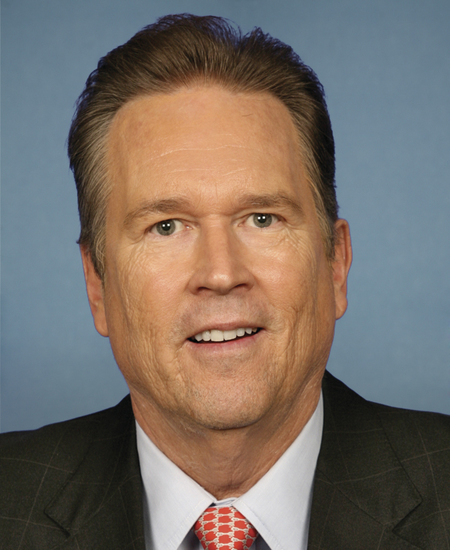
Rep. Vern Buchanan
Sponsored bills
American Innovation Act of 2023 This bill revises the tax treatment of business start-up or organizational expenditures. Specifically, it allows an election to deduct such expenditures in an amount equal to the lesser of the aggregate amount of such expenditures incurred by an active trade of business, or $20,000, reduced by the amount by which such aggregate amount exceeds $120,000. The remaining amount of such expenditures shall be amortized over the 180 month period after the trade or business begins. The bill also revises the tax treatment of partnership syndication fees and start-up net operating losses and tax credits after an ownership change.
Maddy summaryHRES 29 is a procedural resolution that would amend House rules to create the "Committee on the Elimination of Nonessential Federal Programs." This committee would study and recommend cutting underperforming or nonessential federal programs, requiring annual reports listing such programs and submitting related legislation. The resolution also establishes expedited procedures for bills reported by this committee, including limiting debate to 10 hours and making motions to proceed highly privileged. It does not directly affect constituents but changes House committee structure and procedures.
This joint resolution proposes a constitutional amendment prohibiting total outlays for a fiscal year from exceeding total receipts for that fiscal year unless Congress authorizes the excess by a two-thirds vote of each chamber. The prohibition excludes outlays for repayment of debt principal and receipts derived from borrowing. The amendment prohibits total outlays for any fiscal year from exceeding 18% of the gross domestic product of the United States unless two-thirds of each chamber of Congress provides for a specific increase above this amount. The amendment requires a two-thirds vote of each chamber of Congress to impose a new tax, increase the statutory rate of any tax, or increase the aggregate amount of revenue. It requires a three-fifths vote of each chamber to increase the limit on the debt of the United States. The President must submit an annual budget in which total outlays do not exceed total receipts or 18% of the gross domestic product of the United States. The amendment prohibits a court from ordering a revenue increase to enforce the requirements. Congress may waive specified requirements when a declaration of war is in effect or the United States is engaged in a military conflict that causes an imminent and serious military threat to national security.
Maddy summaryHJRES 8 proposes a constitutional amendment to permanently set the Supreme Court's size at nine justices. The bill would require any future changes to the Court's composition to follow this specific number, locking in the current structure. It does not alter the existing Court size (which has been nine since 1869) but aims to prevent future adjustments through legislative action. The amendment must be ratified by three-fourths of state legislatures within seven years to take effect. This is a procedural proposal focused on constitutional structure, not a direct policy affecting citizens or programs.
Maddy summaryHR 135, the "No Pay Raise for Congress Act," prevents members of Congress from receiving pay raises unless the federal government's total spending in the previous fiscal year did not exceed its total revenue, as verified by the Congressional Budget Office (CBO). It directly affects all congressional members by tying their pay adjustments to the federal budget balance. The key provision amends existing law to require CBO certification that spending did not exceed revenue before any pay increase can be implemented. This creates a specific fiscal condition for congressional pay adjustments, rather than allowing automatic raises.
Maddy summaryThis bill establishes nationwide recognition for valid concealed carry permits. It allows permit holders from any state to carry concealed handguns in states that either issue such permits or don't ban concealed carry, provided they carry a photo ID and their valid permit. Key provisions include making presentation of a valid permit and ID prima facie evidence of compliance, shifting the burden of proof to prosecutors if challenged, and requiring courts to award attorney fees to successful defendants. It does not override state laws prohibiting concealed carry on private property or government lands, nor does it affect restrictions on federal lands like national parks.
Maddy summaryThis bill would block federal funding to any state or local government that permits non-citizens to vote in federal, state, or local elections. States and localities seeking federal funds must certify they do not allow non-citizen voting as a condition of receiving those funds. The rule applies only to new funding agreements entered into after the bill's enactment, not existing contracts. It directly affects state and local government budgets by tying federal financial assistance to compliance with citizenship requirements for voting.
Maddy summaryHR 130, the Thin Blue Line Act, amends federal death penalty law to add a new consideration for sentencing. It specifies that killing or targeting a law enforcement officer (including firefighters and other first responders) while they are performing official duties, because of their duties, or due to their status as a public official qualifies as an aggravating factor. This change directly affects defendants convicted of such killings, making the death penalty a potential sentence in these specific cases. The bill does not alter sentencing ranges but adds this circumstance as a factor judges must weigh during sentencing.
Maddy summaryHR 129 requires the Secretary of Defense to install secure drop boxes on every military installation for service members and their families to deposit unused prescription drugs. These boxes must be accessible to active-duty personnel and their dependents, providing a standardized way to handle unused medications. The bill defines "prescription drug" using existing federal law (Section 1074g(i) of Title 10, U.S. Code) but focuses on creating mandatory disposal points across all bases. This policy directly affects military communities by improving access to safe medication disposal.