

Fostering Innovation and Research to Strengthen Tomorrow Act This bill doubles the rate of the tax credit for increasing research expenses and the alternative simplified research tax credit. It also increases the credit rate for taxpayers with no research expenses during a specified three-year period and the amount of the credit that certain small businesses may apply against payroll tax liabilities.
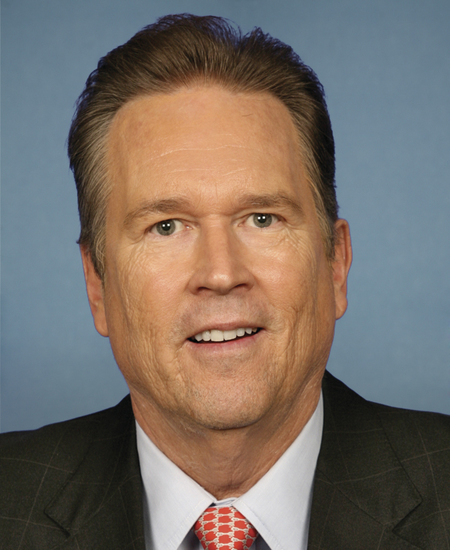
Rep. Vern Buchanan
Sponsored bills
Reporting Instances of Non-authorized Grift Act of 2023 or the RING Act of 2023 This bill requires creditors to establish a hotline for assisting consumers who are 50 years of age or older to resolve billing errors and mitigate fraud. Consumers who call the hotline must have the option to receive assistance from a live English- or Spanish-speaking individual and not from an automated system.
Maddy summaryHR 4695, the Unfair Tax Prevention Act, amends the tax code to create special rules for certain foreign-controlled companies operating under specific foreign tax regimes. It directly affects multinational entities controlled by foreign owners that face "extraterritorial taxes" (taxes based on income connections through ownership chains, not direct ownership). Key provisions include treating these entities as "applicable taxpayers" for base erosion rules, changing a key deadline to the bill's enactment date, and requiring 50% of their cost of goods sold to be counted as a tax benefit. This targets tax avoidance strategies used by some foreign-owned businesses in jurisdictions with complex cross-border tax structures. The changes apply to taxable years beginning after the bill's enactment.
Maddy summaryHR 4721, the Main Street Tax Certainty Act, makes a permanent the 20% tax deduction for eligible small business owners under Section 199A of the tax code. This provision directly affects pass-through business owners (like S-corps, partnerships, and sole proprietorships) who qualify for the deduction. The bill achieves this by removing the temporary expiration language (subsection (i)) from the existing tax code provision. The key change is ending the need for annual congressional extensions of this deduction, providing long-term tax certainty for small businesses.
Maddy summaryThis bill creates a 30-day grace period for flood insurance policyholders under the National Flood Insurance Program (NFIP) who choose to pay premiums monthly. During this period, policyholders won't lose coverage for nonpayment, but they must later pay back unpaid premiums plus an extra fee. The bill also prohibits charging extra fees for choosing monthly payments compared to annual payments, directly affecting NFIP policyholders who select the monthly payment option.
Maddy summaryThe DRIVE SAFE Act directs the Comptroller General to study whether military tactical vehicles should be equipped with black box data recorders that capture vehicle operation data. This study must be completed within 180 days of the bill's enactment, with results reported to congressional defense committees. The bill does not mandate any immediate changes but would provide Congress with a report to inform future decisions about data recorders in military vehicles. It directly affects the U.S. Armed Forces' tactical vehicle fleet and congressional oversight bodies.
Maddy summaryThis bill ensures veterans' monthly compensation payments automatically restart the day after they leave active military duty, without requiring them to reapply. It requires the VA to resume payments using existing records if the veteran was previously eligible, eliminating the need for a new claim. The VA and Defense departments must create a system to track when service ends to prevent payment delays. This directly affects veterans whose benefits were paused during active duty service.
Maddy summaryHR 4400, the Veteran Overmedication and Suicide Prevention Act of 2023, requires the Department of Veterans Affairs (VA) to commission the National Academies of Sciences, Engineering, and Medicine to review all veteran suicides and related deaths from 2018-2023. This review analyzes medication use (including drugs with serious safety warnings or off-label prescriptions), treatment approaches (comparing medication-only vs. non-medication therapies like therapy), staffing levels for mental health providers, and data-sharing practices. It specifically examines veterans who died by suicide, violent death, or accidental death during the five-year period, focusing on medication histories, treatment protocols, and facility-specific patterns. The VA must submit the findings to Congress and the public within 30 days of the review's completion.
Maddy summaryThe SAFE Act of 2023 extends a 2018 law that prohibits slaughtering animals for human consumption to include horses, donkeys, and other equine animals, such as ponies. It amends Section 12515 of the Agriculture Improvement Act of 2018 by updating the language to replace "dog or cat" with "dog, cat, or equine" in both the section title and the main prohibition. This change directly affects the livestock industry and slaughter facilities by banning the processing of equines for food. The bill modifies existing law without adding new enforcement mechanisms, closing a gap in animal protection.
Fair Accounting for Condominium Construction Act This bill exempts certain residential construction contracts from the requirement to use the percentage of completion method of accounting. The percentage of completion method is a tax accounting method in which the revenues and expenses of long-term contracts are recognized as a percentage of the work completed in a particular period.