

Maddy summaryThe SAVES Act establishes a 5-year pilot program where the VA awards competitive grants to accredited nonprofits (e.g., Assistance Dogs International or International Guide Dog Federation members) to provide service dogs to veterans with specific disabilities like mobility issues, PTSD, TBI, or visual/hearing impairments. It requires veterans with mental health conditions to undergo a VA mental health evaluation to confirm the dog is the optimal treatment, prohibits nonprofits from charging veterans fees, and mandates VA-provided veterinary insurance for the dogs. The program is funded with $10 million annually for five years and directly affects eligible veterans enrolled in VA care with qualifying disabilities and participating nonprofit service providers.
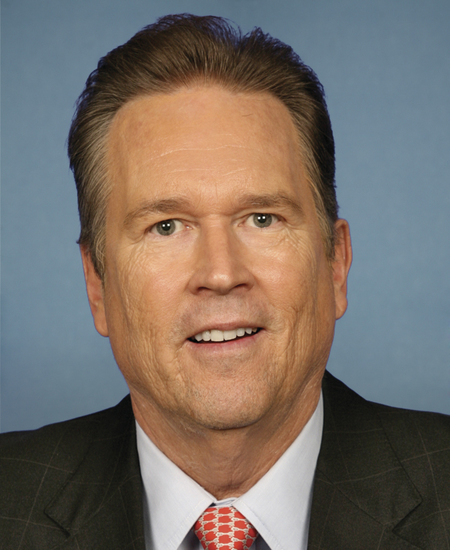
Rep. Vern Buchanan
Sponsored bills
Maddy summaryThis bill requires the USDA to identify and map "American wildlife corridors" on farmland enrolled in conservation programs (like the Agricultural Conservation Easement Program), using science-based criteria to support wildlife movement and habitat connectivity. It mandates technical assistance for producers maintaining these corridors and allows USDA to prioritize re-enrollment in conservation programs for such lands. The bill directly affects farmers and ranchers enrolled in USDA conservation programs who have designated corridors, while requiring annual reports to Congress on implementation progress and data gaps.
Maddy summaryThe Petfax Act of 2024 requires sellers of dogs and cats (excluding animal shelters and nonprofit rescue organizations) to provide buyers with specific information about the animal's source and health history before purchase. Sellers must disclose details about the breeder (including license information, past violations, and breeding volume), the animal's health examinations, vaccinations, and any known health conditions. The bill also prohibits sellers from misrepresenting whether a pet came from a high-volume breeder or from whom they acquired the animal. The Federal Trade Commission will develop regulations to implement these requirements within 180 days of the bill's enactment.
Maddy summaryThis bill amends the Older Americans Act to explicitly address loneliness among seniors by adding it to existing provisions about social isolation. It requires the federal government to prepare a report within five years, examining how current programs tackle loneliness's health impacts, geographic prevalence, and preventive services. The report must also analyze multigenerational family connections' role in reducing loneliness and recommend policy improvements. The bill directly affects older individuals served by programs under the Older Americans Act, focusing on health outcomes linked to social isolation. It does not create new funding but directs existing programs to coordinate services addressing loneliness.
Maddy summaryThe SAFER at the Border Act prohibits the U.S. Department of Homeland Security from temporarily admitting (paroling) certain individuals at the border. It defines "known terrorists" (those arrested, charged, or convicted for terrorism), "suspected terrorists" (reasonably suspected of terrorism), and "special interest aliens" (those with potential terrorism links based on travel patterns). The bill explicitly bans parole for these individuals, even for humanitarian reasons or public benefit, and also prohibits parole for refugees. Additionally, it allows states to sue the Department of Homeland Security if they suffer financial harm exceeding $100 from the parole of such individuals.
Maddy summaryHRES 1412 is a formal congressional resolution condemning the People’s Republic of China Coast Guard for specific actions against multiple nations. It cites recent incidents, including harassment of Malaysian oil projects, an attack on Philippine soldiers, standoffs near Japan’s Senkaku Islands, and the interception of a Taiwanese fishing vessel. The resolution demands China respect international maritime law, calls for global condemnation of its actions, and urges the U.S. to strengthen alliances with partners like Japan and the Philippines while holding Chinese officials accountable. As a symbolic resolution (not a binding law), it expresses U.S. policy stance but does not impose new legal requirements.
Maddy summaryHR 9274, the SHAWL Act, establishes two new Smithsonian museums: the National Museum of the American Latino and the American Women’s History Museum. It authorizes both museums to be located within the National Mall’s "Reserve" area, overriding prior restrictions, and requires federal agencies managing potential sites to transfer jurisdiction to the Smithsonian after notifying congressional committees. The bill mandates that both museums accurately represent diverse cultures, histories, and viewpoints within Latino and women’s communities through exhibits and programs, requiring input from a broad range of community experts. It also requires the Smithsonian to submit biennial reports to Congress detailing compliance with these representation requirements.
Freedom from Unfair Gun Taxes Act of 2024 This bill prohibits states or localities from imposing a levy or collecting an excise tax on the sale of a firearm, ammunition, or any part or component thereof, by a manufacture or retailer.
Maddy summaryHRES 1395 is a non-binding House resolution expressing concern that the U.S. is being outpaced by China and Russia in nuclear energy production and global market share. It cites statistics showing China has 56 operational reactors (vs. the U.S.'s 94, including retired ones) and is actively constructing more, while the U.S. has no reactors under construction. The resolution states it is "unacceptable" that the U.S. is no longer dominant in nuclear energy and urges expanding domestic nuclear capacity and supply chains. As a symbolic resolution, it does not create new laws or funding but highlights perceived strategic competition in nuclear technology.
Maddy summaryThe STAR Act of 2024 creates a new 25% tax credit for semiconductor companies in the United States, specifically for qualified semiconductor design expenditures. This credit applies to both in-house design costs (like employee wages for design work and supplies used in design) and contracted design work paid to external firms, all conducted within the U.S. The bill directly affects U.S.-based semiconductor manufacturers and design firms by reducing their tax liability for eligible design expenses. The credit is added to the existing advanced manufacturing investment credit, with specific exclusions for non-qualifying activities like cosmetic design or duplicating existing products.