

Maddy summaryHR 3389, the Alzheimer’s Law Enforcement Education Act of 2025, requires the Justice Department to create an online training course for law enforcement officers within one year of the bill’s enactment. The course will teach officers how to interact with people experiencing Alzheimer’s or dementia, including recognizing symptoms, communicating effectively, avoiding physical restraints, and identifying abuse. It mandates that states count completion of this course toward required training hours for law enforcement officers, correctional officers, and probation officers. The bill directly affects state and local law enforcement agencies by establishing standardized training on dementia care for their personnel.
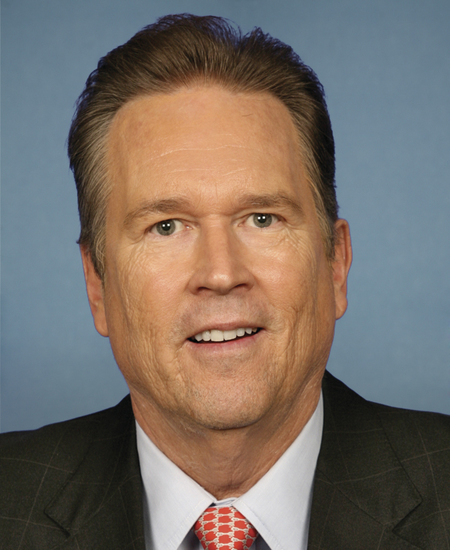
Rep. Vern Buchanan
Sponsored bills
Maddy summaryThis bill establishes a program to identify and protect "American wildlife corridors" - connected habitats that allow wildlife to move freely across landscapes. The Secretary of Agriculture, working with wildlife agencies, must identify these areas within one year, create maps, and submit reports to Congress. Landowners enrolled in USDA conservation programs can receive priority enrollment or contract modifications if they help maintain these corridors through practices like habitat restoration and wildlife monitoring. The law directly affects farmers and ranchers participating in USDA conservation programs by offering new incentives to support wildlife movement and habitat connectivity.
Maddy summaryHR 3295, the Federal Animal Research Accountability Act of 2025, requires research institutions receiving National Institutes of Health (NIH) funding to submit detailed annual reports on animal use. These reports must categorize animals by species and specify: (1) animals used with no pain/distress, (2) animals with pain/distress using pain relief, (3) animals with pain/distress where pain relief would interfere with research, and (4) animals bred but not yet used. The NIH must make these reports publicly accessible online within three months of submission through a searchable database. The bill applies to all NIH-funded research entities and takes effect two years after enactment.
Maddy summaryHR 3246, "Violet’s Law," amends the Animal Welfare Act to require federal research facilities to create plans for placing eligible animals (dogs, cats, nonhuman primates, guinea pigs, hamsters, or rabbits) no longer needed for research. It directs federal departments and agencies operating such facilities to develop standards within one year of enactment to facilitate adoption or placement with qualified organizations like animal rescue groups, sanctuaries, or shelters. Animals must be certified by a licensed veterinarian as free of infectious disease or physical issues endangering health before release. This applies directly to all U.S. federal agencies conducting animal research, mandating concrete steps to transition animals out of research settings into permanent care.
Maddy summaryThis bill clarifies liability for payroll tax errors when third-party payroll services (like professional employer organizations) rely on employer certifications. It allows these services to depend on employer-provided information unless they knew or should have known of an error. If an error is discovered, the employer bears full liability unless the third party had "constructive knowledge" of the error, in which case liability is shared based on the portion of the error the third party knew about. The bill also prevents the IRS from delaying payroll tax credits or auditing employers solely because a third party relied on an erroneous certification from that employer. It directly affects third-party payroll services and the businesses that use their services for tax filings.
Maddy summaryHR 3177 requires FEMA to use state-licensed professionals (like engineers or architects) for cost estimates and material purchases in disaster recovery projects under the Stafford Act. It directly affects FEMA, state/local governments (which must hire these licensed professionals), and the professionals themselves. Key provisions mandate that FEMA cannot reject plans or materials without the licensed professional's consent, must approve their suggested purchases, and cannot delay projects without evidence of fraud. The bill shifts responsibility to states to hire qualified local professionals for project planning, ensuring projects follow state licensing standards. This applies specifically to projects eligible for FEMA assistance under Stafford Act sections 406 and 428.
Maddy summaryHR 3178, the Save Healthcare Workers Act, creates a new federal crime for assaulting hospital staff while they are performing their duties, with penalties including fines and up to 10 years in prison (up to 20 years for aggravated cases involving weapons or injuries). The bill directly affects hospital employees - including nurses, doctors, and support staff - across all covered facilities (such as emergency rooms, long-term care centers, and children’s hospitals) by criminalizing violence that disrupts patient care. It also establishes a $25 million annual grant program (2025-2034) to help hospitals implement safety measures like staff de-escalation training, security technology, and coordination with local law enforcement. These provisions aim to address workplace violence in healthcare settings, which the bill cites as a growing problem affecting service delivery and staff retention.
Maddy summaryHR 3112, the Better CARE for Animals Act of 2025, strengthens enforcement of the federal Animal Welfare Act by requiring dealers and exhibitors to hold valid licenses for animal sales or transport (Section 4). It expands enforcement authority by allowing the Attorney General to sue violators for up to $10,000 per day, seize animals, and seek injunctions (Section 20), while clarifying that courts can address violations of related rules and regulations. The bill directly affects animal dealers, exhibitors, the USDA, and the Department of Justice, creating clearer pathways for holding violators accountable. Key provisions include updating definitions, broadening inspection powers to cover all regulations, and directing penalty funds toward temporary animal care costs during legal proceedings.
Maddy summaryThis bill designates the POW/MIA Memorial and Museum under construction in Jacksonville, Florida, as the official "National POW/MIA Memorial and Museum." It requires the museum to submit a detailed report to Congress within 90 days, including a five-year budget, organizational structure, bylaws, and accreditation details. The designation may be withdrawn if the museum is not operational within five years of the bill's enactment or if the required report is late. The museum honors prisoners of war and those missing in action since World War II through educational exhibits and reflective spaces for the public.
Canadian Snowbird Act This bill authorizes the Department of Homeland Security to admit into the United States qualifying Canadian citizens as long-term nonimmigrant visitors. A qualifying Canadian citizen is an individual who (1) is at least 50 years old, (2) maintains a Canadian residence, (3) owns a U.S. residence or has rented a U.S. accommodation for the duration of the individual's stay, (4) is not inadmissible or deportable, (5) will not engage in employment or labor for hire in the United States other than for a non-U.S.-based person or entity by whom the Canadian citizen was employed in Canada or for whom the Canadian citizen performed services in Canada, and (6) will not seek certain forms of assistance or benefits. A qualified individual may be admitted for up to 240 days during any single 365-day period. The spouse of such an individual may be admitted under the same terms, except that the spouse is not required to separately satisfy the requirement for owning or renting a residence in the United States. An individual admitted into the United States under this bill shall have nonresident alien tax status.