

Maddy summaryThis bill requires the Bureau of Prisons to develop and implement a strategy for scanning all incoming mail at federal prisons to stop fentanyl and other synthetic drugs from entering facilities. It directs the Bureau to evaluate existing scanning technology within 180 days and submit a detailed plan to Congress within 90 days, including how to provide digital copies of mail to inmates within 24 hours and physical copies within 30 days (if safe). The strategy must achieve 100% mail scanning capacity at all federal prisons, prioritize high-security facilities, and include a budget proposal for fiscal years 2024-2026. This directly affects federal prisons, inmates, and Bureau employees by changing mail processing procedures to enhance safety and reduce staffing burdens from manual mail checks.
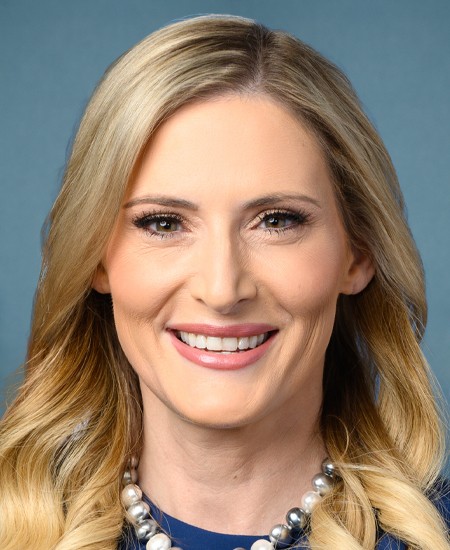
Rep. Laurel M. Lee
Sponsored bills
Maddy summaryHR 4949, the Don Young Veterans Advancing Conservation Act, establishes a Department of Commerce grant program to fund nonprofit organizations that train or employ veterans for underwater marine and coastal conservation work. The program, authorized for $1 million in fiscal year 2024 and increasing to $1.8 million by 2028, supports specific activities like coral restoration, invasive species removal, marine debris cleanup, and hurricane recovery. Nonprofits must be 501(c)(3) organizations and use funds to employ veterans in these conservation roles, with coordination required with the Department of the Interior. This directly affects veterans seeking meaningful employment and conservation-focused nonprofits receiving federal grants.
Maddy summaryHCONRES 59 is a non-binding congressional resolution urging all countries to ban the dog and cat meat trade and enforce existing anti-trade laws. It directly affects foreign governments, not U.S. citizens, as it calls on them to adopt legal prohibitions and strengthen enforcement. The resolution cites animal cruelty concerns (including reports of stolen pets and inhumane slaughter) and public health risks (such as rabies and trichinellosis transmission linked to the trade). It does not change U.S. law, as domestic prohibition already exists under the 2018 Agriculture Act. The resolution affirms U.S. support for global animal welfare but has no legal force.
Maddy summaryHR 5239, the Gulf of Mexico Commerce Protection Act, prohibits the National Oceanic and Atmospheric Administration (NOAA) from creating a vessel slowdown zone in the Gulf of Mexico until the Commerce Secretary completes and reports on a study. The study must prove that any proposed whale protection measures (specifically for Rice’s whales) would not harm supply chains or maritime commerce. The bill requires the Commerce Secretary to develop and report findings within 60 days to specific congressional committees, and explicitly bans nighttime transit bans or fixed slowdown zones in the required mitigation protocols. This bill directly affects NOAA’s regulatory authority and the Commerce Department’s study process, delaying potential environmental rules pending congressional review.
Maddy summaryHR 4162, the Land Grant Research Prioritization Act of 2023, adds four new research priorities to existing agricultural funding under the Food, Agriculture, Conservation, and Trade Act of 1990. The bill directs the Secretary of Agriculture to prioritize grants for land-grant universities (as defined in 7 U.S.C. 3103) to develop: mechanized harvesting technologies for specialty crops, artificial intelligence applications in agriculture, methods to manage invasive species, and sustainable aquaculture techniques. These provisions expand funding opportunities for research projects addressing specific agricultural challenges. The bill directly affects land-grant colleges and universities by creating new, targeted grant categories for their research programs.
Maddy summaryHR 5020 prohibits the U.S. Department of Health and Human Services (HHS) from funding or conducting animal testing research in China, Iran, North Korea, Russia, or other countries designated as "of concern" after consultation with the State and Defense Departments. It blocks federal grants, contracts, or support for such research conducted by foreign entities or facilities owned by these countries. HHS must submit detailed reports to Congress within 60 days when adding new countries to the list, explaining its reasoning.
Maddy summaryThe Healthy SNAP Act of 2023 changes what foods SNAP recipients can buy by updating the program's definition of eligible "food." It explicitly excludes soft drinks, candy, ice cream, and prepared desserts like cakes or cookies, while requiring the USDA Secretary to designate specific nutrient-rich foods that address dietary gaps and promote health. The bill mandates the Secretary to review and update these designated foods every five years based on nutrition science and public health needs, and allows states to substitute culturally appropriate, nutritionally equivalent foods with approval. This directly affects the 40 million SNAP participants nationwide by altering their purchasing options under the program.
Maddy summaryThis bill removes an age restriction for expunging certain criminal records. It amends federal law to eliminate the requirement that a nonviolent offender must have been under 21 years old at the time of a simple possession conviction involving controlled substances. As a result, individuals convicted of these offenses who are now 21 or older can now qualify for record expungement, regardless of their age at the time of the offense. The bill directly affects nonviolent offenders with past simple possession convictions who previously could not seek expungement due to their age when convicted. This change expands eligibility for record clearance under federal expungement provisions.
Maddy summaryHR 4942 extends and modifies the Conrad State 30 program, which allows states to sponsor foreign medical graduates to work in medically underserved areas in exchange for a commitment to practice for three years. The bill directly affects foreign medical graduates seeking to work in the U.S., states that sponsor them, and health facilities in underserved communities. Key provisions include creating mechanisms for physicians to change employers or states if they face issues with their current employment, adding requirements for employment agreements (including prohibitions on non-compete clauses), and establishing exceptions to the three-year work requirement under certain circumstances. The bill also creates a process for states to recapture waiver slots when physicians leave their employment and requires annual reporting on the program's usage. These changes aim to improve physician retention in underserved areas by providing more flexibility and protections for foreign medical graduates.
Maddy summaryHR 4470 extends the authorization of the Chemical Facility Anti-Terrorism Standards Program (CFATS) under the Department of Homeland Security until September 30, 2025, instead of the previous expiration date of July 27, 2023. This bill directly affects DHS, which administers the program, and chemical facilities subject to its security standards. The key mechanism is a simple date extension for the existing program, maintaining current security requirements for facilities handling hazardous chemicals without introducing new rules or funding changes.