

Maddy summaryThe CAPE Canaveral Act (HR 2422) would require the National Aeronautics and Space Administration (NASA) to relocate its headquarters to Brevard County, Florida, within one year of the bill becoming law. This bill directly affects NASA by mandating a physical move of its central administrative operations from its current location. The key provision sets a strict one-year deadline for the transfer, without altering NASA's missions or programs. The bill focuses solely on changing the headquarters location, not on policy or funding changes.
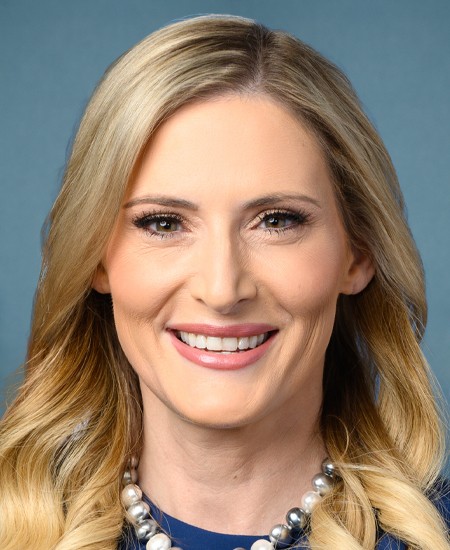
Rep. Laurel M. Lee
Sponsored bills
Maddy summaryThe Freedom from Unfair Gun Taxes Act of 2025 would prohibit states and local governments from imposing taxes on the sale of firearms, ammunition, or firearm parts during interstate or foreign commerce. This bill directly affects state tax policies and manufacturers or dealers selling these items across state lines. It explicitly states that the bill does not change the existing federal tax on firearms and ammunition that funds wildlife conservation programs. The key provision bans state-level taxes for these sales in interstate transactions while preserving current federal funding mechanisms.
Maddy summaryHR 2286, the American Genetic Privacy Act of 2025, prohibits commercial DNA testing services (like ancestry companies) from selling or disclosing genetic data collected from users to the People’s Republic of China or any entity controlled by China. It directly affects individuals who use these services, as their genetic information - defined as data obtained through such testing - cannot be shared with Chinese entities. The bill empowers the Federal Trade Commission (FTC) to enforce these restrictions as violations of unfair or deceptive trade practices under existing law. This creates a clear legal barrier to prevent U.S. genetic data from being accessed by Chinese entities through commercial DNA testing platforms.
Maddy summaryThe FOCA Act of 2025 prohibits federal agencies from requiring or banning contractors from using union agreements in construction project bids or contracts. It directly affects federal agencies, contractors, and subcontractors working on federally funded or assisted construction projects (like buildings or infrastructure). The law requires bid documents to not favor or penalize contractors based on whether they have union agreements, aiming to promote open competition and prevent discrimination. This changes how agencies structure bids but does not affect union agreements themselves. The bill applies to all new contracts and subcontracts after enactment, with limited exemptions only for public health/safety emergencies or national security.
Homes for Every Local Protector, Educator, and Responder Act of 2025 or the HELPER Act of 2025 This bill establishes a program administered by the Department of Housing and Urban Development to provide mortgage assistance to law enforcement officers, elementary and secondary school teachers, firefighters, or other first responders. Specifically, these individuals may be eligible for a first-time mortgage on a primary family residence with no down payment. Instead, the mortgage is subject to a one-time, up-front mortgage insurance premium.
Maddy summaryHR 2050, the Homeland Heroes Pay Act, ensures that U.S. Customs and Border Protection (CBP) agents and Immigration and Customs Enforcement (ICE) officers continue receiving pay during federal budget gaps. It directly affects CBP agents working at Southwest, Northern, and maritime border ports (preventing terrorism, drug trafficking, and illegal entry) and ICE officers handling immigration enforcement (detaining/removing individuals) and criminal investigations (drug trafficking, human smuggling). The bill automatically funds their salaries and expenses using existing Treasury money if discretionary appropriations lapse after the bill passes. This prevents pay interruptions for these frontline personnel during budget shutdowns while they perform critical border security and enforcement duties.
Maddy summaryHR 2081, the Donut Dollies Congressional Gold Medal Act, authorizes a Congressional Gold Medal to honor the 627 women who served as Red Cross volunteers in the Supplemental Recreation Activities Overseas (SRAO) program during the Vietnam War. The bill directs the Treasury Secretary to design and strike the medal, which will be presented by Congress and then given to the Smithsonian Institution for display. It also allows the sale of bronze duplicates to cover costs, with proceeds going to the U.S. Mint fund. This commemorative act recognizes the volunteers' service supporting over 280,000 troops through recreation programs across Vietnam from 1965 to 1973.
Maddy summaryThis bill protects three specific state programs that handle permits for dredged or fill material in waterways under the Clean Water Act. It prohibits the EPA from withdrawing approval of Michigan's, New Jersey's, and Florida's existing programs without new congressional authorization, preventing the EPA from revoking them through standard administrative processes. The bill also creates a 90-day transition period for Florida to continue issuing permits during a program review and allows other states to seek similar approval if their programs are deemed comparable. It does not change environmental standards but ensures these cooperative state-federal arrangements remain intact unless Congress acts.
Maddy summaryHR 2033, the Military Spouse Hiring Act, expands the Work Opportunity Tax Credit to include spouses of active-duty military personnel. It adds "qualified military spouse" as an eligible category for the tax credit, meaning employers who hire such spouses can claim the credit. A "qualified military spouse" is defined as someone certified by a local agency as married to an active-duty service member at the time of hire. The credit applies to hires occurring after the bill's enactment date. This directly affects military spouses seeking employment and employers hiring them, providing a tax incentive to encourage their hiring.
Maddy summaryThe JUDGES Act of 2025 authorizes the creation of new federal district court judgeships across multiple jurisdictions to address rising caseloads. It specifies adding 1-2 new judges to 11 federal districts in 2025, with additional judgeships phased in through 2035 across California, Texas, Florida, New York, and other states. The bill also establishes temporary judgeships for Oklahoma's eastern district with specific vacancy rules, authorizes funding for these positions through 2035, and requires GAO reports on judicial caseload methodologies and detention space needs. This legislation directly affects federal courts in 15 states by increasing judicial staffing to address a 30% rise in filings since 1990, as noted in the bill's findings.