

Maddy summaryThis bill prohibits the export or sale of petroleum products drawn from the U.S. Strategic Petroleum Reserve to specific countries and entities, including China, Russia, North Korea, Iran, and any nation under U.S. sanctions. It also bans exports to entities owned or controlled by these countries or the Chinese Communist Party. The Secretary of Energy must enforce this ban, though they may issue a national security waiver for specific exports. The bill requires the Secretary to issue implementing rules within 60 days of enactment. It directly affects the Secretary of Energy, oil exporters seeking to use the Strategic Petroleum Reserve, and the listed countries/entities.
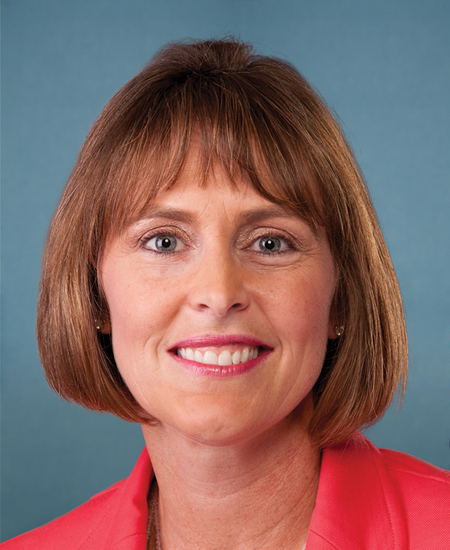
Rep. Kathy Castor
Sponsored bills
Maddy summaryHR 396, the Closing the Bump Stock Loophole Act of 2023, defines "bump stock" as any device or modification that increases the firing rate of a semi-automatic weapon to mimic a machine gun. The bill amends federal tax and firearms laws to classify bump stocks as prohibited devices under the National Firearms Act, requiring existing owners to register them within one year of enactment. It directly affects individuals who currently own bump stocks by mandating registration to avoid future possession prohibitions. The law takes effect immediately for new sales but provides a one-year grace period for existing owners to comply with registration requirements.
Maddy summaryHRES 35 is a procedural resolution that would amend House rules to require the House of Representatives to continue broadcasting the full chamber during legislative sessions, maintaining the same level of transparency as the broadcasts provided from January 3-6, 2023. This change would directly affect House broadcasting procedures, ensuring floor proceedings are covered as comprehensively as they were during the opening days of the 118th Congress. The resolution does not alter legislative content but mandates a specific standard for public access to chamber proceedings.
Maddy summaryHR 308, the Rosa Parks Day Act, would designate Rosa Parks Day as a legal public holiday for federal employees and government operations. The bill amends Title 5 of the U.S. Code to add "Rosa Parks Day" to the list of federal holidays, placing it after Thanksgiving Day. This change would require federal offices to close on this designated day, affecting federal employees and standard government operations. The bill does not create new programs or alter existing laws beyond the holiday designation.
Maddy summaryThis bill requires colleges to notify students receiving federal work-study aid about their potential eligibility for the Supplemental Nutrition Assistance Program (SNAP). It mandates that institutions send electronic notifications (via email or other digital means) to these students, explaining SNAP eligibility requirements, state-specific application processes, and including a document confirming their work-study status to satisfy SNAP eligibility rules. The bill directly affects undergraduate and graduate students participating in federal work-study programs who may qualify for food assistance but lack awareness of SNAP. The key mechanism is the standardized notification developed by the Education and Agriculture Departments, designed to streamline access to nutrition benefits for students facing food insecurity.
This resolution condemns all acts of political violence, as well as attacks on health care facilities, health care personnel, and patients. The resolution also states that all people have the freedom to access reproductive health care services and medical advice without fear of violence, intimidation, or harassment. Finally, the resolution calls on the Biden Administration to use all appropriate authorities to uphold public safety, protect health care facilities, and safeguard health care personnel and patients.
Emergency and Disaster Preparedness for Farm Animals Act This bill requires producers to develop disaster preparedness plans that include adverse weather plans to be eligible for livestock indemnity payments and emergency loans due to adverse weather under certain agricultural disaster assistance programs.
This joint resolution proposes a constitutional amendment authorizing Congress and the states to (1) regulate and impose reasonable viewpoint-neutral limitations on the raising and spending of money by candidates and others to influence elections; and (2) regulate and enact public campaign financing systems, including those designed to restrict the influence of private wealth by offsetting the raising and spending of money by candidates and others with increased public funding. The amendment grants Congress and the states the power to implement and enforce this amendment by legislation. They are allowed to distinguish between natural persons and corporations or other artificial entities created by law, including by prohibiting such entities from spending money to influence elections.
Maddy summaryHR 51, the Washington, D.C. Admission Act, would admit Washington, D.C. as the 51st state, named "Washington, Douglass Commonwealth," granting its residents full representation in Congress with two Senators and one Representative. The bill establishes procedures for admission, including elections for state officials, with the state initially having one Representative until the next congressional apportionment. It would create a "Capital" area (including the White House, Capitol, and other key federal buildings) that remains under federal jurisdiction as the seat of the U.S. government, while the rest of the District becomes the new state. The bill also includes provisions to ensure continuity of federal services, property management, and legal procedures during the transition to statehood.
Cover Outstanding Vulnerable Expansion-eligible Residents Now Act or the COVER Now Act This bill establishes a demonstration program to allow local governments to provide health benefits to the Medicaid expansion population in states that have not expanded Medicaid. Under the program, local governments may provide coverage for individuals who are newly eligible for Medicaid under the Patient Protection and Affordable Care Act (i.e., the Medicaid expansion population) for a maximum of 10 years, or until their respective states expand Medicaid. The bill provides a 100% federal matching rate for the first three years of program participation. The bill prohibits states from taking certain actions against participating localities, such as withholding funding, increasing taxes, or restricting provider participation. States that violate these requirements are subject to certain funding penalties.