

Maddy summaryThe Immigration Visa Efficiency and Security Act of 2023 caps family-based immigrant visas for any single country at 15% (2% for dependent areas) of total visas annually, addressing longstanding visa backlogs for certain nations. It establishes new requirements for H-1B employers, including posting job openings on a Department of Labor website, meeting specific wage requirements (minimum $90,000 or prevailing wage), and preventing discrimination against workers. The bill also creates enhanced procedures for investigating H-1B violations, increases penalties for noncompliance, prohibits certain visas for nationals of "foreign adversary countries," and establishes a new pathway for employment-based immigrants to adjust their status with specific job requirements during the process.
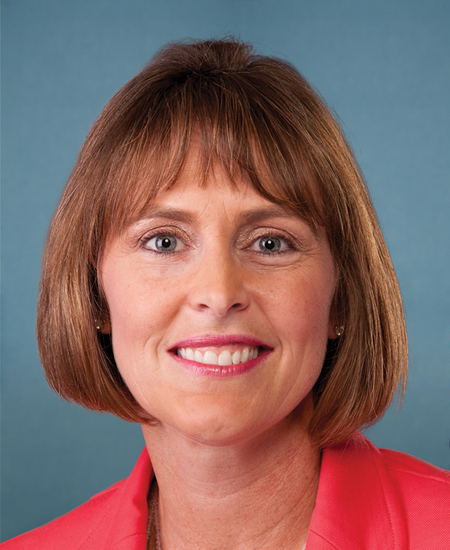
Rep. Kathy Castor
Sponsored bills
Maddy summaryThe REBATE Act (HR 6536) amends existing federal rebate programs to allow eligible local governments - such as cities or counties - to directly access funds for home energy efficiency upgrades, rather than requiring state energy offices to administer all rebates. It specifically expands the HOMES Rebate Program (for whole-house energy improvements) and the High-Efficiency Electric Home Rebate Program to include local governments in states where state offices have not established or plan to run these programs. Local governments must apply by December 31, 2024, and funds are distributed so that total allocations per state match amounts reserved for state energy offices. This change aims to increase access to rebates in communities currently underserved by state-level programs.
Maddy summaryHR 6318, the Public Housing for the 21st Century Act of 2023, requires the Department of Housing and Urban Development (HUD) to identify and share best practices for developing mixed-income public housing. It directs HUD to create training and technical assistance for state and local governments, public housing agencies, and housing finance agencies on using local tools - like tax incentives, public land, and cross-subsidizing market-rate units - to increase affordable housing for extremely low-, very low-, low-, and moderate-income households. The bill focuses on maximizing the use of existing Federal subsidies to target the most vulnerable residents while ensuring developments maintain affordability and avoid displacing neighboring communities. This law does not create new funding but aims to improve how current resources are applied to expand affordable housing supply.
Maddy summaryHRES 874 is a symbolic resolution expressing the House's support for designating November as "Prematurity Awareness Month." It does not create new laws or alter funding but urges the public, organizations, and communities to observe the month through events, promote awareness, and support preterm birth prevention programs. The resolution highlights statistics on preterm births (383,000 babies born preterm in 2021) and health disparities, but its sole action is endorsing the awareness designation. As a non-binding resolution, it has no direct impact on policy or affected individuals beyond raising public visibility.
Maddy summaryHRES 793 is a resolution passed by the U.S. House of Representatives calling on Hamas to immediately release all 199 hostages taken during Hamas' October 7, 2023 attack on Israel. The resolution condemns Hamas for the attack, the taking of hostages, and threats against hostages, while stating that holding hostages violates international humanitarian law under the Geneva Conventions. It demands the immediate release of all hostages and expresses sympathy for victims and their families. As a symbolic resolution, it does not create legal obligations but formally expresses the House's position.
Maddy summaryHR 6451, the Mental Health Justice Act of 2023, provides $250 million in federal grants to states, tribes, and localities to hire mental health professionals as first responders for specific emergencies. It directs these professionals to replace police in situations involving mental health crises, substance use, or intellectual/developmental disabilities - such as when a 911 caller describes a mental health emergency or a first responder identifies someone needing mental health support. The bill requires grantees to train responders in de-escalation techniques, link individuals to community-based services (not incarceration), and report on outcomes like reduced arrests or use of force. It also mandates data collection on demographics and prevents funneling people into institutional settings, with annual reports to Congress on program effectiveness.
Maddy summaryThis bill requires the Department of Energy to develop a national roadmap for bidirectional EV charging within 12 months, outlining strategies, costs, and obstacles for expanding this technology. It mandates that all new electric vehicles (including cars and school buses) manufactured starting in 2027 must support bidirectional charging - allowing EVs to both receive power from chargers and supply power back to the grid or other devices. Manufacturers failing to comply face civil penalties of up to $21,000 per vehicle, with penalties adjusted based on factors like violation scale and business size. Additionally, the bill directs FEMA to require state and local disaster recovery plans to incorporate bidirectional charging capabilities for emergency power resilience.
Maddy summaryHCONRES 75 is a non-binding resolution expressing Congress's support for issuing a new commemorative postage stamp honoring the Buffalo Soldiers. It directly affects the U.S. Postal Service by urging the Citizens’ Stamp Advisory Committee to recommend such a stamp to the Postmaster General. The resolution highlights the historical significance of the Buffalo Soldiers - African American soldiers who served in all-Black regiments from 1866 to 1948 - and references a previous 1994 stamp that was discontinued. It does not create a new law but formally requests the Postal Service consider this commemoration.
This concurrent resolution recognizes the difficult challenges Black veterans faced when returning home after serving in the Armed Forces, their heroic military sacrifices, and their patriotism in fighting for equal rights and for the dignity of a people and a nation. The concurrent resolution also recognizes the need for the Department of Veterans Affairs to continue to work to eliminate any health and benefit disparities for minority veterans.
Maddy summaryThe Helping Heroes Act of 2023 establishes a new Family Support Program within the Department of Veterans Affairs (VA) to connect eligible veterans and their families with supportive services. It requires each VA medical center to appoint at least one family coordinator (with social work qualifications) to assess family needs and link them to services like mental health support, education assistance, workforce training, and after-school programs. The program, funded by VA appropriations, will partner with non-VA entities through contracts or grants, and mandates annual reporting on service recipients, demographics, and outcomes. The bill also requires VA to conduct annual surveys of disabled veterans' families and integrate support information into military transition programs.