

Maddy summaryHRES 337 is a symbolic House resolution honoring linemen for their critical role in maintaining power infrastructure and responding to emergencies. It recognizes them as first responders who work in dangerous conditions 24/7 to keep electricity flowing, supporting schools and businesses during storms. The resolution formally supports designating April 18, 2025, as "National Lineman Appreciation Day" to publicly acknowledge their contributions. As a non-binding resolution, it has no direct policy impact or effect on affected individuals.
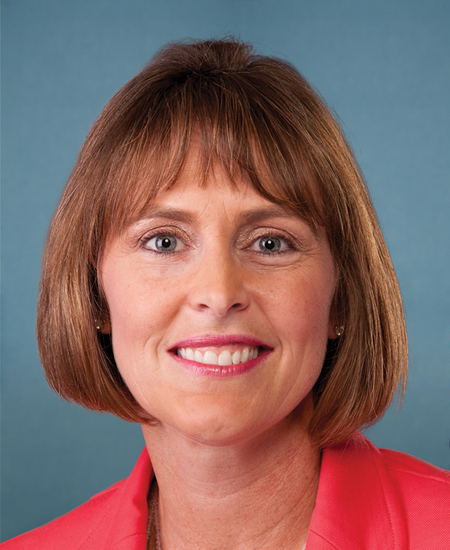
Rep. Kathy Castor
Sponsored bills
Maddy summaryThe Advancing Water Reuse Act creates a 30% tax credit for businesses investing in qualifying water recycling systems. It directly affects industrial, manufacturing, data center, and food processing facilities that replace freshwater use with recycled water from municipal sources, as well as projects building municipal water recycling infrastructure to serve these sectors. The credit covers 30% of the cost for eligible equipment, such as new onsite recycling systems or municipal infrastructure upgrades. This policy is available for projects completed by December 31, 2032, with specific rules allowing businesses to claim the credit even if equipment is later transferred to water utilities.
Maddy summaryThis bill, HR 2936 (the ABC-ED Act), aims to reduce emergency department crowding by requiring real-time tracking of hospital bed capacity and related metrics like patient wait times. It allows federal grants to modernize public health data systems that monitor emergency department boarding rates, bed availability, and ambulance offload times, with results displayed on a public dashboard (while protecting privacy). The bill also adds two new Medicare Innovation Center pilot programs: one focused on improving care for older adults (through staffing, infrastructure, and senior care coordination) and another for psychiatric crisis care (including dedicated units and faster facility transfers). Finally, it mandates a one-year study by the Government Accountability Office to evaluate best practices for these data systems and their impact on emergency department efficiency.
Maddy summaryThis bill increases the federal tax credit for rehabilitating historic buildings. It raises the standard credit rate from 20% to 30% for qualifying small projects (with a $3.75 million expenditure cap) and further increases the cap to $5 million for projects in rural areas. The bill also allows taxpayers to transfer all or part of this credit to another taxpayer, creating a new market for the credit. These changes apply to properties placed in service after the bill's enactment date. The bill directly affects developers and owners of historic properties seeking tax incentives for rehabilitation projects.
Maddy summaryHR 2948, the Safer Neighborhoods Gun Buyback Act of 2025, authorizes $360 million annually from 2025-2027 to fund gun buyback programs across the country. The bill creates a grant program for states, local governments, tribal governments, and eligible gun dealers to collect firearms from individuals using "smart prepaid cards" that cannot be used to purchase guns. Participants would pay 125% of a gun's market value (with possible increases for modified weapons) and must destroy all collected firearms and ammunition within 30 days. The program requires criminal background checks on all collected weapons and prohibits reselling any guns obtained through the initiative, with a new federal criminal provision making it illegal to use these cards for firearm transactions.
Maddy summaryThe DRIVE Act of 2025 requires the Department of Veterans Affairs (VA) to set mileage reimbursement rates for veterans at the federal government's current standard rate for employees using personal vehicles on official business, replacing the previous fixed rate of 41.5 cents per mile. It also mandates that the VA process and pay these reimbursements within 90 days of a veteran's valid request. This directly affects veterans who travel for VA medical appointments or services using their personal vehicles. The bill aligns veteran travel reimbursements with federal employee standards and ensures timely payments.
Maddy summaryThis bill requires social media platforms and online marketplaces to create clear, machine-readable terms of service in plain language that explain content moderation policies, user rights, and reporting procedures. It mandates specific consumer protection policies covering content removal, user appeals, notifications, and seller protections, along with annual reports to the Federal Trade Commission detailing these practices. The FTC will develop standardized short-form disclosures (like icons) to help consumers understand platform policies. Companies must establish consumer protection programs with dedicated officers, conduct risk assessments, and implement safeguards for consumer protection. The bill also establishes enforcement mechanisms through the FTC and allows individuals to sue for violations while prohibiting pre-dispute arbitration agreements for such claims.
Maddy summaryHR 2862 prohibits the federal government from leasing offshore areas in Southern California for oil and gas exploration or production. It directly affects oil and gas companies seeking permits in the Southern California Planning Area, as defined in the federal 2024-2029 Outer Continental Shelf leasing program. The bill amends the Outer Continental Shelf Lands Act to block all future leases in this region, preventing new drilling projects in the specified offshore waters. This is a concrete policy change that halts federal leasing decisions in the area without altering existing leases or operations.
Maddy summaryHR 2824, the Employee Limits ON Profiteering Act, prohibits the federal government from awarding contracts, grants, or other federal awards to "special government employees" or their covered family members/organizations. It directly affects federal employees serving in specific roles (like advisory committees) and their spouses, children, partners, or organizations they lead or work for. The bill requires updating the Federal Acquisition Regulation within 60 days to implement this prohibition, with an exception allowing advisory committee service. This is a procedural change to federal contracting rules, not a new policy affecting the general public.
Maddy summaryHR 2831, the Small Business Energy Loan Enhancement Act, doubles the maximum loan amounts for certain small business energy projects under the Small Business Investment Act of 1958, raising the cap from $5.5 million to $10 million for two specific loan categories. This directly affects small businesses seeking financing for energy-related investments, such as efficiency upgrades or renewable energy installations. The bill requires the Small Business Administration (SBA) to annually report to Congress on which industries and geographic areas receive these loans. These changes aim to increase access to capital for qualifying energy projects without altering eligibility criteria.