

Family and Medical Insurance Leave Act or the FAMILY Act This bill entitles every employee to a family and medical leave insurance (FMLI) monthly benefit payment of two-thirds of the employee's regular pay, limited to a maximum of $4,000, for not more than 60 days of qualified caregiving. The bill establishes the Office of Paid Family and Medical Leave within the Social Security Administration to administer the FMLI program. An FMLI benefit payment must be coordinated with any periodic benefits received under a state or local temporary disability insurance or family leave program. The bill imposes a tax on employers, employees, and self-employed individuals to fund FMLI benefits. It also establishes the Federal Family and Medical Leave Insurance Trust Fund to hold tax revenues.
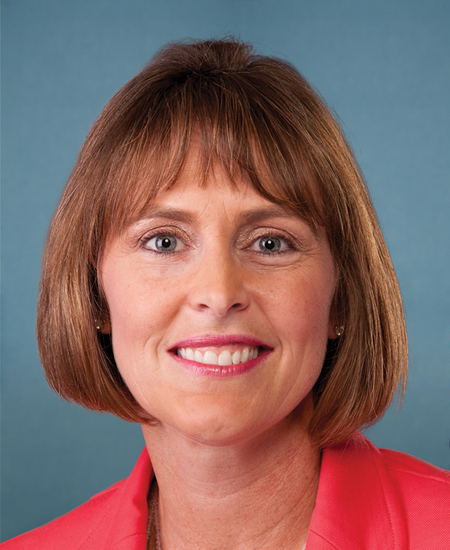
Rep. Kathy Castor
Sponsored bills
Scientific Integrity Act This bill revises provisions regarding the release of scientific research results by federal agencies. Each agency that funds, conducts, or oversees scientific research must (1) adopt and enforce a scientific integrity policy that includes requirements such as that scientific conclusions are not based on political considerations, and (2) submit such policy to the Office of Science and Technology Policy (OSTP) for approval. Each agency must make such policy available to the public and submit such policy to Congress. Agencies and the OSTP must periodically review the policies. The Government Accountability Office shall review implementation of the policies. Each agency shall (1) appoint a Scientific Integrity Officer, (2) establish a process for dispute resolution consistent with the scientific integrity policy, and (3) establish a specified training program for current and new employees.
Sustainable Aviation Fuel Act This bill establishes targets and standards for reducing greenhouse gas emissions from airplane flights and provides incentives for the production and use of sustainable aviation fuel. Specifically, this bill establishes a national goal to achieve a net 35% reduction in greenhouse gas emissions from flights by 2035 and net zero emissions by 2050. The Environmental Protection Agency (EPA) must establish a low carbon fuel standard for aviation fuels. Under the standard, the EPA must set annual targets in order to reduce certain greenhouse gas emissions associated with aviation fuel by at least (1) 20% by 2030, and (2) 50% by 2050. Beginning in FY2023, the Department of Defense must make a bulk purchase of an amount of sustainable aviation fuel that is not less than 10% of the total amount of aviation fuel procured for operational purposes. Additionally, the Department of Transportation must implement a program that offers grants and cost-sharing agreements for projects to produce, transport, blend, or store sustainable aviation fuel. The projects must be located in the United States. Finally, the bill provides tax credits for the production of sustainable aviation fuel.
FEMA Climate Change Preparedness Act This bill requires the Federal Emergency Management Agency (FEMA) to (1) revise its 2018-2022 Strategic Plan to ensure that the plan explicitly mentions climate change and addresses the implications of climate change on homeland security and near- and long-term national disaster risk, and (2) ensure that future strategic plans do likewise. The Department of Homeland Security must establish, as a subcommittee of the National Advisory Council, the Climate Change Subcommittee, which shall advise FEMA on how to best incorporate climate change, including risk assessments and strategies for adaptation and mitigation, into and throughout FEMA's policies, plans, programs, and operations. FEMA must publish as a report, submit to specified congressional committees, and make available to Congress and the public, a comprehensive assessment of climate change risks and preparedness.
Community Immunity During COVID-19 Act of 2021 This bill requires the Centers for Disease Control and Prevention (CDC) to award grants to health departments to increase rates of recommended immunizations during the COVID-19 (i.e., coronavirus disease 2019) public health emergency. The CDC must also develop, in consultation with specified entities, guidance for health care providers on counseling patients about COVID-19 vaccines.
Safe And Friendly for the Environment Streets Act or the SAFE Streets Act This bill revises the Highway Safety Improvement Program to create special rules for vulnerable road users. The bill defines vulnerable road user as a nonmotorist such as a pedestrian, pedalcylcist, bicyclist, other cyclist, or person on personal conveyance. Specifically, the bill requires states and metropolitan planning organizations (MPOs) with above the median rate of vulnerable road user fatalities and serious injuries to dedicate at least 75% of funds under the program for projects to improve safety for such users, and states and MPOs to create vulnerable road user safety assessments that include locations and corridors where serious injuries and fatalities occur and strategies to reduce safety risks for such users in the corridors.
No Congressional Gun Loophole Act This bill prohibits the Capitol Police Board from allowing Members of Congress or their staff to carry firearms on the grounds of the U.S. Capitol or in its buildings. Members and their staff may store firearms in their cars in Capitol complex garages if their possession complies with the firearms laws of the District of Columbia and the firearms are locked with gun locks while on the complex. Current board regulations allow Members of Congress to keep firearms in their offices; the regulations also allow Members and their staff to transport unloaded and securely wrapped firearms within the Capitol grounds. Firearms are prohibited inside the chambers of the Senate and the House of Representatives, as well as in adjacent lobbies and cloakrooms, the galleries, the Marble Room of the Senate, and the Rayburn Room of the House, unless approved by the Sergeants at Arms for security purposes.
Child and Animal Abuse Detection and Reporting Act This bill requires the Children’s Bureau of the Administration for Children and Families to disseminate information through the National Clearinghouse on Child Abuse and Neglect Information about the incidence of cases of child abuse that involve abuse to animals.
USPS Fairness Act This bill repeals the requirement that the U.S. Postal Service annually prepay future retirement health benefits.
Anti-Racism in Public Health Act of 2021 This bill establishes within the Centers for Disease Control and Prevention (CDC) a National Center on Antiracism and Health and a law enforcement violence prevention program. Among other activities, the new center must declare racism a public health crisis, collect and analyze data, and administer research and grant programs to address racism and its impact on health and well-being. Additionally, the bill specifically directs the CDC's National Center for Injury Prevention and Control, in coordination with the Department of Justice and other relevant stakeholders, to carry out the law enforcement violence prevention program by conducting research and supporting other activities pertaining to law enforcement violence and public health.