

Better Care Better Jobs Act This bill establishes programs and provides funds for state Medicaid programs to improve home- and community-based services (HCBS), such as home health care, personal care, case management, and rehabilitative services. Specifically, the bill provides funds for the Centers for Medicare & Medicaid Services to award planning grants, develop quality measures, and provide technical assistance to states regarding specified HCBS improvements, particularly with respect to access, utilization, and the associated workforce. The bill also increases the Federal Medical Assistance Percentage (i.e., federal matching rate) for HCBS in states that develop plans and meet specified benchmarks for improvements. The bill also makes permanent (1) the Money Follows the Person Rebalancing Demonstration Program (a grant program to help states increase the use of HCBS for long-term care and decrease the use of institutional care), and (2) certain provisions regarding Medicaid eligibility that protect against spousal impoverishment for recipients of HCBS.
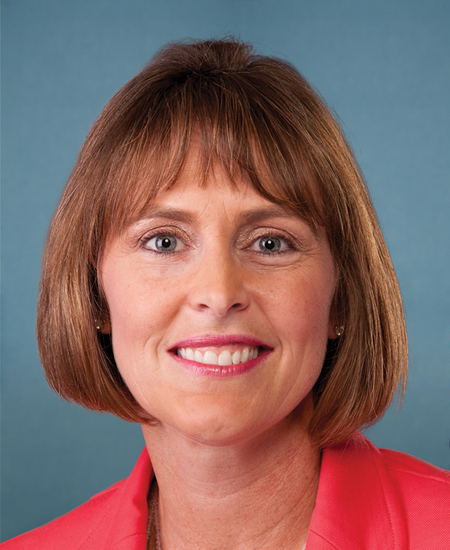
Rep. Kathy Castor
Sponsored bills
Allergy Testing Access Act of 2021 This bill requires equal coverage of two types of allergy tests under Medicaid and Medicare. Specifically, in vitro specific IgE tests (blood tests) and percutaneous tests (skin tests) must be treated equally with respect to (1) medical necessity or other coverage requirements, (2) frequency limits, and (3) allergen unit limits.
Advancing FASD Research, Services, and Prevention Act or the FASD Respect Act This bill expands and establishes programs for fetal alcohol spectrum disorders (FASD). Specifically, it directs the Department of Health and Human Services, the National Institutes of Health, the National Center on Birth Defects and Developmental Disabilities, and the Health Resources and Services Administration to carry out and coordinate research, surveillance, and related activities to diagnose, prevent, and treat FASD. Furthermore, the bill establishes various grant programs to support FASD coalitions and develop systems of care; provide services for individuals affected by FASD and other conditions related to prenatal substance exposure; identify and implement best practices for educating children with FASD; and establish centers for excellence to build relevant capacity for preventing, treating, and responding to the needs of individuals with FASD. The bill also directs the Department of Education and the Department of Justice to develop and disseminate trainings and best practices related to FASD in schools and correctional facilities, respectively.
Reducing Hereditary Cancer Act of 2021 This bill provides for Medicare coverage of germline mutation testing for individuals with a personal or family history of a hereditary cancer gene mutation or suspected history of hereditary cancer, as well as for associated coverage of risk-reducing surgeries and screenings.
Pandemic Effects on Home Safety and Tourism Act This bill requires studies and reports about the effects of COVID-19 (i.e., coronavirus disease 2019) with respect to tourism and consumer product safety. Specifically, the Consumer Product Safety Commission must report, and make available to the public, information about injuries and deaths from consumer products during the COVID-19 public health emergency. The report must be submitted every three months for the duration of the emergency. Additionally, the Department of Commerce, in consultation with appropriate stakeholders, must study and report about the effects of the pandemic on the travel and tourism industry. Commerce must consider metrics including changes in employment rate, sales, and business revenue, and it must provide the opportunity for public comment. An interim study and report must be submitted not later than three months after the enactment of this bill.
Stop Tip-overs of Unstable, Risky Dressers on Youth Act or the STURDY Act This bill requires the Consumer Product Safety Commission to revise the safety standards for freestanding clothing storage units such as a dressers, bureaus, or chests of drawers. Such standards must include specified testing related to tip overs and new warning requirements for all such products entering the U.S. market.
Newborn Screening Saves Lives Reauthorization Act of 2021 This bill reauthorizes through FY2026 and revises several programs and activities relating to newborn screening for certain conditions and genetic, endocrine, and metabolic diseases. Among its changes, the bill reauthorizes and makes mandatory the Hunter Kelly Research Program at the National Institutes of Health, and national surveillance activities conducted by the Centers for Disease Control and Prevention. The bill also aligns statutory requirements for research on non-identified newborn blood spots with federal regulations governing research on human subjects. These blood spots are collected as part of newborn screening programs, and some states make them available for biomedical and public health research. Under current regulations, research on non-identified bio-specimens such as blood spots is not considered to be research on human subjects, to which additional protections apply.
Vanessa Guillén Military Justice Improvement and Increasing Prevention Act This bill modifies the process and policy related to the disposition of charges and convening of courts-martial for certain sexual assault cases and other specified offenses under the Uniform Code of Military Justice (UCMJ). Among other elements, the bill provides that the determinations on the preferral, disposition, and referral of charges for specified offenses under the UCMJ must be made by a commissioned officer of the Armed Forces who is designated as a court-martial convening authority (in grade O-6 or higher) and who is available for detail as trial counsel, has significant trial experience, and is outside the chain of command of the member subject to the charges.
Efficient Grid Interconnection Act of 2021 This bill establishes requirements concerning (1) the equitable allocation of costs for electric grid upgrades; and (2) the deployment of grid enhancing technology or equipment that increases the capacity, efficiency, or reliability of a transmission facility or transmission system. Specifically, it directs the Federal Energy Regulatory Commission (FERC) to issue regulations that require public electric utilities to allocate the cost of upgrades to the electric grid, such as upgrades to interconnect renewable generation projects, among all customers that benefit from the upgrades. In determining which parties benefit, FERC must consider all material benefits of the network upgrade, including environmental benefits and those that cannot be directly quantified. In addition, FERC must issue regulations that apply to regional transmission organizations, independent system operators, or transmission planning coordinators when they are processing requests to interconnect generation projects or energy storage projects to the electric grid. The regulations must require such organizations, operators, and coordinators to study deploying technology or equipment that increases the capacity, efficiency, or reliability of a transmission facility or transmission system.
Puppy Protection Act of 2021 This bill requires the Department of Agriculture to expand standards that govern the humane handling, care, treatment, and transportation of animals to include new requirements for commercial dog dealers. Specifically, the standards must require dog dealers to provide to dogs adequate housing, exercise, and veterinary care; appropriate and nutritious food; continuous access to potable water; and meaningful socialization with humans and compatible dogs for at least 30 minutes each day. The standards must also include requirements for breeders to use safe breeding practices and make all reasonable efforts to find humane placement for retired breeding dogs.