This resolution extends collective bargaining rights prescribed in the Congressional Accountability Act of 1995 to employees of the House of Representatives.
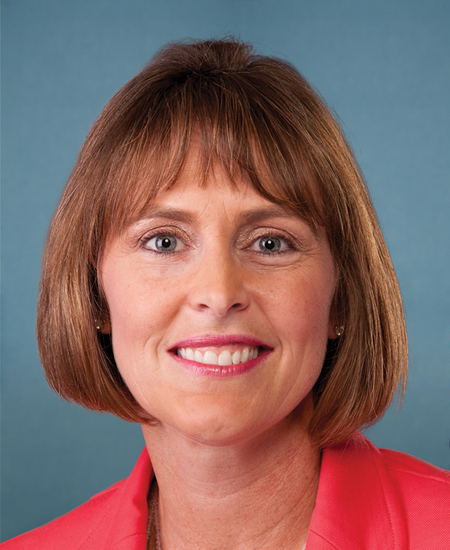
Rep. Kathy Castor
Sponsored bills
Stop the Wait Act of 2022 This bill allows individuals with disabilities to begin receiving Social Security Disability Insurance (SSDI) benefits in the month they become eligible for the benefits. It also allows these individuals to immediately enroll in Medicare if they cannot afford minimum essential coverage. (Under current law, an individual must generally wait 5 months after the onset of disability to begin receiving SSDI benefits and an additional 24 months to become eligible for Medicare.)
Wireless Electric Vehicle Charging Grant Program Act of 2022 This bill requires the Department of Transportation to establish the Wireless Electric Vehicle Charging Grant Program to award grants on a competitive basis for projects to construct, install, or improve existing wireless charging infrastructure and technology for electric vehicles.
Access to AEDs Act This bill requires the Department of Health and Human Services to award grants to local educational agencies and private elementary and secondary schools, in partnership with a health care entity, to promote student access to defibrillation in elementary and secondary schools.
Heating and Cooling Relief Act This bill provides additional energy assistance to households, including heating and cooling assistance. Specifically, the bill reauthorizes through FY2031 and revises the Low Income Home Energy Assistance Program. Under the existing program, the Department of Health and Human Services (HHS) may award grants to states for assisting low-income households that pay a high proportion of their income for home energy. To be eligible under the existing program, households must have incomes which do not exceed the greater of an amount equal to 150% of the poverty level for their state or an amount equal to 60% of the state median income. The bill expands eligibility to households with incomes which do not exceed the greater of an amount equal to 250% of the poverty line as defined in the Community Services Block Grant Act or an amount equal to 80% of the state median income. In addition, the bill expands eligibility to households with a monthly energy burden of 3% or more per year. It also requires states to establish procedures to protect households receiving assistance under the program from energy shutoffs and certain late fees. In addition, the bill requires HHS and the Department of Energy to jointly carry out a program that awards grants to states and local governments for developing and implementing interagency plans to reduce energy burdens for eligible households with high home energy use. The plans must promote the reduction of energy from fossil fuels.
This resolution expresses support for the goals and ideals of PCOS Awareness Month. Polycystic ovary syndrome (PCOS) is caused by a hormone imbalance. Symptoms can include infertility, weight gain, excess hair growth, and acne.
Leading Infrastructure For Tomorrow’s America Act or the LIFT America Act This bill establishes several programs and incentives to modernize the nation's communications, drinking water, energy, transportation, health care, and other related infrastructure. For example, the bill provides incentives to make broadband internet more accessible and affordable. It also establishes grants to implement next generation 9-1-1 services. In addition, it supports drinking water programs, including the drinking water state revolving fund program. Further, it provides grants to treat perfluoroalkyl or polyfluoroalkyl substances (commonly referred to as PFAS) in drinking water and to replace lead service lines. The bill establishes a variety of programs to support clean energy infrastructure and address climate change, including efforts to (1) modernize the electric grid and make it more resilient, efficient, and secure; (2) increase energy efficiency in buildings; and (3) support renewable energy infrastructure. Further, it provides incentives for vehicle infrastructure, such as incentives to develop infrastructure for electric vehicles and grants to reduce air pollution at ports by electrifying port infrastructure. Additionally, the bill establishes grants and programs for health care infrastructure, including by providing support for the Centers for Disease Control and Prevention, laboratories, and state, local, tribal, and territorial health departments. Finally, the bill reauthorizes grant programs to remediate brownfield sites (i.e., sites contaminated with hazardous substances) through FY2026.
Climate Risk and Emergency Support In Livable Inclusive and Equitable Neighborhoods and Communities Everywhere Act or the Climate RESILIENCE Act This bill makes changes to the Robert T. Stafford Disaster Relief and Emergency Assistance Act to take into account climate change. The bill includes extreme temperature events, such as heat waves or freezes, within the scope of the act and defines resilience for purposes of disaster assistance and mitigation efforts. Federal and state preparedness and mitigation assistance may be used for reducing the impacts of extreme temperatures and improving air quality and mitigating against wildfire smoke.. The bill authorizes implementing predisaster hazard mitigation measures that will be cost-effective and equitable long-term and provide enhanced protection to the community. The Federal Emergency Management Agency (FEMA) must (1) provide technical assistance to underserved and disadvantaged communities for such measures; and (2) provide guidance to implement the latest published editions of relevant consensus-based codes, specifications, and standards that incorporate the latest hazard-resistant designs. The bill includes within the hazard mitigation program requirements the abatement of lead, mold, mildew, radon, asthma, and allergen triggers, or other pollutants and hazardous materials directly caused by a major disaster or emergency. FEMA must report to Congress regarding challenges posed by FEMA requirements for determining the cost-effectiveness of mitigation activities and how such requirements may disproportionately burden underserved or disadvantaged communities.
Cures 2.0 Act This bill addresses pandemic preparedness and public health issues, caregiver and patient engagement, drug development, insurance coverage, and biomedical research. The Department of Health and Human Services (HHS) must undertake research and other activities concerning COVID-19 and develop a strategy for future pandemics and declared emergencies. Additionally, the bill specifies actions to combat antimicrobial resistance. HHS may award grants for caregiver training. The bill also addresses diversity in clinical trials, collecting patient experience data during clinical trials, and coverage for care related to participation in specified clinical trials. The bill modifies the timeframe and requires additional guidance relating to expedited approval of certain breakthrough drugs, devices, or products. It also establishes two intercenter institutes within the Food and Drug Administration (FDA) focused on particular diseases that meet specified criteria. The bill also addresses (1) coverage in Medicare, Medicaid, and the Children's Health Insurance Program for telehealth, genetic and genomic testing, and other services; (2) electronic prescribing standards for Medicare drug benefits; and (3) access to Medicare and Medicaid claims data by certain registries. Furthermore, the bill prohibits the use of geographic tracking or biometrics in Medicaid electronic visit verification systems. The bill establishes the Advanced Research Projects Agency for Health (ARPA-H) within the National Institutes of Health to accelerate biomedical research and innovation through grants, contracts, cash prizes, and other means. The FDA may work with ARPA-H to expedite the development of medical products through specified activities.

This bill authorizes the National Medal of Honor Museum Foundation to establish a commemorative work on federal land in the District of Columbia in honor of the extraordinary acts of valor, selfless service, and sacrifice displayed by Medal of Honor recipients. The foundation shall be solely responsible for the acceptance of contributions for, and the payment of expenses of, the establishment of the commemorative work. Federal funds may not be used to pay any expenses for the establishment of the commemorative work. The establishment of the commemorative work shall be in accordance with the Commemorative Works Act.