

Travel and Tourism Act This bill implements measures to support the U.S. travel and tourism industry. Specifically, the bill requires the Department of Commerce to develop a 10-year travel and tourism strategy with annual goals for the number of international visitors to the United States and for travel and tourism commerce. Further, Commerce must develop and implement a COVID-19 pandemic recovery strategy to assist the recovery of the U.S. travel and tourism industry. The bill also provides statutory authority for the United States Travel and Tourism Advisory Board, which shall advise Commerce on matters relating to the travel and tourism industry.
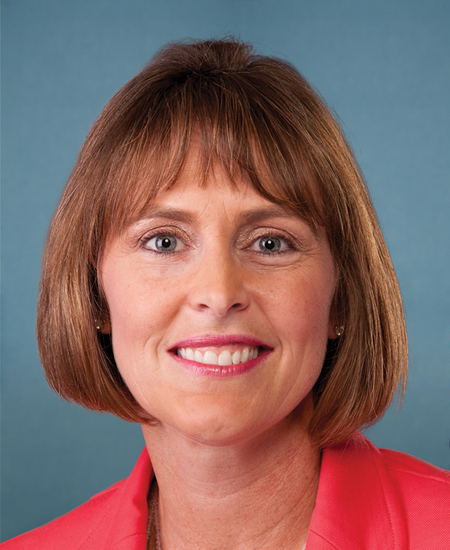
Rep. Kathy Castor
Sponsored bills
Health Care Providers Safety Act of 2022 This bill authorizes the Department of Health and Human Services to award grants to health care providers for security services and other expenses related to physical security and cybersecurity.
Rights for the Transportation Security Administration Workforce Act of 2022 or the Rights for the TSA Workforce Act of 2022 This bill modifies the workplace rights, protections, and benefits applicable to Transportation Security Administration (TSA) personnel. Specifically, the bill by December 31, 2022, eliminates personnel authorities of the Department of Homeland Security (DHS) and the Department of Transportation governing the conditions of employment for TSA employees, thus making TSA employees subject to the personnel management system applicable to other federal employees; sets forth transition rules that protect the pay rates, leave rights, and other rights of TSA employees; and requires DHS to consult with the exclusive representative of TSA screening employees to carry out the conversion of those positions. The bill also permits the TSA to consult with organizations representing federal air marshals to address concerns, including mental health and suicide rates; directs the TSA to ensure its employees are provided proper guidance regarding prevention and protections against COVID-19; requires the TSA to provide a one-time bonus payment of $3,000 to each TSA employee carrying out duties that require substantial contact with the public during the COVID-19 national emergency; and requires the Government Accountability Office to report on implementation of the bill, TSA recruitment efforts, and specified TSA personnel policies.
Building America's Health Care Workforce Act This bill extends certain flexibilities relating to training and competency requirements for nurse aides in Medicare skilled nursing facilities (SNFs) and Medicaid nursing facilities (NFs). Generally, SNFs and NFs may not hire nurse aides for longer than four months unless they meet certain training and certification requirements. The Centers for Medicare & Medicaid Services waived some of these requirements during the COVID-19 emergency period so as to allow facilities to maintain adequate staffing levels; the waiver ends in June 2022. The bill extends these flexibilities for at least two years after the bill's enactment and specifies that (1) any time worked by a nurse aide during the emergency period counts toward the 75 hours required for initial training, and (2) a competency evaluation may be conducted at the SNF or NF where the nurse aide is employed if the state does not offer such an evaluation at least once a week.
Supreme Court Ethics, Recusal, and Transparency Act of 2022 This bill provides for the establishment of a code of conduct for Supreme Court Justices, judges of the courts of appeals, judges of the district courts, and judges of the Court of International Trade.
Benjamin Berell Ferencz Congressional Gold Medal Act This bill provides for the award of a Congressional Gold Medal to Benjamin Berell Ferencz in recognition of his service to the United States and the international community during the post-World War II Nuremberg trials and his lifelong advocacy for international criminal justice and the rule of law.
Roadless Area Conservation Act of 2021 This bill bars the Department of Agriculture from allowing the construction of roads, the reconstruction of roads, or logging in an inventoried roadless area where those activities are prohibited by the Roadless Rule (i.e., certain federal regulations relating to roadless area management).
This resolution extends collective bargaining rights prescribed in the Congressional Accountability Act of 1995 to employees of the House of Representatives.
Commercial Advertisement Loudness Mitigation Modernization Act of 2022 or the CALM Modernization Act of 2022 This bill applies certain requirements concerning the volume of commercials to video streaming services that are supported by advertisements (e.g., Hulu). It also modifies enforcement related to those requirements. Current law requires commercials transmitted via broadcast, cable, and satellite television to have the same average volume as the underlying programming. Under this bill, the Federal Communications Commission must apply through rulemaking similar requirements to ad-supported video streaming services. The bill also modifies enforcement of requirements for moderating the volume of commercials. The commission currently uses a complaint-driven enforcement process. Under this bill, the commission must treat violations of the requirements as violations of the Communications Act of 1934. Additionally, the bill makes rebuttable a presumption that deems a broadcast television station, cable operator, or other multichannel video programming distributor in compliance with the requirements if it appropriately installs and uses certain equipment and software to moderate the volume of commercials. The Government Accountability Office must report on the effectiveness of the requirements, and the commission's enforcement of them, in moderating the volume of commercials.
Advancing Student Services In Schools Today Act or the ASSIST Act This bill requires the Department of Health and Human Services to award grants to, among others, local educational agencies to increase the number of mental health and substance use disorder care providers in schools and school-based health centers. It also increases the federal government's share of Medicaid costs for behavioral health services furnished in those settings.