

Maddy summaryThe Permitting for Mining Needs Act of 2023 streamlines federal permitting for mining projects on public lands by establishing specific time limits for environmental reviews (12 months for assessments, 24 months for impact statements) and allowing lead agencies to adopt applicant-prepared environmental documents that meet National Environmental Policy Act requirements. It enables mineral exploration with limited surface disturbance (up to 5 acres) to proceed without full environmental review, and creates mechanisms for coordination between agencies and project applicants through memorandums of agreement. The bill applies to all minerals, not just "critical" minerals, and ensures uranium is treated as a critical mineral for certain purposes. The legislation aims to expedite domestic mineral development while maintaining environmental review standards.
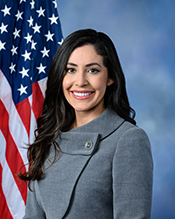
Rep. Anna Paulina Luna
Sponsored bills
Maddy summaryThe Federal Agency Sunset Commission Act of 2023 would establish a 13-member commission to review all federal agencies every 12 years (or less) to determine if they should be abolished, reorganized, or continued. The commission would evaluate agencies based on specific criteria including efficiency, cost-effectiveness, duplication with other agencies, and whether the agency has achieved its original purpose. Agencies would be scheduled for review and potentially abolished unless Congress reauthorizes them, with a supermajority vote allowing up to a 2-year extension. This bill directly affects all federal agencies and would require Congress to periodically assess the necessity of government programs. The commission would also monitor new legislation to prevent unnecessary creation of new agencies or programs.
Maddy summaryHR 1200, the National Right-to-Work Act, prohibits requiring workers to join a union or pay dues as a condition of employment in both private-sector workplaces (covered by the National Labor Relations Act) and railroad industries (covered by the Railway Labor Act). The bill amends key sections of these laws to eliminate provisions that allowed union security agreements, meaning workers in unionized settings would no longer be forced to pay dues to retain their jobs. This directly affects employees in unionized workplaces across the U.S., particularly those in industries with existing union contracts that included mandatory dues. The law changes the legal framework to ensure union membership and dues payment remain voluntary for all workers.
Stop CCP Fentanyl Act This bill imposes sanctions on various Chinese government officials and entities. It also establishes a cause of action against China’s government or Chinese government officials for certain harms stemming a fentanyl-related overdose. Specifically, the bill requires the President to impose visa- and property-blocking sanctions on (1) the president of China, (2) the chairman of the Chinese Communist Party (CCP), (3) China’s State Council, and (4) China’s Politburo Standing Committee. The President may waive the sanctions upon certifying that (1) China’s government and the CCP have taken all reasonable measures to prevent the flow of fentanyl produced in China into the United States, and (2) the intelligence community has determined that amount of fentanyl from China and the deaths resulting from overdoses of such fentanyl has dropped 98%. This bill also authorizes a U.S. national or lawful permanent resident to sue certain Chinese government officials or the Chinese government for the death of an immediate family member caused by an overdose by fentanyl (or fentanyl analogue) manufactured using fentanyl precursors from China. Property blocked pursuant to sanctions under this bill may be used to satisfy a judgment from such a lawsuit.
Imported Seafood Safety Standards Act This bill prohibits the importation of any seafood from a foreign country unless the country complies with U.S. standards for seafood manufacturing, processing, and holding. Among other requirements, the bill requires an annual inspection of each foreign facility that exports seafood to the United States to ensure compliance with U.S. standards.
Maddy summaryHR 1008 adds harmful algal blooms to the list of qualifying events for federal disaster assistance under the Stafford Act, enabling affected communities to access emergency aid. It also requires the CDC to conduct a study on health effects from airborne toxins during blooms within one year of enactment, to be shared with relevant congressional committees. The bill establishes a framework for federal response but does not provide new funding or directly regulate pollution sources. It primarily affects coastal and lake communities where blooms threaten public health, tourism, and local economies through potential beach closures, fishing restrictions, and property value declines.
Maddy summaryThis bill prohibits federal funding from being provided to healthcare facilities that refuse treatment to patients based on their COVID-19 vaccination status. It specifically blocks funds under Medicare (Title XVIII), Medicaid (Title XIX), and CHIP (Title XXI) from going to such facilities. The law directly affects hospitals, clinics, and other providers receiving federal healthcare funding by requiring them to offer treatment regardless of vaccination status. The key mechanism is withholding all federal funds authorized by law from any facility engaging in this practice.
This concurrent resolution directs the President to remove the U.S. Armed Forces from Syria within 15 days of the adoption of this concurrent resolution.
CBDC Anti-Surveillance State Act This bill limits the ability of the Federal Reserve to (1) provide direct services to individuals, and (2) use a central bank digital currency. A central bank digital currency is a digital currency (e.g., Bitcoin or Ether) issued by a government-backed central bank. Specifically, the bill prohibits the Federal Reserve and the Federal Open Market Committee from using any central bank digital currency to implement monetary policy. In addition, a Federal Reserve bank is prohibited from offering products or services directly to an individual, maintaining an account on behalf of an individual, or issuing a central bank digital currency directly to an individual. The Federal Reserve must (1) consult with each Federal Reserve bank with respect to any central bank digital currency study or pilot program, and (2) issue quarterly reports on the findings and determinations of any such study or program.
Maddy summaryHR 970 imposes a 12-year moratorium (through June 2032) on energy development leases for oil, gas, and wind projects in specific Gulf of Mexico areas critical to military operations. It directly affects energy developers seeking permits in zones east of the Military Mission Line or areas identified in Defense reports as threatening military readiness. The bill prohibits leasing in these zones but allows exceptions for environmental conservation projects like wetlands restoration. It also requires the Department of Defense to submit reports by 2024 and 2031 detailing how energy development impacts military capabilities in designated Gulf planning areas. This policy change aims to protect military testing ranges by restricting commercial energy activities in sensitive waters.