

Maddy summaryThis bill is a procedural naming resolution that designates a specific U.S. Postal Service facility in Key West, Florida (at 400 Whitehead Street) as the "Jimmy Buffett Post Office Building." It directly affects the postal facility and all official references to it in government documents. The key provision requires all federal laws, maps, regulations, and records to update their references to this location to the new name. This is a symbolic honorific designation with no policy or funding changes.
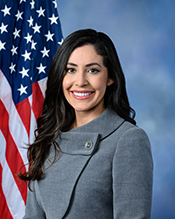
Rep. Anna Paulina Luna
Sponsored bills
Maddy summaryHR 7778, the Stop VOYEURS Act of 2024, amends federal law to strengthen penalties for video voyeurism. It increases the maximum prison sentence for such offenses from one year to five years and expands federal jurisdiction to cover cases involving interstate travel, digital communications (like email or apps), payments, or equipment used across state lines. The bill directly affects individuals who secretly record others without consent in situations connected to interstate commerce or digital platforms. Key provisions define specific circumstances - such as using the internet, making payments, or traveling between states - to trigger federal prosecution. This law applies to non-consensual recordings occurring within U.S. territories or involving interstate activity.
Maddy summaryThis bill establishes new eligibility rules for women's and girls' amateur sports by defining "female" and "male" based on biological sex at birth. It prohibits individuals designated as male under these definitions from participating in athletic competitions designated for females, women, or girls. The law amends existing U.S. Code provisions to add this requirement, directly affecting athletes and organizations managing female-designated teams. The key change is a clear ban on male-identified participants in female sports, replacing previous eligibility standards with biological sex criteria.
Maddy summaryHR 5082, the REPORT Act, creates limited liability protections for vendors working with the National Center for Missing & Exploited Children (NCMEC) on child sexual exploitation cases and for minors reporting their own exploitation via NCMEC's CyberTipline. The bill prohibits legal claims against NCMEC-contracted vendors for handling child pornography reports, provided they follow strict data security rules (like end-to-end encryption and limited employee access). It also extends the required preservation period for reports to NCMEC from 90 days to one year and mandates secure storage methods aligned with cybersecurity standards. Additionally, the bill increases civil penalties for large online platforms failing to report such content, with fines up to $850,000 for platforms with over 100 million monthly users.
Maddy summaryHR 7669, the Right to Try IVF Act of 2024, prevents federal funding from being withheld from states that restrict IVF access for individuals with documented medical infertility. The bill specifically prohibits the use of federal funds from the State Maternal and Child Health Services Block Grant program (Title V of the Social Security Act) for any state that bans licensed physicians from performing IVF on patients with a physician-diagnosed medical hardship in conceiving a child. It directly affects states receiving these federal funds by requiring them to allow IVF for medically necessary cases or risk losing the funding. The key mechanism is linking federal financial support to state policies regarding IVF access for infertility treatment. The bill does not directly change IVF access for individuals but uses federal funding leverage to influence state regulations.
Maddy summaryThis bill prohibits the interstate transport, sale, breeding, or possession of captive American mink raised for fur production (including parts or offspring), directly affecting mink fur farmers and the fur industry. It includes a limited exception for entities covered under the Lacey Act and establishes a buy-out program where the government may purchase mink farms. The buy-out amount is based on the farmer's average mink count over three years and the farm's infrastructure value. Funding for the buy-out depends on available appropriations. The bill does not apply to mink not raised for fur or to certain wildlife management activities.
Maddy summaryHRES 1060 is a non-binding House resolution expressing support for in vitro fertilization (IVF) as a method for families to start or grow. It acknowledges the role of IVF in helping millions of people overcome infertility (citing CDC data showing over 1 million U.S. births via IVF since 1987) and recognizes the physical/emotional challenges of infertility treatment. The resolution affirms IVF's legality in all 50 states, encourages further research into infertility treatments, and supports state efforts to set standards for IVF clinics. It does not create new laws or alter existing policies.
Maddy summaryThis non-binding resolution expresses the House's support for in vitro fertilization (IVF) access, noting that 19% of women in the U.S. face infertility challenges. It states IVF is necessary for those unable to conceive naturally, emphasizes policies enabling family growth, and recognizes "life is precious." The resolution does not create new laws or change regulations but symbolically affirms the House's position on IVF as a vital medical option for individuals struggling with infertility. It was introduced by Rep. Chavez-DeRemer and others on February 29, 2024.
Maddy summaryThe D.C. Consumer Vehicle Choice Protection Act repeals a District of Columbia rule that adopted California's vehicle emission standards, effective December 29, 2023. This repeal restores the vehicle emission regulations that were in place before the rule was adopted, reverting to the District's prior regulatory framework. The bill directly affects the District of Columbia's vehicle emission standards, impacting vehicle manufacturers and consumers in the District by removing alignment with California's requirements. As a result, the District will no longer require vehicles to meet California's emission standards through this rule.
Maddy summaryHR 7567, the *Protect Victims of Digital Exploitation and Manipulation Act of 2024*, makes it a federal crime to create or share non-consensual digital forgeries of intimate visual depictions (like deepfakes) of identifiable people. It directly affects individuals whose intimate images are manipulated without consent and those who produce or distribute such forgeries. The bill prohibits this conduct with penalties of up to 5 years in prison or fines, while including exceptions for law enforcement, medical use, legal proceedings, and reporting harmful content. Key provisions define "digital forgery" as AI-generated or altered images that appear authentic, require "affirmative consent" for sharing, and protect platforms from liability unless they knowingly distribute violating content.