

Maddy summaryThis bill ensures U.S. Border Patrol Agents and Customs and Border Protection officers who continue working during a government shutdown receive their salaries. It authorizes funding from the Treasury for fiscal year 2026 to cover their salaries and expenses during any lapse in discretionary appropriations. The measure specifically applies to employees "excepted from furlough," meaning those required to work during shutdowns. It does not change eligibility for pay but guarantees funding for these personnel during funding gaps.
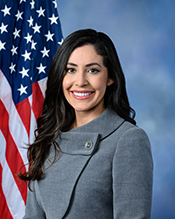
Rep. Anna Paulina Luna
Sponsored bills
Maddy summaryHR 5231, the Safe Airspace for Americans Act, requires the Federal Aviation Administration (FAA) to establish standardized procedures for reporting and analyzing incidents involving unidentified anomalous phenomena (UAPs) - commonly referred to as UFOs - reported by aviation personnel like pilots and air traffic controllers. The bill mandates the FAA to develop secure reporting systems, coordinate with defense and intelligence agencies, and protect reporters from retaliation or negative impacts on medical or pilot certificates. Key provisions include requiring immediate archiving of flight data during investigations, creating a public communications strategy to reduce stigma around reporting, and prohibiting employers from penalizing staff for reporting UAP encounters. This legislation directly affects airline crews, FAA staff, and aviation operators by creating a formal, non-punitive process for documenting potential airspace safety concerns.
Maddy summaryThe FIREARM Act (HR 3770) changes how federal firearm licensees (like dealers) handle violations of firearms laws. It requires the Attorney General to give licensees 30 business days to correct minor, self-reported violations - such as clerical errors - with assistance and training, instead of automatically revoking licenses. The bill also adds a 15-day window for licensees to challenge revocations in federal court, where courts must review the case anew and only uphold revocations if the licensee willfully violated the law. Additionally, it applies retroactively to licensees whose licenses were revoked under a 2021 enforcement policy, allowing them to reapply if they meet compliance requirements.
Maddy summaryHRES 685 is a non-binding resolution expressing support for adding antiphospholipid syndrome (APS) testing to standard prenatal screening. APS is an immune condition causing blood clots that can lead to miscarriages and stillbirths, currently not tested for routinely despite causing about 15% of recurrent pregnancy losses. The resolution urges medical associations to update guidelines to recommend APS testing as standard during prenatal care, rather than only for women with specific histories of pregnancy loss. It does not change current medical practice but advocates for updated recommendations to potentially prevent pregnancy complications.
Maddy summaryHR 2808, the Homebuyers Privacy Protection Act, restricts how consumer reporting agencies share credit reports during mortgage applications. It prevents agencies from sending these reports to third parties unless the request is tied to a firm credit offer and the recipient has either the homebuyer’s explicit written consent or is directly involved in the mortgage (like the lender, loan servicer, or the homebuyer’s bank holding an active account). This directly affects homebuyers applying for residential mortgages by limiting unsolicited sharing of their credit information. The law amends the Fair Credit Reporting Act to strengthen privacy protections around mortgage-related credit data.
Maddy summaryHR 5156, the COUNT Act, requires federal agencies to share specific immigration and demographic data with the Department of Commerce to improve national citizenship statistics. It mandates agencies like DHS, SSA, and HHS to provide access to records including immigration files, passport applications, and Medicaid data, while directing the Census Bureau to add a citizenship question to the 2030 census and American Community Survey. The bill also directs the Commerce Department to seek state administrative records for citizenship data and requires annual reports to Congress on state cooperation. This directly affects federal and state agencies by altering data-sharing protocols for immigration and citizenship tracking.
Maddy summaryThis bill prohibits Members of Congress, their spouses, and dependent children from owning or trading certain investments, including stocks, commodities, and derivatives (referred to as "covered investments"). It requires affected individuals to divest these investments within 90-180 days, with specific exemptions for Treasury bonds, diversified mutual funds, small business interests, and family trusts meeting strict conditions. Violations incur penalties of 10% of the investment's value plus disgorgement of profits, paid directly to the U.S. Treasury. The law applies to all covered individuals during federal service, with exceptions for investments acquired through inheritance or occupational trading (e.g., a spouse’s finance job).
Maddy summaryHR 5116, the "Empower Parents to Protect their Kids Act," requires all K-12 schools receiving federal funds to obtain parental consent before accommodating a student's gender identity that differs from their sex assigned at birth. The bill prohibits schools from changing student names/pronouns, facilitating gender transition, hiding such information from parents, or encouraging gender transition without parental involvement. Schools must publicly post policies ensuring compliance and provide written policies to families. Parents or the Attorney General can sue schools for violations, seeking injunctions, fees, or compensation for harm caused by unconsented gender transition efforts.
Maddy summaryHR 4018 aims to accelerate U.S. access to critical minerals (like nickel, cobalt, and rare earths) found in seabed resources on the continental shelf. It requires federal agencies to expedite permits for exploration and commercial recovery under the Deep Seabed Hard Mineral Resources Act and the Outer Continental Shelf Lands Act within 60 days of enactment. The bill also mandates a seabed mapping plan, identifies critical minerals for defense/energy use, and directs engagement with allies to support U.S. companies in developing these resources. This directly affects U.S. mining companies seeking seabed mineral rights and federal agencies managing offshore resource development.
Maddy summaryThis bill amends U.S. sanctions law to target Chinese entities and officials involved in fentanyl trafficking. It redefines "foreign opioid trafficker" to include Chinese chemical companies or government officials (like those in the National Narcotics Control Commission) that fail to prevent fentanyl precursor trafficking or cooperate with U.S. efforts. Key mechanisms include requiring China to implement stricter chemical shipment labeling and "know-your-customer" procedures, extending sanctions periods from 5 to 10 years, and mandating annual presidential reports to Congress on drug trafficking emergencies. The bill explicitly excludes importation of goods from sanctions coverage.