

Maddy summaryHCONRES 67 designates the week of September 17-23, 2023, as "National Fall Prevention Awareness Week" to highlight fall risks among older adults (aged 65+). It cites CDC data showing falls cause ~39,000 preventable deaths and $50 billion in annual medical costs for this group. The resolution supports existing evidence-based fall prevention programs - like balance exercises, home hazard reduction, and medication management - and encourages collaboration between federal agencies, community organizations, and healthcare providers to raise awareness. It does not create new laws but formally recognizes ongoing efforts to reduce falls.
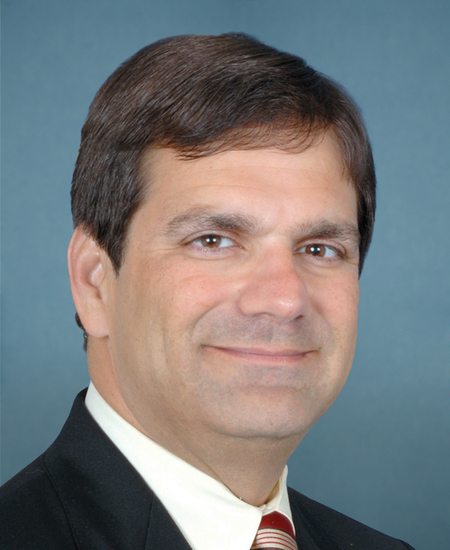
Rep. Gus M. Bilirakis
Sponsored bills
Maddy summaryHR 5686 authorizes $30 million in U.S. humanitarian aid for Armenians in Armenia and Nagorno-Karabakh affected by recent conflicts and blockades, and $12 million in foreign military financing to support Armenia's sovereignty and security cooperation. The bill requires the State Department to develop a strategy protecting Nagorno-Karabakh residents' rights, including cultural heritage and security, and mandates a 90-day report on Azerbaijani military actions during 2022-2023 attacks. It also directs the U.S. to push for International Criminal Court investigations into alleged atrocities and imposes sanctions on Azerbaijani officials involved in blockades or attacks. The legislation focuses on concrete U.S. policy actions - aid, accountability measures, and diplomatic efforts - without prescribing specific outcomes.
Maddy summaryThis House resolution (HRES 701) symbolically supports expanding the Abraham Accords on their third anniversary by urging the U.S. government to encourage more countries to normalize relations with Israel and deepen economic cooperation among existing signatories. It recommends promoting regional collaboration in areas like clean energy, security, and trade, while linking expanded ties to progress on Israeli-Palestinian peace efforts. The resolution has no legal effect - it expresses congressional support but does not create new laws or obligations. It directly affects U.S. diplomatic strategy toward Middle East relations, emphasizing symbolic endorsement over concrete policy changes.
Maddy summaryHR 1435, the Preserving Choice in Vehicle Purchases Act, amends the Clean Air Act to restrict states from implementing vehicle emissions rules that limit the sale or use of new gasoline-powered cars. It directly affects states with stricter emissions standards (like California) by adding a new definition that blocks state rules "directly or indirectly" limiting internal combustion engine vehicles as defined in federal regulations as of January 1, 2023. The bill requires the EPA to revoke existing state emissions waivers granted between January 2022 and the bill’s enactment if they don’t comply with this new definition. This creates a concrete federal standard preventing states from advancing policies that could reduce demand for conventional vehicles.
Maddy summaryThe Life.Gov Act (HR 5406) requires the U.S. Department of Health and Human Services to create a federal website called life.gov within one year of enactment. The website will provide pregnant and postpartum women with locally tailored resources - such as health services, financial assistance, and mental health support - via zip code searches, multilingual access, and user feedback tools. States must submit resource recommendations meeting strict criteria (e.g., no abortion providers, 3+ years of service), and the website cannot list "prohibited entities" (defined as abortion providers or supporters). The Secretary must report to Congress within 180 days on website usage, user feedback, and gaps in resources, using existing HHS funding.
Maddy summaryThis resolution symbolically designates October 8, 2023, as "National Hydrogen and Fuel Cell Day" to recognize advancements in hydrogen and fuel cell technologies. It does not create new laws or policies but highlights the U.S. role in developing these energy solutions for transportation, power generation, and environmental benefits. The resolution cites hydrogen's historical use in space exploration and current applications in zero-emission vehicles and grid resilience. It is a non-binding gesture expressing support for the industry, with no direct impact on individuals or regulations.
Maddy summaryHRES 492 is a congressional resolution condemning the Iranian government's systematic persecution of the Baha'i minority, which directly affects Baha'is in Iran facing arrests, property confiscation, and imprisonment. The resolution specifically calls for Iran to immediately release Baha'is detained for their faith, end state-sponsored hate propaganda against them, and reverse discriminatory policies denying equal access to education, employment, and religious freedom. It urges the U.S. President and Secretary of State to demand Iran’s compliance with international human rights treaties and to use existing sanctions authorities (under the 2010 and 2012 Iran sanctions laws) against officials responsible for these abuses. The resolution does not impose new legal requirements but serves as a formal U.S. government statement of condemnation and a call for diplomatic and sanctions action.
Safeguarding Endangered Children, Unaccompanied and at Risk of Exploitation Act of 2023 or SECURE Act of 2023 This bill requires regular reports to Congress detailing the status of unaccompanied non-U.S. national ( alien under federal law) children. The bill also rescinds certain funding for the agencies responsible for the report for each day that a report is late. Specifically, the Department of Health and Human Services (HHS), the Department of Homeland Security (DHS), and the Federal Bureau of Investigation must jointly report to Congress every 60 days on such children that have been in the custody of the Office of Refugee Resettlement (ORR) since January 1, 2021, and have been released to a parent, family member, or sponsor within the United States. This report must provide each child’s age, sex, location, and detail the child’s health and well-being. Additionally, the report must provide specified information about adults living in the child’s home, such as whether adults in the home have been subject to a fingerprint-based check of national crime information databases. The report must also specify the number of children that ORR has tried to contact without success on at least three separate attempts. The report must be provided for up to three years or until all of the specified children have been accounted for. The bill also rescinds certain funding from HHS, DHS, and the FBI for each day that a report is late. Up to $10 million may be rescinded from each agency for each fiscal year.
Maddy summaryHR 5363, the Robert Cleckler (Bobby) Bowden Congressional Gold Medal Act, authorizes the posthumous presentation of a Congressional Gold Medal to honor Bobby Bowden, the late Florida State University football coach, for his 377 career wins, two national championships, and humanitarian work. The medal, designed by the U.S. Mint, will be given to Bowden’s next of kin, with bronze duplicates available for sale to cover production costs. This bill is purely commemorative and does not create new laws or policies.
Maddy summaryThis bill requires the Bureau of Prisons to develop and implement a strategy for scanning all incoming mail at federal prisons to stop fentanyl and other synthetic drugs from entering facilities. It directs the Bureau to evaluate existing scanning technology within 180 days and submit a detailed plan to Congress within 90 days, including how to provide digital copies of mail to inmates within 24 hours and physical copies within 30 days (if safe). The strategy must achieve 100% mail scanning capacity at all federal prisons, prioritize high-security facilities, and include a budget proposal for fiscal years 2024-2026. This directly affects federal prisons, inmates, and Bureau employees by changing mail processing procedures to enhance safety and reduce staffing burdens from manual mail checks.