

Maddy summaryThe Wounded Warrior Workforce Enhancement Act creates federal grants to expand training programs for orthotics and prosthetics specialists. It provides $1-1.5 million per grant to eligible colleges to establish or grow master's programs, with priority given to institutions partnering with VA or military medical facilities. Covered veterans (those with limb loss or mobility impairments) receive admission and financial aid preference in these programs. A separate $5 million grant funds a Center of Excellence to research and improve orthotics/prosthetics education for veterans, service members, and civilians. The bill authorizes $15 million for program grants and $5 million for the Center in fiscal year 2025.
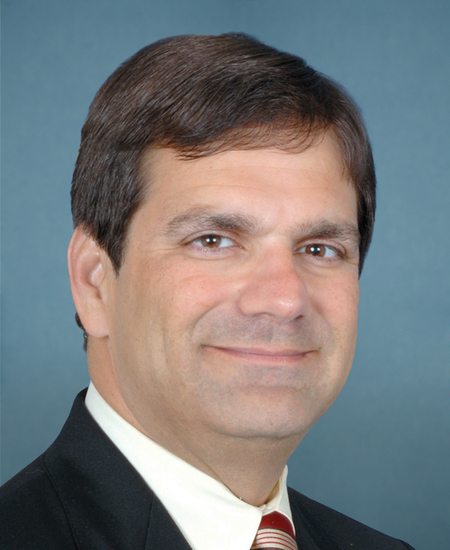
Rep. Gus M. Bilirakis
Sponsored bills
Maddy summaryHR 8167, the Wounded Warrior Research Enhancement Act, authorizes $30 million in fiscal year 2025 funding to improve limb replacement devices and care for military personnel, veterans, and civilians who have experienced combat-related amputations, traumatic brain injuries, or other serious physical injuries. The bill directs the Defense and Veterans Affairs Secretaries to award competitive, peer-reviewed research grants focused on preventing amputations, determining optimal treatment timing, developing better materials and technologies, and addressing aging-related challenges with prosthetics. These grants aim to enhance clinical care and quality of life for individuals with limb loss by advancing evidence-based solutions. The law requires annual reports to Congress detailing research progress and priorities.
Maddy summaryHR 8147 repeals the Corporate Transparency Act, which required certain businesses (typically those with more than 20 employees) to report beneficial ownership details to the Treasury Department. This bill eliminates the requirement for companies to disclose who ultimately owns or controls them, directly affecting business owners and financial institutions that previously submitted this information. The bill also makes minor technical changes to Title 31 of the U.S. Code to remove references to the repealed provisions. The repeal would end the existing financial transparency reporting obligation for covered entities.
Maddy summaryHRES 1170 prohibits U.S. House Members, Delegates, and Resident Commissioners from bringing or displaying any foreign nation's flag on the House floor during sessions, except for lapel pins or flags shown during speeches under House rules. The resolution applies to all flag sizes and is enforced by the House Sergeant-at-Arms. It directly affects House members' conduct during floor proceedings but allows limited exceptions for personal accessories and official speeches. This is a procedural rule change, not a substantive policy.
Maddy summaryHR 8141, the Azerbaijan Sanctions Review Act of 2024, requires the President to review whether 44 specific Azerbaijani officials meet criteria for U.S. sanctions under the Global Magnitsky Act and related laws. The bill targets military commanders, judges, prosecutors, and security officials linked to alleged human rights violations, including torture of prisoners of war and suppression of political dissent. Within 180 days of enactment, the President must submit a detailed determination to Congress on whether sanctions should be imposed on these individuals. The review is based on findings of Azerbaijan’s alleged war crimes, arbitrary detentions, and failures to uphold international legal obligations. This bill focuses on procedural review, not immediate sanctions.
Maddy summaryHR 8114 blocks the U.S. Department of Health and Human Services from finalizing a proposed rule that would have required states to spend at least 80% of Medicaid funds for home and community-based care services (like homemaker, home health aide, and personal care) on direct care worker wages. The bill directly affects Medicaid programs and the states administering them, preventing them from being required to meet this specific spending threshold. It prohibits the finalization, implementation, or enforcement of this rule or any substantially similar rule that would mandate a minimum percentage of payments for these services go toward worker compensation. This is a concrete policy change that maintains current Medicaid funding flexibility for states regarding home care worker wages.
Maddy summaryHR 8101, the Maintaining Cooperative Permitting Act of 2024, prevents the Environmental Protection Agency (EPA) from revoking approval of three specific state environmental programs without explicit congressional authorization. The bill directly affects Michigan, New Jersey, and Florida, which operate state-level permit systems for dredged or fill material under the Clean Water Act. It requires that any EPA withdrawal of approval for these programs must be authorized by a new Act of Congress, rather than through agency action alone. The bill also clarifies that the EPA's approval of these state programs does not count as a federal rule or regulation. This ensures the continued operation of these state programs unless Congress passes a new law to change them.
Maddy summaryHR 8061, the Crime Victims Fund Stabilization Act of 2024, ensures stable funding for the Crime Victims Fund by directing certain False Claims Act collections into it from 2024 through 2029. Specifically, it adds a provision requiring that amounts collected under the False Claims Act (excluding whistleblower rewards and government reimbursement for damages) be deposited into the fund during this period. This directly affects crime victims who rely on the fund for services like counseling and emergency aid, as it prevents potential shortfalls in funding. The bill makes a concrete policy change by redirecting specific federal civil penalties into the fund, rather than altering the fund's existing purposes or eligibility rules.
Maddy summaryHR 5947 terminates specific U.S. waivers and licenses related to Iran, ending a 2023 waiver that allowed funds transfer from South Korea to Qatar. It prohibits the Treasury Department from reissuing similar waivers or licenses for the same purpose and blocks the President from granting Iran access to certain designated financial accounts established under prior laws. The bill directly affects U.S. foreign policy implementation by restricting how Treasury handles Iran-related financial transactions. It enacts concrete policy changes by ending existing authorizations and preventing future approvals for Iran to access specific accounts.
Maddy summaryThe Veterans Appeals Efficiency Act of 2024 aims to streamline the processing of veterans' benefit claims by requiring the Department of Veterans Affairs (VA) to track specific claim types and report on delays. It mandates annual reports on how long remanded claims (sent back by the Board of Veterans' Appeals) remain pending, and requires the VA to use technology to monitor claims in the National Work Queue, including those awaiting hearings or expeditious review. The bill also expands the Board of Veterans' Appeals' authority to group similar cases for review and gives the Court of Appeals more power to address unresolved legal issues in veterans' claims. These changes directly affect veterans filing benefit claims, the VA, and the Board, with the goal of reducing processing times through better data tracking and clearer procedures.