

Maddy summaryHR 1466, the Cardiac Arrest Survival Act of 2025, creates uniform federal liability protection for individuals and entities involved with automated external defibrillators (AEDs) used in cardiac emergencies. It directly affects businesses, public venues, and organizations that own, manage, or use AEDs - especially those operating across multiple states where inconsistent state laws previously discouraged AED deployment. The bill shields users, property owners/managers, and AED owners from civil lawsuits for harm caused during emergency AED use, unless the harm resulted from gross negligence or willful misconduct. This preempts conflicting state laws, removing legal barriers to wider AED placement without requiring any new AED installations.
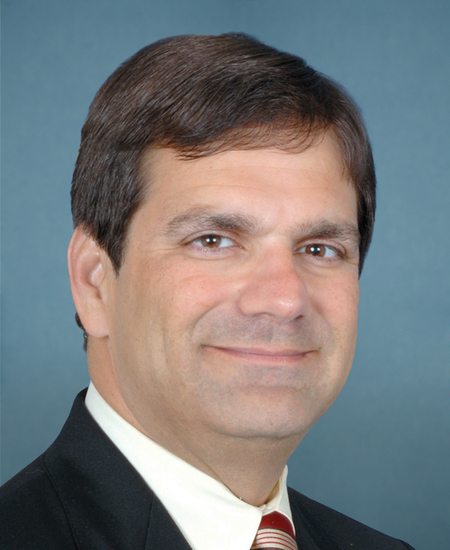
Rep. Gus M. Bilirakis
Sponsored bills
Maddy summaryThis bill would require states to create a simplified process for out-of-state healthcare providers to join Medicaid and CHIP programs. Qualified providers (those already enrolled in Medicare or another state's program with low fraud risk) could enroll without excessive screening and would be approved for five years. It directly affects children under 21 enrolled in Medicaid or CHIP by expanding access to providers outside their state, particularly in underserved areas. The change applies to all states' Medicaid programs but takes effect three years after enactment.
Leveraging Integrity and Verification of Eligibility for Beneficiaries Act or the LIVE Beneficiaries Act This bill requires state Medicaid programs to check the Social Security Administration's Death Master File on at least a quarterly basis to determine whether Medicaid enrollees are deceased.
This concurrent resolution declares that Congress should not impose any new performance fee, tax, royalty, or other charge relating to the public performance of sound recordings on a local radio station for broadcasting sound recordings over the air, or on any business for such public performance of sound recordings.
Maddy summaryHR 1301, the Death Tax Repeal Act, would eliminate the federal estate tax and generation-skipping transfer tax for estates of individuals dying on or after its enactment date. It directly affects individuals inheriting significant assets, as it removes taxes on estates exceeding $10 million (adjusted for inflation) and repeals taxes on large transfers between generations. The bill modifies the gift tax by establishing a $10 million lifetime exemption with annual inflation adjustments, replacing previous tax brackets. It applies to estates, gifts, and transfers occurring on or after the bill's effective date.
Maddy summaryHR 1300, the PSA Screening for HIM Act, requires health insurance plans and issuers to cover prostate cancer screenings without cost-sharing (like copays or deductibles) for men aged 40+ who are at high risk of prostate cancer. This directly affects African-American men and men with a family history of prostate cancer, as defined by the bill. The law amends existing insurance coverage rules to mandate this specific screening coverage, effective for plan years starting January 1, 2026. It does not change screening guidelines but removes financial barriers to recommended screenings for these high-risk groups.
Maddy summaryHR 1349, the Women’s Protection in Telehealth Act, excludes Medicare participation for providers who prescribe, administer, dispense, or furnish abortion-inducing drugs via telehealth unless they meet strict conditions. Specifically, providers must be physicians who physically examine the patient, be present in the same room during drug administration, and schedule an in-person follow-up within 14 days. The bill defines "abortion-inducing drug" as any substance used to terminate a clinically diagnosable pregnancy with knowledge it will likely cause fetal death. This directly affects Medicare-covered telehealth abortion services, requiring in-person care for such treatments rather than remote consultations. The exclusion is permanent for non-compliant providers under Medicare rules.
Maddy summaryHR 1330 establishes the Smithsonian National Museum of the American Latino, authorizing its location within the National Mall's "Reserve" area. The bill requires the Smithsonian Board to coordinate with federal agencies managing potential museum sites, including notifying relevant congressional committees before land transfers. It mandates that the museum's exhibits and programs accurately represent the diverse cultures, histories, and viewpoints of Hispanic and Latino communities in the U.S., seeking input from a broad range of community experts. The Smithsonian must also submit regular reports to Congress detailing compliance with these representation requirements.
Maddy summaryHR 1282 prohibits federal funding for colleges that operate diversity, equity, and inclusion (DEI) programs or offices. It requires institutions to certify they do not run any initiative primarily focused on classifying students by race, gender, or other protected characteristics, or providing preferential treatment based on those factors. Schools receiving federal funds (including student loans) must provide this certification, and the government can verify it or appeal funding termination through a formal process. This bill directly affects nearly all colleges and universities that accept federal financial aid, fundamentally changing eligibility for those programs.
Maddy summaryHR 1283, the "Protecting Our Children in an AI World Act of 2025," updates federal laws to address AI-generated child sexual abuse material. It eliminates a legal defense allowing defendants to claim AI-created content wasn't "real" child pornography (by amending 18 U.S.C. § 2252A(c)), and expands the definition of prohibited "sexually explicit conduct" to include simulated obscene exhibitions of certain body parts. This directly affects defendants in federal prosecutions involving AI-generated child pornography and ensures such material is treated as illegal under current laws. The bill makes clear that AI-generated content falls under existing prohibitions without requiring proof of real children.