

Maddy summaryThe GRID Power Act requires the Federal Energy Regulatory Commission (FERC) to create new rules within 180 days that streamline the process for connecting new "dispatchable power" projects - like natural gas plants or battery storage - to the electricity grid. It allows transmission providers (such as utilities and grid operators) to propose prioritizing these projects in the interconnection queue if they demonstrate how the projects improve grid reliability or resilience, with public input required before submission. FERC must review such proposals within 60 days and approve or deny them, while also mandating regular reports on grid conditions and periodic rule updates every five years to address evolving challenges. This bill directly affects transmission providers and new power project developers by accelerating connections for reliable energy sources that help prevent blackouts.
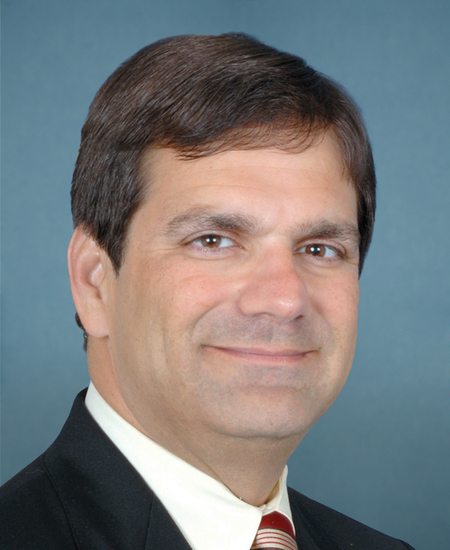
Rep. Gus M. Bilirakis
Sponsored bills
Maddy summaryThis bill allocates $5 million annually (2026-2030) to states for collecting de-identified stillbirth data through existing health systems, including risk factor analysis. It also provides $1 million yearly to develop standardized guidelines for healthcare providers and public educational materials about stillbirths, requiring consultation with medical professionals, bereavement organizations, and affected families. The bill mandates that all data collection complies with privacy laws and requires the Department of Health and Human Services to publish a public report on stillbirth guidelines within five years. It directly affects state health departments, healthcare providers, and families experiencing stillbirth by improving data quality and access to resources.
Maddy summaryThis bill reauthorizes federal funding for diabetes programs targeting Type 1 diabetes. It extends annual funding of $160 million for fiscal years 2026 through 2030, continuing existing support for research, treatment, and prevention initiatives. The funds remain available until expended, directly supporting programs serving people with Type 1 diabetes and the organizations delivering these services. The bill makes no changes to program eligibility or structure, only extending current funding levels.
Maddy summaryHRES 729 is a symbolic resolution designating September 17, 2025, as "Constitution Day" to honor the 250th anniversary of the U.S. Constitution's signing (September 17, 1787). It does not create new laws or affect any specific group; instead, it urges the American public to observe the day with ceremonies and activities. The resolution emphasizes the Constitution's historical significance and its role in establishing American democracy. As a commemorative measure, it has no binding effect on policy or governance.
Maddy summaryThis bill ensures Medicare coverage for new medical devices designated as "breakthrough devices" during a 4-year period after FDA approval. To qualify, devices must meet specific criteria, including FDA priority review, clinical data from Medicare beneficiaries, and a safety review showing benefits outweigh risks. Medicare must finalize coverage decisions within 6 months of manufacturer applications and before the 4-year period ends. The law appropriates $10 million annually (2025-2030) for Medicare to administer this process.
Maddy summaryHRES 727 is a symbolic resolution designating October 14, 2025, as a "National Day of Remembrance for Charlie Kirk." It does not create new law but formally honors Charlie Kirk, founder of Turning Point USA and a prominent advocate for free speech and civic education, who died by assassination on September 10, 2025. The resolution encourages educational institutions and citizens to observe the day with activities promoting civic engagement, liberty, and democracy. It directly affects no specific group through policy changes, as it is a commemorative gesture without binding requirements.
Maddy summaryHR 5401, the Pay Our Troops Act of 2026, ensures military personnel, civilian Defense workers, and supporting contractors receive pay during government funding gaps in fiscal year 2026. It appropriates emergency funds for active-duty service members, reserves, and their supporting personnel (including Coast Guard staff under DHS) if regular appropriations aren't enacted by the end of the fiscal year. The bill provides necessary pay and allowances during any period when full-year funding is unavailable, covering both active service and support roles. Funding expires when regular appropriations are passed, a funding resolution is enacted, or January 1, 2027, whichever comes first. This is a procedural measure to prevent pay delays for military and support staff during fiscal year 2026 funding lapses.
Maddy summaryThe TICKET Act requires ticket sellers and resellers to clearly show the total price (including all fees) before purchase, ban selling tickets before having them in hand, and mandate refunds for canceled or postponed events. It prohibits misleading claims like "official" tickets unless authorized, and forces clear refund policies for consumers. The law applies to all event ticket sellers - both primary issuers and secondary platforms - for concerts, sports, and theater events with over 200 seats. Key changes include upfront price transparency, a ban on speculative sales, and standardized refund rules for cancellations or postponements. The Federal Trade Commission will enforce these rules and report on related laws within six months.
Maddy summaryThe Azerbaijan Sanctions Review Act of 2025 requires the President to review within 180 days whether 53 specific Azerbaijani officials meet criteria for sanctions under the Global Magnitsky Human Rights Accountability Act. These officials include military commanders, security service heads, and judges implicated in human rights violations related to the Nagorno-Karabakh conflict. The review must include a detailed justification and determine if sanctions should be imposed on individuals linked to alleged war crimes, arbitrary detention, and torture of Armenians. The bill mandates this assessment without imposing new sanctions, focusing instead on evaluating existing legal authority for action.
Maddy summaryHRES 702 is a symbolic resolution condemning the September 10, 2025, assassination of Charlie Kirk, founder of Turning Point USA and a conservative political activist. It expresses condolences to his family, praises first responders, and reaffirms the right to peaceful assembly. As a non-binding resolution, it does not create new laws or policies but serves as a formal statement of condemnation. The resolution directly addresses the House of Representatives' stance on this event, with no direct impact on constituents or legislation.