Temporary Reauthorization of the Emergency Scheduling of Fentanyl Analogues Act This bill extends until May 6, 2022, the temporary scheduling order issued by the Drug Enforcement Administration to place fentanyl-related substances in schedule I of the Controlled Substances Act. The temporary order expires on May 6, 2021.
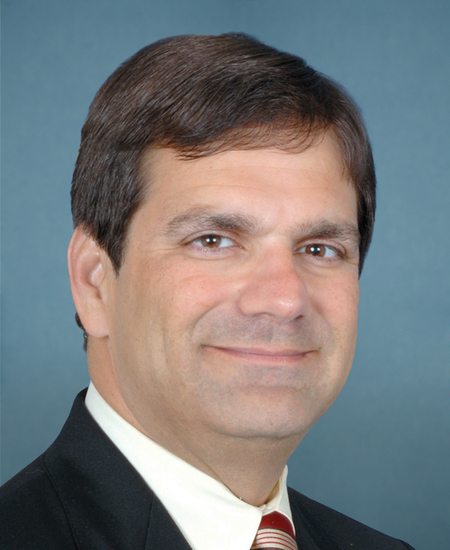
Rep. Gus M. Bilirakis
Sponsored bills
Honest Elections and Campaign, No Gain Act This bill establishes certain requirements for disbursing unused funds after a federal election. The bill also requires former candidates serving as registered lobbyists or foreign agents to comply with disbursement requirements. Specifically, the bill requires each authorized committee or leadership political action committee (PAC) of a candidate to disburse all unused funds within a specified time period beginning after an election or before the candidate registers as a lobbyist or foreign agent, unless the candidate files to run for office again before the disbursement period begins. A committee or PAC disbursing unspent funds shall first pay any obligations incurred. If funds are left over, the committee or PAC may only disburse the funds in one or more of the following ways: (1) returning funds to donors; (2) making contributions to nonprofit organizations; and (3) transferring funds without limitation to a national, state, or local committee of a political party. The bill generally prohibits disbursements to relatives of the candidate. A former candidate must, in order to register as a lobbyist or foreign agent, comply with the disbursement requirements outlined by this bill.

Camp Lejeune Justice Act of 2021 This bill allows certain individuals to sue and recover damages for harm from exposure to contaminated water at Camp Lejeune in North Carolina between August 1, 1953, and December 31, 1987. This action is available only to individuals who were exposed to contaminated water for at least 30 days. The bill prohibits the U.S. government from asserting specified immunity from litigation in response to such a lawsuit. The bill also prohibits an individual who brings such an action from bringing a separate tort action against the United States based on the same harm.
COVID-19 Border Protection (CBP) Act This bill requires the Department of Homeland Security (DHS) to devise and implement a strategy to ensure that no alien with COVID-19 (i.e., coronavirus disease 2019) in DHS or Department of Health and Human Services custody may be released into the community during a public health emergency related to COVID-19. Funds previously provided to the Department of State for supporting international efforts to help migrants and refugees respond to COVID-19 shall be transferred to DHS to implement this strategy.
Prohibiting IRS Financial Surveillance Act This bill prohibits the Department of the Treasury from requiring a financial institution to report the transfers into and out of a financial account. This prohibition does not apply to laws or regulations in effect on October 1, 2021.
This resolution expresses support for the designation of National Vitiligo Awareness Day. (Vitiligo is a chronic condition that results in the loss of pigment in patches on the skin, hair, eyes, and inside of the mouth; the condition may lead to discomfort, itching, and pain.)
This resolution honors Gibraltar's contribution to advancing U.S. security interests in the Mediterranean region and expresses support for the people of Gibraltar.
Maddy summaryHR 5553 prohibits the Secretary of Veterans Affairs from providing or paying for surgical treatments related to gender transition. This directly affects transgender veterans who rely on VA healthcare for gender-affirming surgical procedures. The bill blocks VA funding specifically for these surgical treatments, without altering coverage for other healthcare services. It applies to all veterans seeking such care through the VA system.
Flood Risk Transparency for Homebuyers Act This bill requires the Department of Housing and Urban Development (HUD) to disclose certain flood hazards to prospective buyers when listing a one-to-four-unit residential property for sale. The requirement applies to every such HUD-owned property located in a special flood hazard area and requires HUD to disclose (1) the estimated monthly cost to insure the property under the National Flood Insurance Program in the zip code where the property is located and (2) whether the property is a severe repetitive loss property. A one-to-four-unit residential property is considered a severe repetitive loss property under existing law if the property is covered by flood insurance under the National Flood Insurance Program and has incurred flood-related damage resulting in either (1) four or more separate claim payments each exceeding $5,000, or (2) two or more separate claim payments that cumulatively exceed the value of the property. Severe repetitive loss properties are subject to higher flood insurance rates under the National Flood Insurance Program, but may be eligible for grants to mitigate the flood risk under certain circumstances.
Stabilizing Medicare Access to Rehabilitation and Therapy Act or the SMART Act This bill modifies the application of a certain Medicare payment methodology for outpatient physical therapy services and outpatient occupational therapy services that are furnished by a therapy assistant. Under current law, effective January 1, 2022, payment for such services is 85% of the otherwise applicable rate. The bill delays this effective date by one year and excludes services that are furnished in rural or medically underserved areas from this payment methodology. The bill also specifies that supervision requirements for outpatient physical therapy services that are furnished through private practice may not be more stringent for purposes of Medicare coverage than under state law.