

Maddy summaryHR 8147 repeals the Corporate Transparency Act, which required certain businesses (typically those with more than 20 employees) to report beneficial ownership details to the Treasury Department. This bill eliminates the requirement for companies to disclose who ultimately owns or controls them, directly affecting business owners and financial institutions that previously submitted this information. The bill also makes minor technical changes to Title 31 of the U.S. Code to remove references to the repealed provisions. The repeal would end the existing financial transparency reporting obligation for covered entities.
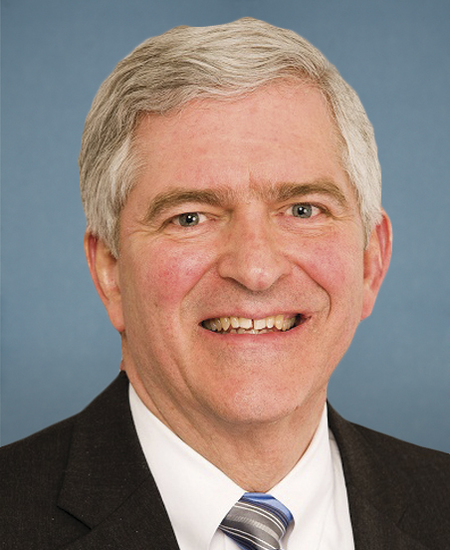
Rep. Daniel Webster
Sponsored bills
Maddy summaryHRES 1170 prohibits U.S. House Members, Delegates, and Resident Commissioners from bringing or displaying any foreign nation's flag on the House floor during sessions, except for lapel pins or flags shown during speeches under House rules. The resolution applies to all flag sizes and is enforced by the House Sergeant-at-Arms. It directly affects House members' conduct during floor proceedings but allows limited exceptions for personal accessories and official speeches. This is a procedural rule change, not a substantive policy.
Maddy summaryThe Defund NPR Act would prohibit all federal funding for National Public Radio (NPR) and any successor organization. This means public broadcast stations receiving federal funds could no longer use those funds to pay for NPR programming or dues. The bill would take effect upon enactment, eliminating federal financial support for NPR through any channel. It directly affects NPR and public broadcasters that rely on federal funds for programming partnerships.
Maddy summaryHR 8101, the Maintaining Cooperative Permitting Act of 2024, prevents the Environmental Protection Agency (EPA) from revoking approval of three specific state environmental programs without explicit congressional authorization. The bill directly affects Michigan, New Jersey, and Florida, which operate state-level permit systems for dredged or fill material under the Clean Water Act. It requires that any EPA withdrawal of approval for these programs must be authorized by a new Act of Congress, rather than through agency action alone. The bill also clarifies that the EPA's approval of these state programs does not count as a federal rule or regulation. This ensures the continued operation of these state programs unless Congress passes a new law to change them.
Maddy summaryHR 5947 terminates specific U.S. waivers and licenses related to Iran, ending a 2023 waiver that allowed funds transfer from South Korea to Qatar. It prohibits the Treasury Department from reissuing similar waivers or licenses for the same purpose and blocks the President from granting Iran access to certain designated financial accounts established under prior laws. The bill directly affects U.S. foreign policy implementation by restricting how Treasury handles Iran-related financial transactions. It enacts concrete policy changes by ending existing authorizations and preventing future approvals for Iran to access specific accounts.
Maddy summaryHRES 1148 is a resolution passed by the U.S. House of Representatives that condemns the Iranian government for supporting terrorism, regional proxy conflicts, and internal suppression of dissent - including its crackdown on protests following Mahsa Amini's death in 2022. It specifically calls for maintaining sanctions against Iran, supporting the Iranian Resistance's Ten-Point Plan (which advocates for a democratic, secular, nonnuclear Iran), and protecting Iranian political refugees in Albania. The resolution also affirms the Iranian people's right to self-determination under international law and urges the U.S. to recognize their struggle for freedom. As a non-binding resolution, it does not create new laws but formally expresses congressional stance.
Maddy summaryH.J.Res. 116 seeks to block a Department of Labor rule finalized on January 10, 2024, which aimed to clarify how businesses classify workers as employees or independent contractors under the Fair Labor Standards Act (FLSA). If passed, this resolution would prevent the rule from taking effect, directly affecting businesses that use independent contractors and their workers, who rely on FLSA protections for minimum wage and overtime pay. The bill uses a specific congressional process (under Chapter 8 of Title 5, U.S. Code) to disapprove the rule, rather than creating new policy. This action would maintain the existing classification standards until a new rule is established.
Maddy summaryHR 7823, the Second Chance for Moms Act, requires new labeling on mifepristone (a medication used in medical abortions) and establishes a hotline. The bill mandates that mifepristone packaging include a warning label stating that natural progesterone may counteract the drug's effects, based on a statement from the American Society for Reproductive Medicine. It also directs the creation of a 24/7 toll-free hotline to provide support for women seeking to reverse the drug's effects. This bill directly affects pharmaceutical manufacturers (through labeling changes), healthcare providers, and women using mifepristone, with the labeling requirement taking effect six months after enactment.
Maddy summaryThis bill is a procedural naming resolution that designates a specific U.S. Postal Service facility in Key West, Florida (at 400 Whitehead Street) as the "Jimmy Buffett Post Office Building." It directly affects the postal facility and all official references to it in government documents. The key provision requires all federal laws, maps, regulations, and records to update their references to this location to the new name. This is a symbolic honorific designation with no policy or funding changes.
Maddy summaryHR 7770, the Rosie the Riveter Commemorative Coin Act, authorizes the U.S. Mint to produce and sell three commemorative coins honoring women who worked on the U.S. home front during World War II. It specifies $5 gold coins (max 50,000), $1 silver coins (max 400,000), and half-dollar coins (max 750,000), all to be issued between January 1, 2025, and December 31, 2025. Each coin sale includes a surcharge ($35 for gold, $10 for silver, $5 for half-dollar), with all surcharge funds directed to the Rosie the Riveter Trust for maintaining the Rosie the Riveter WWII Home Front National Historical Park and educational programs. The coins will feature designs reflecting the legacy of diverse women workers and must meet specific weight, diameter, and composition standards.