

Fair Access to Banking Act This bill places restrictions on certain banks, credit unions, and payment card networks if they refuse to do business with a person who complies with the law. Restrictions include prohibiting the use of electronic funds transfer systems and lending programs, termination of an institution's depository insurance, and specified civil penalties. Banks and other specified financial institutions are allowed to deny financial services to a person only if the denial is justified by a documented failure of that person to meet quantitative, impartial, risk-based standards established in advance by the institution. This justification may not be based upon reputational risks to the institution. The bill establishes the right for a person to bring a civil action for a violation of this bill.
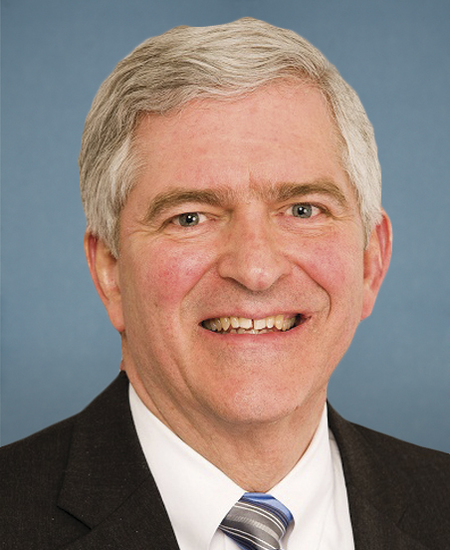
Rep. Daniel Webster
Sponsored bills
Maddy summaryHR 934, the Chinese Spy Balloon Assessment Act, requires the Secretary of Defense to submit a report to Congress within 90 days of the bill's enactment. The report must analyze the national security effects of surveillance conducted by China via the high-altitude balloon shot down in U.S. airspace in February 2023, specifically covering impacts on military installations and the technology recovered from the balloon, including its country of origin. This bill directly affects the Department of Defense and Congress by mandating a formal assessment of a specific security incident. It does not create new policies or funding but establishes a procedural requirement for transparency regarding the balloon incident. The report must be unclassified but may include a classified annex.
Maddy summaryHR 925, the "Dismantle DEI Act of 2025," would eliminate diversity, equity, and inclusion (DEI) programs across federal government operations. The bill requires federal agencies to close DEI offices, rescind related executive orders, and prohibit the use of federal funds for DEI training, offices, or initiatives. It defines "prohibited diversity, equity, or inclusion practice" as any activity that discriminates based on race, ethnicity, religion, biological sex, or national origin, or requires employees to complete training asserting that certain groups are inherently superior or inferior. The legislation also prohibits requiring employees to sign statements about race, ethnicity, or gender, and establishes private lawsuits for violations with potential damages of $1,000 per violation per day. This bill would directly affect federal agencies, contractors, grantees, and advisory committees receiving federal funding.
Defending Domestic Orange Juice Production Act of 2025 This bill requires finished pasteurized orange juice to contain at least 10% by weight of orange juice soluble solids, exclusive of the solids of any added optional sweetening ingredients. (Current regulations require at least 10.5% by weight of orange juice soluble solids.)
Maddy summaryHR 895 requires the Attorney General to investigate whether the 2022 discovery of five baby remains in Washington, DC, violated the existing Partial-Birth Abortion Ban Act of 2003, with a report due within six months. It mandates that healthcare workers must immediately report suspected violations of the ban to law enforcement and requires annual reports from the Attorney General detailing enforcement efforts, violations, and prosecutions over the past decade. The bill also directs the GAO to review enforcement actions from 2004-2024 and submit recommendations. This legislation focuses on strengthening enforcement of the existing 2003 ban, directly affecting healthcare providers, law enforcement, and the Department of Justice.
Maddy summaryHR 886, the "Beat Bad Bureaucrats Act," prevents the Small Business Administration (SBA) from withholding Social Security payments to repay certain business loans when identity theft is confirmed. It specifically protects victims of identity theft who fraudulently obtained SBA loans under Sections 7(a) or 7(b) of the Small Business Act (including pandemic-era loans). The law requires the SBA to update its regulations within 30 days to include clear instructions for reporting identity theft through its public website. This policy change directly affects individuals who report fraud via SBA's designated process, blocking garnishment of their Social Security benefits for those specific loans.
Maddy summaryThe Fighting Budget Waste Act requires the President and the Office of Management and Budget (OMB) to consider the most recent Government Accountability Office (GAO) report on reducing government waste when preparing the annual federal budget. Specifically, it mandates review of the GAO's findings about cutting fragmentation, duplication, and overlap in federal programs - such as the report titled *Additional Opportunities to Reduce Fragmentation, Overlap, and Duplication and Achieve Billions of Dollars in Financial Benefits* - to identify potential savings. The OMB must also submit a separate report to Congress detailing how it incorporated the GAO's recommendations into the budget submission. This law aims to make the budget process more transparent by formally integrating the GAO's waste-reduction analysis into federal fiscal planning.
Maddy summaryHR 833 creates a federal tax credit for individuals and corporations that contribute to scholarship granting organizations (SGOs) providing scholarships for elementary and secondary education. The credit allows taxpayers to deduct up to 10% of their adjusted gross income or $5,000 (whichever is less) for contributions to SGOs serving students from households with income up to 300% of the area median income. The bill establishes a $10 billion annual cap on the tax credit program, requires SGOs to verify student eligibility and maintain separate accounts, and prohibits government control over SGOs or private schools. It ensures scholarships can be used at public, private, or religious schools without discrimination based on religious character. The tax credit would be available for contributions made after December 31, 2025, with annual volume cap increases based on usage.
Maddy summaryThis bill prohibits the Department of Health and Human Services (HHS) and the Food and Drug Administration (FDA) from treating pregnancy as an illness when approving or regulating abortion drugs. It specifically bans using this framework for approvals under the Federal Food, Drug, and Cosmetic Act or for risk management strategies. The bill also nullifies existing approvals of abortion drugs (like mifepristone) that relied on treating pregnancy as an illness. This directly affects how the FDA regulates abortion medications, changing the basis for their safety and efficacy evaluations.
Maddy summaryThe Second Chance for Moms Act (HR 796) requires a new warning label on mifepristone - a medication used for medical abortions - stating that natural progesterone may counteract its effects and increase fetal survival, with a hotline reference for further information. It also mandates a federal 24/7 hotline providing support and referrals exclusively to healthcare providers offering "abortion pill reversal" services. This bill directly affects patients prescribed mifepristone and healthcare providers who dispense the medication, as the label must appear on packaging and the hotline must be established. The warning label would take effect six months after enactment, and the hotline would operate under the Public Health Service Act.