

Maddy summaryHR 4542, the "No Cages in the Everglades Act," bans federal funding for any immigration detention facility within or adjacent to Florida's Everglades ecosystem - including construction, operation, or maintenance. It directly affects U.S. Immigration and Customs Enforcement (ICE) and any state/local governments operating such facilities. Key provisions include requiring DHS to submit a detailed report within 90 days on facility costs, construction history, compliance with detention standards, and ecological risks, while also granting Congress unannounced access to inspect all DHS detention facilities. The bill aims to prevent new immigration detention operations in the protected Everglades area and enhance oversight of existing facilities.
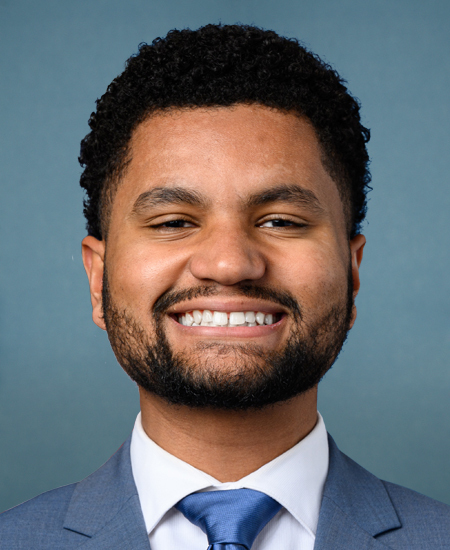
Rep. Maxwell Frost
Sponsored bills
Maddy summaryHR 4497, the Extreme Heat Emergency Act of 2025, amends the Stafford Act to explicitly include "extreme heat" in the definition of a "major disaster" alongside events like floods and droughts. This change would allow communities experiencing severe, life-threatening heatwaves to qualify for federal disaster assistance under existing Stafford Act programs. The bill directly affects local governments and residents in areas hit by extreme heat events that meet the new definition, enabling them to access federal aid previously unavailable for heat emergencies. It does not create new programs or funding but adjusts eligibility criteria for current disaster relief mechanisms.
Maddy summaryThe Black Farmers and Socially Disadvantaged Farmers Increased Market Share Act creates a new grant program to support food hubs that increase market access for socially disadvantaged farmers and ranchers. The program provides competitive grants for food hubs to develop infrastructure, equipment, and marketing services, with priority given to projects benefiting underserved communities. The bill also establishes a 25% tax credit for businesses that purchase agricultural products from these food hubs and requires USDA to prioritize purchasing from socially disadvantaged farmers in domestic food assistance programs. These provisions aim to address historical barriers to market access for socially disadvantaged farmers by supporting their participation in food distribution systems.
Maddy summaryThis bill requires all federal agencies to set specific equity goals in their strategic and performance plans, mandating at least one goal or 20% of total goals focused on improving services for underserved communities and individuals. It establishes an "Agency Equity Advisory Team" with 10+ agency roles (including civil rights, data, and human capital leaders) and creates an "Equity Subcommittee" to coordinate across agencies on equitable practices. The bill also updates data officer responsibilities to prioritize equitable data collection, use, and sharing, including collaboration with community groups and state/local governments. It directly affects all federal agencies and aims to reshape how government services are delivered to populations systematically excluded from economic, social, and civic opportunities.
Maddy summaryThis bill requires a nonpartisan review of rising costs for transit buses in the U.S. The Comptroller General will analyze factors driving high manufacturing and procurement costs, compare U.S. prices to other countries, and examine how supplier challenges affect federal transit programs like the Low/No Emission Grant Program. The review will assess strategies such as joint state procurement that might reduce costs and speed up delivery. The findings will be reported to Congress within 18 months, but the bill itself does not change funding or directly alter bus procurement processes.
Maddy summaryHCONRES 44 is a symbolic resolution recognizing a health and safety emergency for children linked to the Trump administration's climate policies. It claims these policies - unleashing fossil fuel production, blocking renewable energy, and suppressing climate science - disproportionately harm children through increased air pollution, extreme weather, and denied access to climate data. The resolution calls for reversing these policies, restoring the EPA's mission, and ensuring climate action aligns with protecting children's rights. It does not enact new laws or change policy, but serves as a formal congressional statement of concern.
Maddy summaryThis bill establishes federal worker heat protection standards to prevent heat-related illness and injury. It requires employers to provide a workplace free from heat stress hazards, including access to cool water, scheduled rest breaks, shaded cooling areas, and training on heat illness symptoms. The Secretary of Labor must create these standards within one year, incorporating evidence-based practices like engineering controls (e.g., ventilation), administrative measures (e.g., adjusted schedules), and employer-paid personal protective equipment. The law directly affects all employers in high-heat work environments - such as construction, agriculture, and manufacturing - and strengthens whistleblower protections for workers reporting safety violations.
Maddy summaryThe Child Care for Working Families Act creates a federal program to provide affordable, high-quality child care for working families with children under age 6. It would provide direct child care assistance through certificates or grants to parents, with no copayment required for families at or below 85% of state median income. The program requires states to implement quality standards for child care providers, including a tiered quality system and minimum wage requirements for staff (at least a living wage equivalent to elementary educators). The bill appropriates $20 billion for the program over five years, with additional funding for quality improvement initiatives and universal preschool services.
Maddy summaryThis bill would allow states to create their own universal health care systems by applying for waivers that replace federal health programs with state-based coverage. States would need to demonstrate they can cover at least 95% of residents within 5 years, maintain comparable benefits and affordability, and provide comprehensive coverage including reproductive health services. The federal government would redirect funds that would have gone to federal programs like Medicaid and Medicare to the states, with states required to submit regular reports on coverage progress and costs. The bill includes specific protections for Indian health care providers and ensures coverage for vulnerable populations without imposing new costs on them. This framework would apply to states that choose to implement their own universal health care system rather than relying on existing federal programs.
Maddy summaryThis bill directs the Department of Health and Human Services to significantly increase federal research funding for uterine fibroids ($30 million annually from 2026-2030), expand coordination of NIH research, and establish a Medicaid data system to track treatment access and costs. It mandates public education on fibroid symptoms, prevalence (especially among Black women, who face higher risk and severity), and non-hysterectomy treatment options. The bill also requires disseminating evidence-based provider resources on managing fibroids while preserving fertility. These provisions directly affect the estimated 26 million U.S. women with fibroids - particularly women of color - and aim to address the current lack of research and treatment data.