

Maddy summaryHRES 797 is a non-binding resolution expressing concern about the rising number of book bans in U.S. schools and libraries. It cites PEN America data showing 6,870 book bans affecting 3,751 titles between July 2024 and June 2025, with books about race, LGBTQ+ experiences, and marginalized communities disproportionately targeted (e.g., *The Handmaid’s Tale*, *Maus*, *This Book Is Gay*). The resolution calls on schools to follow best practices for book challenges, protect students’ access to diverse materials, and return books removed from military schools under recent executive orders. It directly addresses students, educators, librarians, and authors impacted by censorship, emphasizing that such bans threaten free expression and democratic values.
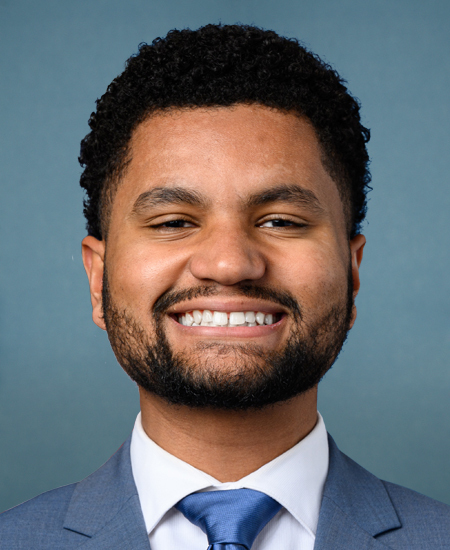
Rep. Maxwell Frost
Sponsored bills
Maddy summaryThis bill adds Medicare coverage for multi-cancer early detection screening tests (blood or biological tests analyzing cell-free DNA) starting January 1, 2028. It directly affects Medicare beneficiaries aged 68 and older (starting in 2028, with the age limit increasing by 1 year annually), requiring tests to be FDA-cleared and deemed reasonable/necessary by the Secretary for early cancer detection across multiple organ sites. Payment will initially match current stool DNA test rates before 2031, then shift to a lower rate or new payment system after 2031, with limits preventing more than one test per year. The bill explicitly states it does not alter coverage for existing cancer screenings like breast, colorectal, or prostate cancer tests.
Fair Pay for Federal Contractors Act of 2025 This bill provides back pay to employees of federal contractors who lost pay due to a lapse in appropriations (i.e., government shutdown) in FY2026. Specifically, the bill provides appropriations for federal agencies that are subject to a lapse in appropriations in FY2026 to adjust the price of contracts to compensate federal contractors for providing back pay to employees who were affected by the lapse in appropriations. The agencies must adjust the price of any contract for which the contractor stopped, suspended, delayed, or interrupted all or part of the work under the contract due to the lapse in appropriations. The price adjustment must compensate the contractor for reasonable costs incurred to (1) compensate employees who were furloughed or laid off, were not working, or experienced a reduction of hours or compensation due to the lapse in appropriations; or (2) restore paid leave taken by employees during the lapse in appropriations if the contractor required or permitted employees to use paid leave as a result of the lapse in appropriations. The maximum amount of weekly compensation of an employee for which an adjustment may be made under this bill may not exceed the lesser of (1) the employee's actual weekly compensation, or (2) $1,442 (or a lesser amount pro-rated for an employee who works less than 40 hours per week). The bill also requires the Office of Federal Procurement Policy to submit a report to Congress on the adjustments made under this bill.
Maddy summaryThis bill repeals longstanding restrictions on federal funding for gun violence research that have been in place since 1996. It establishes a National Gun Violence Research Program coordinated by the Office of Science and Technology Policy, authorizing $200 million over six years ($200,000 annually from 2026-2031) to fund research across multiple agencies including the National Institutes of Health, Centers for Disease Control, and National Institute of Justice. The bill requires sharing of gun trace data with researchers and creates an interagency working group and advisory committee to guide the research program. This legislation focuses on enabling research into the causes and prevention of gun violence without making changes to gun laws or regulations.
Maddy summaryThis bill requires home medical devices like blood pressure monitors and sleep apnea machines to include nonvisual accessibility features (such as screen readers or audio feedback) so blind or low-vision users can operate them independently and safely. It sets a standard that devices must be as effective for these users as for sighted individuals, applying to Class II/III devices cleared under FDA's 510(k) process for home use. The FDA must issue proposed regulations within one year and final rules within two years of enactment, with manufacturers needing to comply one year after the final rule takes effect. Devices may qualify for waivers only if compliance would cause a "fundamental alteration" or "undue hardship" for the manufacturer, though the bill emphasizes accessibility can often be integrated without extra cost during design.
Maddy summaryHCONRES 51 directs the President to withdraw U.S. military forces from hostilities against Venezuela and designated terrorist organizations (transnational criminal groups listed as Foreign Terrorist Organizations or Specially Designated Global Terrorists) without congressional authorization. It applies to military actions since February 20, 2025, including recent Caribbean operations referenced in the bill's findings. The resolution invokes the War Powers Resolution, requiring removal of forces when no declaration of war or specific statutory authorization exists. It explicitly excludes self-defense against sudden attacks but mandates withdrawal for unapproved military engagement.
Maddy summaryThe Mental Health Services for Students Act of 2025 would establish a federal grant program to fund school-based mental health services for students in grades K-12, particularly those experiencing trauma, grief, suicide risk, or violence. It directly affects schools (including Bureau of Indian Education schools), students, and community mental health providers through partnerships that must include school districts and local mental health entities. Key provisions require services to be culturally appropriate, trauma-informed, and integrated with positive behavioral supports, with grants capped at $2 million per award for 5 years (renewable) and funded at $300 million annually for 2027-2028. Recipients must report annually on program outcomes, ensure equitable access across urban and rural areas, and comply with privacy laws like HIPAA and FERPA.
Maddy summaryThis resolution condemns the use of federal regulatory agencies (like the FCC) or lawsuits to suppress lawful speech critical of political parties or the President, specifically referencing concerns about tactics mirroring authoritarian practices. It does not create new laws but formally warns that such actions undermine First Amendment protections and democratic norms. The resolution directly affects media organizations, journalists, and public discourse by calling on government agencies to avoid using their power for political retaliation. It reaffirms the House’s commitment to protecting free expression and urges officials to refrain from pressuring media to silence criticism.
Maddy summaryThis bill requires the Secretary of Defense to restore access to all curricula, books, and learning materials previously available at Department of Defense Education Activity (DODEA) schools by 30 days after enactment, and prohibits new restrictions until the 2026-2027 school year. It adds new procedural requirements for future directives affecting DODEA schools, mandating advisory committee reviews and congressional notice before changes to curricula or materials. The bill also nullifies specific executive orders (including those restricting "radical indoctrination" or "gender ideology") that impacted DODEA schools and directs a study on creating an independent body to oversee DODEA curricula. It directly affects military-connected students and schools operated by the Department of Defense Education Activity.
Maddy summaryThis bill requires health plans and insurers to create a clear, timely process for patients or doctors to request exceptions when step therapy protocols (which force patients to try cheaper drugs first) might harm them. It mandates approval for exceptions in six specific cases, such as when prior treatments failed, delaying care risks severe harm, or the required drug causes adverse reactions. Plans must respond within 72 hours (24 hours for emergencies) and cover the requested drug for at least one year if approved. Additionally, health plans must report annual data on exception requests, approvals, denials, and reasons to the government for transparency.