

Safeguard American Voter Eligibility Act or the SAVE Act This bill requires individuals to provide documentary proof of U.S. citizenship when registering to vote in federal elections. Specifically, the bill prohibits states from accepting and processing an application to register to vote in a federal election unless the applicant presents documentary proof of U.S. citizenship. The bill specifies what documents are considered acceptable proof of U.S. citizenship, such as identification that complies with the REAL ID Act of 2005 that indicates U.S. citizenship. Further, the bill (1) prohibits states from registering an individual to vote in a federal election unless, at the time the individual applies to register to vote, the individual provides documentary proof of U.S. citizenship; and (2) requires states to establish an alternative process under which an applicant may submit other evidence to demonstrate U.S. citizenship. Each state must take affirmative steps on an ongoing basis to ensure that only U.S. citizens are registered to vote, which shall include establishing a program to identify individuals who are not U.S. citizens using information supplied by certain sources. Additionally, states must remove noncitizens from their official lists of eligible voters. The bill allows for a private right of action against an election official who registers an applicant to vote in a federal election who fails to present documentary proof of U.S. citizenship. The bill establishes criminal penalties for certain offenses, including registering an applicant to vote in a federal election who fails to present documentary proof of U.S. citizenship.
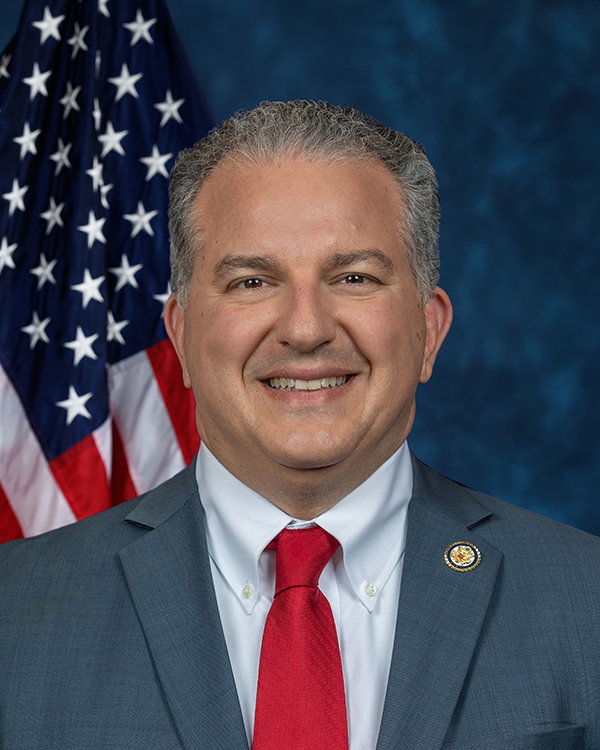
Rep. Jimmy Patronis
Sponsored bills
Nuclear Family Priority Act This bill imposes limits on various types of family-sponsored immigration visas. The non-U.S. national ( alien under federal law) parents of U.S. citizens shall not qualify for visas for immediate relatives, which are not subject to any direct numerical limits. Currently, the spouses, unmarried children under 21, and parents of citizens are considered immediate relatives. The bill also creates a nonimmigrant visa for such parents of citizens. Such non-U.S. nationals shall not be eligible for employment or any public benefits. The bill also reduces the baseline annual cap for family-sponsored visas from 480,000 to 88,000, and revises the methods for calculating the cap. Currently, the 480,000 cap may be adjusted depending on various factors but shall not be less than 226,000. The bill eliminates preference allocations (visa categories subject to various annual caps) for various family-sponsored visas, including those for the siblings and married children of citizens. The bill provides for a preference allocation for the unmarried children under 21 and spouses of permanent residents, subject to the 88,000 annual cap.
Maddy summaryThis bill, HR 2102 (Major Richard Star Act), allows veterans with combat-related disabilities to receive both full military retired pay and veterans' disability compensation simultaneously, without the previous offset that reduced retired pay. It directly affects veterans already eligible for both benefits due to combat-related injuries, removing the requirement that their retired pay be reduced by the disability compensation amount. The key provision amends Title 10 and Title 38 to eliminate the offset rule (sections 5304 and 5305 of Title 38) for these veterans. The change applies to payments starting after the bill’s enactment date, effective for all qualifying veterans. This is a policy change to increase financial support for affected veterans, not a new benefit.
Maddy summaryHR 2565, the No Tax on Bonuses Act of 2025, would exempt certain military enlistment, reenlistment, and retention bonuses from federal income tax. It directly affects members of the U.S. Armed Forces who receive these specific bonuses in exchange for service commitments, including officers and enlisted personnel in active or reserve components. The bill amends the Internal Revenue Code to exclude "qualified bonuses" from gross income, defining them as payments made by the military for enlistment, reenlistment, or extended service. This change applies to taxable years beginning after the bill's enactment.
Save America's Forgotten Equines Act of 2025 or the SAFE Act of 2025 This bill permanently prohibits the slaughter of equines (e.g., horses and mules) for human consumption. (Current law prohibits the slaughter of dogs and cats for human consumption. This bill extends the prohibition to equines.) Specifically, this bill prohibits a person from knowingly (1) slaughtering an equine for human consumption; or (2) shipping, transporting, possessing, purchasing, selling, or donating an equine to be slaughtered for human consumption or equine parts for human consumption. The bill subjects a violator to a fine. The bill applies to conduct in or affecting interstate or foreign commerce or within the special maritime and territorial jurisdiction of the United States. However, it does not apply to an activity carried out by an Indian for a religious ceremony. As background, in recent years, the appropriations acts have prohibited the Department of Agriculture (USDA) from using federal funds to inspect horses before they are slaughtered for human consumption. Therefore, there are currently no USDA-inspected horse slaughter facilities in the United States.
Maddy summaryThe SHORT Act (HR 2395) redefines federal firearm definitions to exclude antique and collector firearms from being classified as firearms, and removes distinctions between short-barreled rifles and shotguns in federal regulations. It prevents state laws from imposing taxes or registration requirements on short-barreled rifles and shotguns, requiring state rules to align with federal compliance instead. The bill also mandates the federal government to destroy specific records related to these firearms within one year of enactment.
Maddy summaryThe Freedom from Unfair Gun Taxes Act of 2025 would prohibit states and local governments from imposing taxes on the sale of firearms, ammunition, or firearm parts during interstate or foreign commerce. This bill directly affects state tax policies and manufacturers or dealers selling these items across state lines. It explicitly states that the bill does not change the existing federal tax on firearms and ammunition that funds wildlife conservation programs. The key provision bans state-level taxes for these sales in interstate transactions while preserving current federal funding mechanisms.
Fairness for High-Skilled Americans Act of 2025 This bill eliminates the Optional Practical Training Program or any successor program, unless Congress expressly authorizes such a program. (The program provides an F-1 student visa holder temporary employment authorization before or after completion of the student's studies, or both.)
Maddy summaryHR 1383 extends the Secure Rural Schools program, which provides payments to counties and states with federal land (like national forests) to support local schools and services. It reauthorizes these payments through fiscal year 2026, adding specific rules to ensure counties don’t receive duplicate payments for 2024 and 2025. The bill also extends related authorities for special projects on federal land and county fund expenditures through 2028-2029. This directly affects rural communities adjacent to federal lands that rely on these payments for education and infrastructure.
Maddy summaryThis bill awards a Congressional Gold Medal to the 761st Tank Battalion (known as the "Black Panthers"), the first predominantly Black armored unit in World War II's European Theater. It recognizes their combat service from 1944-1946, including key roles in the Battle of the Bulge and breaking the Siegfried Line, despite facing racial prejudice during and after the war. The medal will be displayed at the National Museum of African American History and Culture, with bronze duplicates available for sale to cover costs. The bill commemorates the battalion's 130,000 enemy casualties inflicted, 50% casualty rate, and their 1978 Presidential Unit Citation. It does not create new laws or affect current policies.