

This resolution declares that (1) the United States needs a Marshall Plan for Moms to revitalize and restore mothers in the workforce; and (2) mothers, especially mothers of color have been pushed to the brink of economic, social, and emotional collapse during the COVID-19 (i.e., coronavirus disease 2019) pandemic because of the existing economic and social inequalities women have long faced. The resolution also states that any relief and long-term recovery package to address the COVID-19 crisis must recognize and rebuild moms in the workforce by including certain policies such as establishing a robust paid leave plan; rebuilding and stabilizing the child care industry; providing necessary child poverty reduction tools for families' economic security that include recurring child benefits and an expanded and improved child tax credit and earned income tax credit; establishing an expanded unemployment insurance program that benefits struggling workers, including those experiencing long-term unemployment; raising the federal minimum wage to $15 per hour or higher for all minimum wage workers; and providing access to mental health support for mothers. Finally, the resolution declares that employers and policymakers must prioritize addressing the economic cliff facing mothers and make permanent the policies set forth in this resolution so that mothers are protected against any future economic calamities.
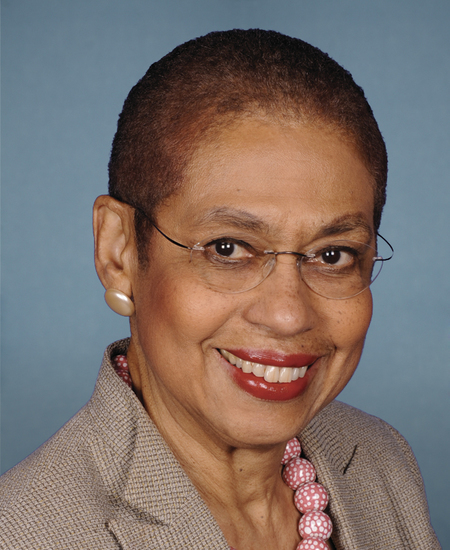
Rep. Eleanor Holmes Norton
Sponsored bills
Know Your Polling Place Act This bill establishes minimum requirements for notifying individuals of a change in their polling place for a federal election. Specifically, the bill requires a state that changes an individual's polling place to notify the individual at least seven days before the federal election. However, if the change is made fewer than seven days before the federal election and the individual appears at the previously assigned polling place, the state must make every reasonable effort to enable the individual to vote.
Prohibit Auto Insurance Discrimination Act or the PAID Act This bill prohibits an automobile insurer from considering specified factors when determining a consumer's insurance rates or eligibility. These prohibited factors include gender, employment status, zip code, census tract, marital status, and credit score. Automobile insurers must make underwriting rules and rate filings available to the public. The Federal Trade Commission may enforce a violation of these requirements as an unfair or deceptive act or practice.
Medicare-X Choice Act of 20 21 This bill establishes and funds the Medicare Exchange health plan, which allows individuals who are not otherwise eligible for Medicare to enroll in a government-administered health insurance plan. The Centers for Medicare & Medicaid Services (CMS) must offer such plan in certain individual health insurance exchanges beginning plan year 2022 and offer it in all individual health insurance exchanges beginning plan year 2025. CMS must offer the plan in the small group market in all geographic areas for plan year 2025. The plan must cover primary care services without cost sharing and meet the same requirements, including essential health benefits, as existing health insurance exchange plans. Unless they opt out, health care providers enrolled under Medicare or under a state Medicaid plan must participate in the plan and are reimbursed at Medicare rates. The bill establishes a grants program for community organizations, educational institutions, and health agencies to create service partnerships and establish interactive data systems for health care providers. Additionally, the bill expands the premium tax credit available for plans purchased through an exchange and eliminates the restriction on the Department of Health and Human Services negotiating prescription drug prices for Medicare.
Living Donor Protection Act of 2021 This bill prohibits certain insurance carriers from discriminating against, and provides other protections for, living organ donors. Specifically, carriers may not deny, cancel, or otherwise impose conditions on policies for life insurance, disability insurance, or long-term care insurance based on an individual's status as a living organ donor. The bill also expressly specifies that recovery from organ-donation surgery constitutes a serious health condition that entitles eligible employees to job-protected medical leave. In addition, the Department of Health and Human Services must update educational materials on live organ donation to include information about the benefits of live organ donation and about access to insurance for living organ donors.
Electric Vehicles for Underserved Communities Act of 2021 This bill requires the Department of Energy (DOE) to support the deployment of electric vehicle charging infrastructure in underserved or disadvantaged communities. Specifically, DOE must establish an EV Charging Equity Program. Under the program, DOE must provide technical assistance and award grants to increase the deployment and accessibility of electric vehicle charging infrastructure in such communities. If practicable, DOE must ensure that relevant programs promote electric vehicle charging infrastructure, support clean and multimodal transportation, provide improved air quality and emissions reductions, and prioritize the needs of such communities.
Kira Johnson Act This bill establishes grants to improve maternal health outcomes for racial and ethnic minority groups and other underserved populations. Specifically, the Department of Health and Human Services must award grants for community-based programs to improve maternal health outcomes for Black pregnant and postpartum individuals, as well as individuals in other underserved groups; training for health care providers and others who work in maternity care settings on reducing and preventing racism, bias, and discrimination; and respectful maternity care compliance programs in specified health care facilities. The National Academies of Sciences, Engineering, and Medicine must study issues related to the training programs, and the Government Accountability Office must study issues related to the compliance programs.
Assuring You Uniform Dietary Assistance (AYUDA) Act of 2021 This bill makes the Commonwealth of the Northern Mariana Islands eligible to participate in the Supplemental Nutrition Assistance Program (SNAP, formerly known as the food stamp program).
Congressional Oversight to Secure Transparency of Relocations Act or the COST of Relocations Act This bill requires a federal agency seeking to relocate more than 5% of its employees or more than 100 employees to conduct and make public a comprehensive cost-benefit analysis of the proposed change. Specifically, the agency must conduct such analysis and submit it to the agency's office of inspector general for review and submission to Congress. The report must include the anticipated outcomes and improvements that will result from the proposed relocation, the metrics for measuring whether the proposed relocation results in the anticipated outcomes and improvements, a timeline of past and future engagements with stakeholders regarding the proposed relocation, a comprehensive strategy for accomplishing the proposed relocation, and an assessment of the short- and long-term effects of the proposed relocation on the agency's mission.
ABLE Age Adjustment Act This bill increases from 26 to 46 the age threshold for tax-favored ABLE (Achieving a Better Life Experience) accounts. (ABLE accounts are designed to enable individuals with disabilities to save for and pay for disability-related expenses. To establish an account, an individual must have a qualifying impairment that began before the individual attained the age threshold.)