

Maddy summaryHR 7522, the Improving Access to Nutrition Act of 2026, removes work requirements from the Supplemental Nutrition Assistance Program (SNAP). It directly affects approximately 6.1 million SNAP recipients currently subject to these requirements, including people with health issues, Black Americans disproportionately impacted by such rules, families with children, and individuals experiencing homelessness. The bill amends the Food and Nutrition Act of 2008 by striking subsection (o) and related provisions that mandate work requirements for SNAP eligibility. This change would eliminate a barrier that studies show reduces participation without reducing poverty and increases administrative burdens. The bill does not create new benefits but removes an existing eligibility requirement affecting vulnerable populations.
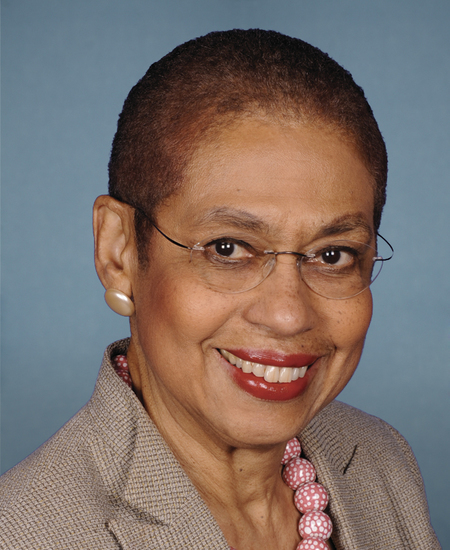
Rep. Eleanor Holmes Norton
Sponsored bills
Maddy summaryThe Opportunities in Organic Act establishes a new federal program to support farmers and ranchers transitioning to organic certification and expanding organic operations. It provides cost-share payments for organic certification (up to $1,500 per producer, with higher amounts allowed for socially disadvantaged farmers or in high-cost regions) and funds eligible nonprofits to deliver technical assistance, transition support, and supply chain development. The program specifically targets socially disadvantaged farmers, organic producers, and farms in vulnerable or under-resourced areas, with annual funding starting at $50 million for 2027-2028 and increasing to $100 million annually by 2030.
Maddy summaryHR 7251, the "Prohibit Partisan Park Passes Act," amends federal law to prevent the use of living political figures on National Park Service and federal recreational lands passes. The bill specifically prohibits including images of current or former elected officials or other living political figures on these passes. This change directly affects the National Park Service, which issues the passes, and ensures the design remains neutral. The law modifies existing regulations under the Federal Lands Recreation Enhancement Act to remove partisan imagery from these commonly used visitor passes.
Maddy summaryThis resolution recognizes the Islamic holy month of Ramadan and extends well wishes to Muslims in the United States and globally for Eid al-Fitr. It formally acknowledges the significance of Ramadan as a period of fasting, spiritual renewal, and reflection for over 2 billion Muslims worldwide. The document highlights the contributions of American Muslims to society, including their roles in the military, government, and various professional fields. This is a symbolic gesture of respect and solidarity rather than a law that changes policy or requires funding.
Maddy summaryThis bill establishes a federal task force to address maternal health disparities by coordinating efforts across multiple government agencies and community stakeholders to reduce preventable maternal deaths and serious health complications. The task force will include representatives from various departments such as Health and Human Services, Housing and Urban Development, and Transportation, along with community leaders, patients, and healthcare providers focused on maternal health. Additionally, the bill authorizes $100 million over five years to provide grants to community organizations for addressing social determinants of maternal health including housing, transportation, nutrition, employment, and environmental conditions. These grants prioritize areas with high rates of maternal mortality and poverty, and recipients must submit annual reports on their activities and outcomes. The legislation defines key terms such as maternal mortality and social determinants of maternal health to guide implementation and reporting requirements.
Maddy summaryThis bill expands federal labor protections to incarcerated workers by explicitly including them under the Fair Labor Standards Act, regardless of whether they work in publicly or privately operated correctional facilities. It defines these workers as individuals performing labor within prison programs, work release initiatives, or facility operations, and clarifies that they are employed by either the public agency or the private contractor running the facility. A key provision allows employers to deduct the cost of board, lodging, and certain court-imposed fees from an incarcerated worker's wages without counting these deductions against minimum wage requirements. The legislation also specifies which fees qualify for deduction, such as court surcharges and filing costs, while explicitly excluding payments for child support, victim compensation, civil judgments, and criminal fines.
Maddy summaryThe BRIDGE Act extends the work opportunity tax credit through 2030 and expands eligibility to include individuals with felony convictions or incarceration histories, as well as out-of-school youth. Employers who hire these qualified individuals after the bill's enactment can receive tax credits, with the credit amount determined under existing Internal Revenue Code provisions. The bill also requires the Treasury Secretary to issue regulations for implementation and directs the Comptroller General to study how to improve the efficiency of the credit claiming process.
Maddy summaryThis bill establishes a task force to study how artificial intelligence speech-to-text and automatic speech recognition technologies are used in federal and state courts across the United States. The 15-member group, composed of government officials, legal experts, and technology specialists, will examine issues like accuracy, privacy, civil liberties, and costs associated with these AI tools in judicial proceedings. Within 18 months of enactment, the task force must submit a final report to Congress detailing its findings on whether AI affects court record quality, impacts individuals with speech impediments, creates cybersecurity risks, and recommends any necessary policy changes. The task force will also provide quarterly status updates to congressional committees and will dissolve once its final report is submitted.
Maddy summaryThis bill requires the Department of Homeland Security to release specific documents and materials related to two types of incidents: any officer-involved shootings that occurred on or after January 20, 2025, and any deaths of individuals in DHS custody during the same period. The law mandates that the DHS Secretary provide these records to congressional committees within 30 days of the bill's enactment. Required materials include video footage from body cameras and other recording devices, written reports, witness statements, internal communications, training records, and any disciplinary actions taken against involved officers. The bill also specifies that documents should be provided in unredacted form whenever possible, with written justifications required for any redactions made under legal authority.
Maddy summaryThe Energy Bills Relief Act aims to lower household energy costs and accelerate the development of low-cost, clean energy by modifying federal tax credits, expanding weatherization programs, and streamlining permitting processes. Key provisions include restoring tax incentives for renewable energy projects, increasing funding for low-income heating assistance, and requiring federal agencies to treat wind, solar, and storage projects with the same procedural fairness as oil and gas projects. The bill also establishes new incentives for upgrading the electricity grid, such as tax credits for transmission lines and grants for wildfire prevention measures, while creating mechanisms to ensure utilities serve public interests and protect consumers from price volatility.