

Maddy summaryThe Senior Hunger Prevention Act of 2026 aims to reduce food insecurity among older adults and people with disabilities by modifying and expanding federal nutrition assistance programs. It streamlines the Supplemental Nutrition Assistance Program (SNAP) by extending certification periods to 36 months for these groups, creating simplified application processes, and establishing a standard medical expense deduction. The bill also expands eligibility for the Commodity Supplemental Food Program and the Seniors Farmers' Market Nutrition Program to include adults with disabilities, while increasing funding and benefits for these programs. Additionally, it establishes a pilot program for SNAP enrollment outreach, creates a new program to reimburse retail food stores for grocery delivery to eligible participants, and provides funding for farmers' market infrastructure and local produce procurement.
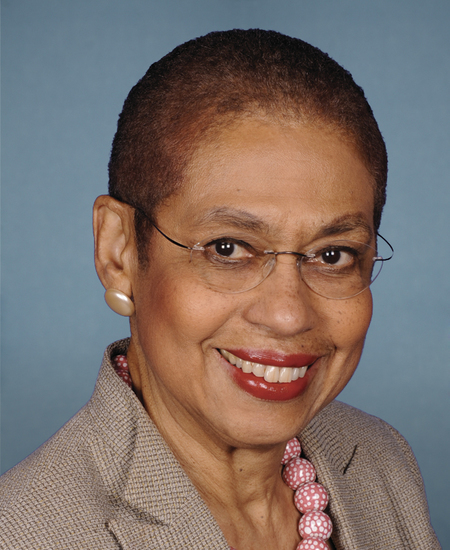
Rep. Eleanor Holmes Norton
Sponsored bills
Maddy summaryThe Water Access and Affordability Act establishes a federal program, administered by the EPA, to provide financial assistance to low-income households for their drinking water and sanitary sewer bills. States, large water systems, or Indian Tribes can receive grants to implement these programs, offering aid for bill payments, debt relief, and water efficiency improvements. The bill includes provisions to simplify enrollment, such as automatic enrollment and self-attestation, and prohibits service disconnections for participating households. Additionally, it revises federal State Revolving Loan Fund programs for water infrastructure, requiring states to increase transparency, public engagement, and prioritize assistance for disadvantaged communities. This includes public review of funding plans, reporting on the socioeconomic impact of projects, and expediting aid to communities with affordability challenges.
Maddy summaryThis bill seeks to block a specific rule issued by the Department of Education that affects the William D. Ford Federal Direct Loan Program. If passed, it would prevent the rule from taking effect, meaning the proposed changes to federal student loans would not be implemented. The measure uses a legislative process known as a joint resolution of disapproval to override agency regulations. It directly impacts students, families, and institutions that rely on federal student loans by stopping the Department of Education from enforcing the new policy.
Maddy summaryThis resolution supports the National Day of Silence, an annual event that highlights anti-LGBTQI+ bullying and discrimination in K-12 schools. It calls on communities to demand equal educational opportunities and civil rights protections for all students, with particular focus on LGBTQI+ young people. The bill does not create new laws or regulations but instead expresses official congressional support for awareness efforts and encourages local educational agencies to adopt policies prohibiting discrimination based on sexual orientation, gender identity, or sex characteristics.
Maddy summaryThis bill, known as the OHH SNAP Act of 2026, would expand eligibility for the Supplemental Nutrition Assistance Program to include more college students. It directly affects students who are working while attending college or have no financial aid available. The key changes allow students with zero financial aid and those classified as independent to qualify for SNAP benefits, while also broadening the definition of eligible work activities to include attending school. These provisions would take effect 180 days after the bill is signed into law, but would not apply to certification periods that began before that date.
Maddy summaryThe Power for the People Act of 2026 requires the Federal Energy Regulatory Commission to create a special approval process for data centers, which are defined as facilities using more than 50 megawatts of electricity. Under this system, data centers must offset their energy consumption by bringing their own clean power sources to the grid or agreeing to flexible power usage that can be reduced when needed. The bill also directs states to establish separate electricity rates for data centers so these facilities pay their full share of grid upgrade costs rather than spreading those expenses across all customers. Additionally, the legislation mandates that data center construction use prevailing wages and registered apprenticeship programs, while requiring greater transparency in how data center energy demands are forecasted and approved.
Maddy summaryThe Books Save Lives Act requires public libraries and schools receiving federal funding to maintain diverse book collections that include works by and about members of underrepresented communities. It mandates that covered schools employ trained librarians and establishes that excluding books with a disparate impact on underrepresented groups serves as initial evidence of discrimination under existing civil rights laws. Additionally, the bill directs the Comptroller General to produce a report within 180 days on how recent book ban campaigns have affected underrepresented communities. The legislation defines underrepresented communities to include racial and ethnic minorities, LGBTQ+ individuals, religious minorities, and people with disabilities.
Maddy summaryThis bill authorizes the minting of commemorative coins honoring Paul Laurence Dunbar, a prominent African-American poet and the namesake of Dunbar High School in Washington, D.C. The legislation directs the Treasury Secretary to produce $5 gold coins, $1 silver coins, and half-dollar clad coins during a one-year period starting in 2028, with specific weight, diameter, and metal content requirements for each denomination. Revenue generated from coin sales will include surcharges that are distributed to the Dunbar Alumni Federation to support scholarships and student development activities at Dunbar High School. The coin designs must be selected through a review process involving the Commission of Fine Arts and the Alumni Federation, with all proceeds structured to ensure no net cost to the federal government.
Maddy summaryThis bill, known as the Moral Injury Recognition and Restitution Act, changes how the Department of Veterans Affairs handles compensation claims for veterans affected by military sexual trauma. It allows veterans who receive approved claims for mental health conditions or physical injuries caused by such trauma to receive back pay starting from the day after their military discharge rather than from the date their claim was filed. The legislation defines military sexual trauma according to existing legal standards and includes both mental health conditions and physical disabilities resulting from or worsened by the trauma. This change applies retroactively to eligible veterans who have already been approved for compensation benefits.
Maddy summaryThis bill is a House resolution that formally honors the Grandassa Models, a group of African-American women who emerged in 1962 Harlem to challenge Eurocentric beauty standards and promote natural Black beauty during the civil rights era. The resolution recognizes their role in the Black is Beautiful movement, noting how they used fashion and public appearances to advance cultural pride and confront colorism. It also acknowledges the continued legacy of the Grandassa Association, which works to preserve their history and support the Black community in New York City through education and cultural programs.