

Maddy summaryThis bill creates a new federal tax on money received by former U.S. presidents, their immediate family members, or their controlled businesses from civil lawsuits against the government. Under the law, any settlement or verdict awarded to these individuals would be subject to a 100 percent tax, and the payments would not be counted as taxable income for other purposes. To enforce this, the bill requires trustees and administrators to file public reports detailing these payments and imposes a $10,000 penalty for failing to do so. These rules would apply to any funds received on or after May 20, 2026.
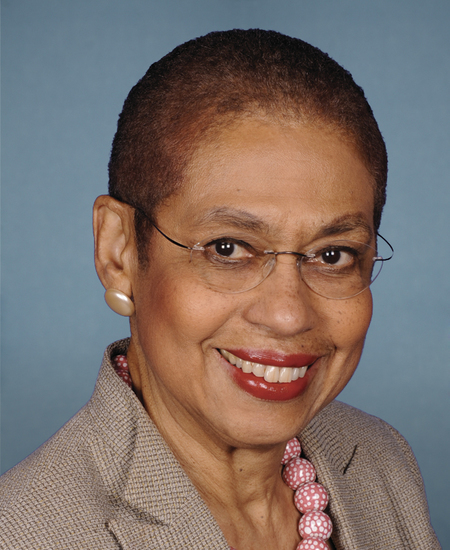
Rep. Eleanor Holmes Norton
Sponsored bills
Maddy summaryThe IMPACT to Save Moms Act directs the Centers for Medicare & Medicaid Services to run a five-year demonstration project from 2027 to 2031, allowing states to test new payment models for maternity care under Medicaid and state child health plans. This initiative aims to improve health outcomes for pregnant and postpartum individuals, with a specific focus on reducing disparities among groups that experience higher rates of maternal mortality and severe complications. To achieve these goals, the project requires states to consider alternative payment structures that account for pregnancy risk levels, include diverse care teams with training on bias, and address social factors affecting health. The bill also mandates that the federal government evaluate the project's impact on health outcomes and spending, and submit a final report to Congress with recommendations on whether to expand the program nationwide.
Maddy summaryThe Loan Forgiveness for Educators Act of 2026 expands existing federal student loan relief programs to offer full debt cancellation for teachers and early childhood educators who work in high-need schools or specific early childhood programs for five years. Under the bill, eligible educators can receive 100 percent forgiveness of their outstanding loans after completing five years of service, which may be consecutive or nonconsecutive, while also qualifying for monthly loan payments to be made by the government during their employment. The legislation defines "high need schools" as those with at least 30 percent of students from low-income families and includes various early childhood settings, while also extending benefits to parents who borrow PLUS loans for their qualifying children or who are educators themselves. To support implementation, the law requires the Department of Education to publish a list of eligible schools and programs, allows for self-certification in some early childhood roles, and ensures that educators who leave their positions early or are promoted within the same organization do not lose their eligibility for forgiveness.
Maddy summaryThis bill establishes the Julius Rosenwald and Rosenwald Schools National Historical Park within the National Park System to honor the legacy of Julius Rosenwald and the thousands of schools he helped build for African American children in the segregated South. The park would include a headquarters in Chicago and three specific restored school sites in Maryland, South Carolina, and Virginia, while also creating a national network to connect and preserve other remaining Rosenwald Schools across the country. Key provisions allow the National Park Service to acquire land, enter into cooperative agreements with state and local governments for preservation efforts, and provide grants to support educational programs and research about Rosenwald's philanthropy and its impact on civil rights leaders.
Maddy summaryThe Restoring Overtime Pay Act of 2026 raises the minimum salary required for certain employees to be exempt from federal overtime pay rules, starting at $45,000 per year and increasing annually until it reaches $75,000 by 2029. The bill also mandates that this threshold automatically updates each year to match the 55th percentile of weekly earnings for full-time salaried workers nationwide, with adjustments taking effect based on Bureau of Labor Statistics data. Additionally, the law modifies the duties test for exemption, requiring that at least 20 percent of an employee's time be spent on executive or administrative tasks rather than the current 40 percent standard. These changes directly affect employers and workers covered by the Fair Labor Standards Act by redefining eligibility for overtime exemptions and establishing a new mechanism for adjusting salary requirements over time.
Maddy summaryThe Corporate Prosecution Reform Act establishes a new Office of Corporate Enforcement within the Department of Justice to oversee agreements with companies accused of federal crimes. It restricts the use of deferred and non-prosecution agreements by banning them for offenses involving loss of life, serious injury, or specific crimes like terrorism and human trafficking, while requiring courts to ensure these deals adequately compensate victims and prevent future misconduct. To increase transparency, the bill mandates that the Attorney General publish the full text of all such agreements on a public website and submit annual reports to Congress detailing their terms and compliance. Additionally, the legislation creates standardized guidance for prosecutors to ensure consistent penalties for similar corporate offenses and updates federal crime categories to include cyber and financial crimes.
Maddy summaryThe Extinction Prevention Act of 2026 establishes four separate conservation funds to provide financial assistance for protecting threatened and endangered species in specific regions. The bill creates funds for butterflies in North America, plants in the Pacific Islands, freshwater mussels in the United States, and desert fish in the Southwest, with each fund managed by the Secretary of the Interior. Eligible applicants, such as state agencies, nonprofits, and research institutions, can apply for competitive grants to support habitat protection, research, and management plans, while federal agencies are restricted to partnering roles rather than leading projects. Each fund is authorized to receive $5 million annually from 2027 through 2032, and the Secretary must submit annual reports to Congress detailing project outcomes and the status of the species.
Maddy summaryThis resolution formally acknowledges the Black Women Best framework, a policy blueprint designed to address historical economic disparities faced by Black women in the United States. It highlights specific strategies such as implementing guaranteed income, expanding tax credits, improving healthcare access, removing police from schools, and prioritizing restorative justice. The measure serves as a non-binding statement of support rather than a law that directly changes federal programs or mandates new actions. By recognizing this framework, the House encourages policymakers to use it as a guide for creating more equitable legislation that centers the lived experiences of Black women.
Maddy summaryThis resolution expresses the House of Representatives' preference for a trade policy that prioritizes American workers, consumers, independent farmers, small businesses, and the environment over corporate interests. It calls for trade agreements to include binding labor and environmental standards, fair wage guarantees, and strict rules of origin to prevent companies from moving jobs overseas. The measure also supports strengthening domestic manufacturing requirements, maintaining tariffs against unfair trade practices, and ensuring that public procurement favors American-made goods. Additionally, it urges the inclusion of provisions to protect data privacy, regulate artificial intelligence, and ensure affordable access to medicine while preventing monopolies.
Maddy summaryThis non-binding resolution expresses the House of Representatives' view that the FDA should regulate mifepristone, a medication used for abortion, based on scientific evidence rather than political pressure. It highlights over 25 years of data showing the drug is safe and effective when prescribed via telemedicine or dispensed by mail and pharmacy. The bill advocates for policies that ensure equitable access to this care, particularly for marginalized communities facing barriers due to state-level restrictions. By citing numerous studies and medical organizations, the resolution calls for transparent, science-based decisions to maintain current access methods.