

Maddy summaryThe Celiac Safety Act of 2026 officially classifies gluten-containing grains as a major food allergen under federal law, directly impacting the food industry and individuals with celiac disease or gluten intolerance. This change requires manufacturers to label products containing wheat, rye, barley, or their crossbred hybrids with the same prominence as other major allergens like milk. The new labeling requirements will not take effect until 18 months after the law is enacted, giving businesses time to adjust their packaging and production processes.
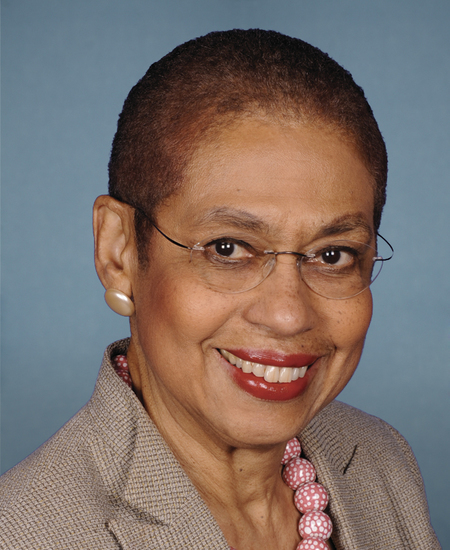
Rep. Eleanor Holmes Norton
Sponsored bills
Maddy summaryThis bill, known as the Arlington National Cemetery Viewshed Protection Act, restricts the construction of large triumphal arches in the Washington, D.C. area to preserve visual sightlines. It specifically bans the building of any such arches within Lady Bird Johnson Park and prohibits the use of federal funds for these structures there. Additionally, the law prevents the erection of triumphal arches taller than 50 feet on any land managed by the National Park Service unless Congress explicitly approves them. These measures aim to limit new monumental structures that could obstruct views of the Arlington National Cemetery from the capital region.
Maddy summaryThis resolution formally recognizes the 1885 Rock Springs Chinese Massacre, honoring the memory of the Chinese immigrant workers who were murdered and acknowledging the event as one of the deadliest acts of anti-Asian violence in U.S. history. The bill directs the House of Representatives to condemn the racist mob violence and the historical failure of authorities to protect the victims or hold perpetrators accountable. Additionally, it encourages the documentation and preservation of the massacre site through archaeological research and federal historic programs while promoting education about this event in schools to prevent future erasure of this history.
Maddy summaryThis bill prohibits the use of federal funds to install permanent fencing around the perimeter of the United States Supreme Court Building and its grounds. It allows for the repair or replacement of existing fences but prevents new permanent barriers from being constructed in the future. The legislation directly affects federal budgeting processes related to the Supreme Court's security infrastructure. By restricting funding, the bill aims to maintain the current appearance of the Supreme Court complex without adding new permanent fences.
Maddy summaryThe American High-Speed Rail Act expands federal funding and streamlines regulations to support the development of high-speed and higher-speed rail projects across the United States. It authorizes billions of dollars in grants for corridor planning, technology improvements, and construction, while allowing the federal government to cover up to 100% of project costs under specific conditions. The bill also introduces new provisions to facilitate land acquisition, prioritize border projects, and extend labor protections to workers involved in federally funded rail infrastructure. Additionally, the legislation defines higher-speed rail as trains traveling between 110 and 186 miles per hour and includes tax incentives for rail carriers that sell or lease property to support these projects.
Maddy summaryThe RESTORE Third Spaces Act of 2026 establishes a three-year federal pilot program to provide grants for renovating and developing community gathering places known as "third spaces," which are public areas distinct from home and work. Administered by the Department of Commerce, the program offers up to $200 million to local governments, nonprofits, and other eligible entities to support projects that strengthen local economies and reduce social isolation. A key requirement of the bill is that at least 60% of the funding must go to low-income and underserved communities, and the resulting spaces must remain free or low-cost for the public. To ensure accountability, recipients must engage the community in the design process and report on attendance, economic impact, and social benefits, with a final report submitted to Congress after the pilot period concludes.
Maddy summaryThe Young Adult Tax Credit Act creates a new $500 monthly tax credit for individuals aged 18 to 24 who are U.S. citizens or residents, with the amount adjusted annually for inflation. This credit is refundable, meaning eligible recipients can receive the full benefit even if they owe no federal taxes, and it is distributed through monthly advance payments starting after December 31, 2026. To manage these payments, the bill establishes an online portal for taxpayers to manage their accounts and includes specific rules to prevent fraud and ensure funds are not subject to garnishment for debts like child support. The legislation also mandates a government outreach campaign to help eligible young adults, particularly those from underrepresented populations, understand and claim the credit.
Maddy summaryThis bill directs the Secretary of Defense to study whether the military justice system needs a specific law against hazing. The Department must examine how to add a new section to the Uniform Code of Military Justice and create a clear definition for what counts as hazing. Within 180 days of passing, the Secretary must submit a report with their findings and recommendations to Congress. This action directly impacts the Department of Defense and the legislative committees overseeing military affairs.
Maddy summaryThis resolution formally recognizes the negative effects of menstrual stigma on women, girls, and other menstruating people and expresses support for designating May as National Menstrual Health Awareness Month. It highlights the importance of normalizing menstruation, improving access to products and sanitation facilities, and expanding education and clinical research on menstrual health conditions. The bill does not create new laws or funding but serves as a symbolic statement to promote awareness and gender equity regarding menstrual health.
Maddy summaryThis resolution condemns specific racist rhetoric directed at Indian and Chinese Americans and calls on all elected officials, including the President, to stop using language that promotes racial or ethnic division. It specifically addresses recent statements made by the President that characterized immigrants from India and China in derogatory terms and linked them to negative stereotypes. The bill affirms that immigrants from all backgrounds are vital to the United States and declares that attacks based on national origin are un-American. While it does not change laws or policies, it serves as a formal statement of disapproval from the House of Representatives regarding the targeted hate speech.