

Maddy summaryHR 4184 repeals legal protections for gun manufacturers and sellers under the Protection of Lawful Commerce in Arms Act. It allows victims of gun violence to use gun trace data from the ATF's Firearms Trace System in civil court cases. This data, previously protected from discovery, can now be subpoenaed, admitted as evidence, and relied upon in lawsuits against gun sellers or manufacturers. The bill directly affects victims seeking legal recourse and gun industry defendants in civil litigation.
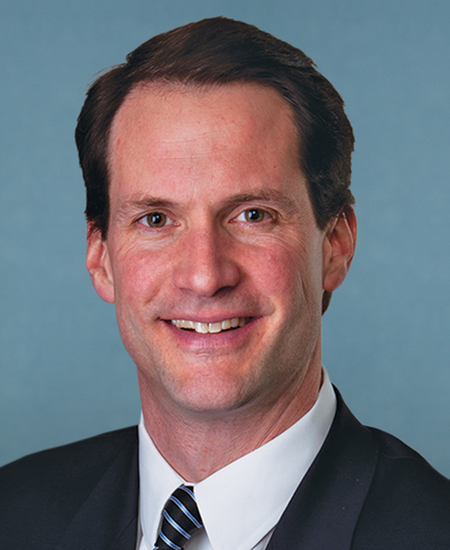
Rep. James A. Himes
Sponsored bills
Maddy summaryHR 4166, the Support UNFPA Funding Act, authorizes annual U.S. funding for the United Nations Population Fund (UNFPA) over five years. It directly supports UNFPA’s global programs serving women and girls in over 150 countries, particularly focusing on reducing preventable maternal deaths, expanding access to contraception, ending gender-based violence, and addressing harmful practices like female genital mutilation and child marriage. The bill specifically directs funding toward UNFPA’s core work in developing nations, humanitarian crises (such as in Ukraine and Yemen), and rebuilding health systems post-pandemic, without altering UNFPA’s existing operations or policies.
Maddy summaryThe American Dream and Promise Act of 2023 would create two pathways to permanent residency for certain immigrants. The "Dream Act" portion would provide conditional permanent resident status to individuals who entered the U.S. as children, have lived continuously in the U.S. since January 1, 2021, and meet educational requirements (such as completing high school, earning a degree, or enrolling in education programs). The "American Promise Act" portion would provide permanent residency to individuals eligible for Temporary Protected Status (TPS) or Deferred Enforced Departure (DED) as of specific dates (January 1, 2017, or January 20, 2021). The bill includes provisions for background checks, fee exemptions for low-income applicants, and processes for removing conditional status after meeting specific criteria like completing higher education or earning income.
Maddy summaryThe GLOBE Act of 2023 requires the U.S. Department of State to document and report on violence and discrimination against LGBTQI people worldwide in annual country reports, with specific requirements to identify countries criminalizing LGBTQI status. It establishes a Special Envoy for LGBTQI Human Rights to coordinate U.S. government efforts internationally and creates targeted sanctions against foreign officials responsible for human rights violations against LGBTQI individuals, including denying visas and imposing financial penalties. The bill also includes provisions to improve U.S. foreign assistance programs to better support LGBTQI communities, reform immigration processes to better protect LGBTQI asylum seekers, and ensure inclusive policies in diplomatic and consular settings. These measures aim to advance LGBTQI rights globally through diplomatic, financial, and policy mechanisms.
Maddy summaryThe AUKUS Undersea Defense Act authorizes the transfer of Virginia-class submarines from the U.S. Navy to Australia as part of the trilateral security partnership between the U.S., Australia, and the United Kingdom. It establishes procedures for Australia to pay for these submarines and related costs, while creating a "Submarine Security Activities Account" to accept Australian contributions for non-nuclear aspects of submarine security activities. The bill also includes provisions for repair/refurbishment of submarines and training to support the development of Australia's submarine industrial base. These measures aim to enhance undersea capabilities and defense cooperation in the Indo-Pacific region among the three nations.
Maddy summaryThis bill requires federal agencies collecting demographic survey data to begin including questions on sexual orientation, gender identity, and variations in sex characteristics (intersex traits) within 360 days of enactment. Agencies must review existing surveys to identify gaps, develop privacy-protective methods for collecting this data (including anonymization and data destruction protocols), and incorporate it into relevant reports within three years. The law applies to all federal surveys that collect standard demographic data (like race, ethnicity, and age), such as the census or health surveys, but does not compel individuals to disclose their status. It emphasizes maintaining confidentiality, allows limited agency waivers if standards can't be met, and mandates a congressional report on implementation within two years.
Maddy summaryHR 3953, the Debt Ceiling Reform Act, changes how Congress can block the Treasury from borrowing more money. It requires the Treasury to notify Congress when debt approaches a $1 trillion increment, giving Congress 30 days to pass a resolution disapproving further borrowing. The bill mandates strict timelines: the House must act within 6 days of introduction (with committees required to report bills within 5 days), and the Senate must consider the resolution within 6 days with limited debate. This process directly affects the Treasury’s ability to issue debt and Congress’s procedural control over debt ceiling decisions. The bill does not eliminate the debt ceiling but streamlines the disapproval process.
Maddy summaryThe Neighborhood Homes Investment Act creates a new tax credit for developers who rehabilitate or build affordable homes in distressed communities. The credit is calculated based on the difference between rehabilitation costs and the sale price, with homes required to be sold at affordable prices to qualified homeowners with incomes up to 140% of the local median family income. The bill targets specific "qualified census tracts" defined by high poverty rates, low homeownership, and below-average home values. Developers must ensure homes are sold to qualified homeowners who use them as primary residences for at least five years, with additional safeguards to prevent program abuse and ensure fair housing practices.
Maddy summaryHR 3850, the Pride In Mental Health Act of 2023, establishes a federal grant program to improve mental health and substance abuse services for LGBTQ+ youth (including nonbinary, intersex, and Two Spirit individuals). The bill directs the Health and Human Services Secretary to fund eligible organizations to provide trauma-informed care, cultural competency training for caregivers, school bullying prevention guidelines, and family support resources. It explicitly prohibits grant funds from being used for conversion therapy or advertising related to such therapy. The bill also requires data collection on LGBTQ+ youth mental health and a federal survey to measure psychological distress.
Wild Horse and Burro Protection Act of 2023 This bill prohibits the Bureau of Land Management (BLM) from using or contracting for the use of helicopters or fixed-wing aircraft for gathering horses and burros under the Wild Free-roaming Horses and Burros Act. Further, BLM may not make contracts to use helicopters for transporting captured animals under such act.