

Maddy summaryThe EACH Act of 2023 would require federal health programs - including Medicaid, Medicare, the Indian Health Service, and TRICARE - to cover abortion services without restrictions. It repeals a provision in the Affordable Care Act that allowed states to limit abortion coverage in health insurance plans sold through state marketplaces. The bill also prohibits the federal government from restricting abortion coverage in private health insurance plans. This would directly affect millions of people, particularly low-income individuals and people of color, who are disproportionately enrolled in Medicaid and currently face barriers to abortion care due to coverage restrictions.
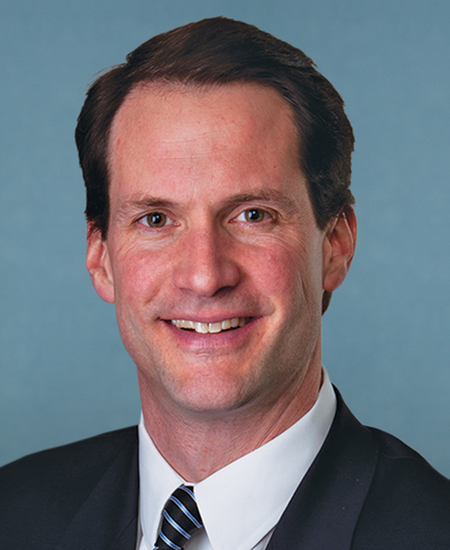
Rep. James A. Himes
Sponsored bills
Maddy summaryHR 415, the "End the Threat of Default Act," repeals the statutory debt ceiling (section 3101 of Title 31, U.S. Code), which currently limits how much the federal government can borrow. This would eliminate the need for Congress to approve increases to the borrowing cap, removing the risk of a government default on its debts. The bill directly affects the Treasury Department’s ability to manage federal borrowing, as it would no longer require congressional action to authorize new debt issuance. The technical amendments update references to the debt ceiling in other laws to reflect this change.
Maddy summaryHR 1361 establishes a federal grant program to fund community gun buyback initiatives. It authorizes $360 million annually (2022-2024) for states, local governments, and licensed gun dealers to conduct buybacks using "smart prepaid cards" loaded with 125% of a firearm's market value. The program prohibits using these cards to purchase guns or ammunition, requires recycling collected firearms within 60 days, and bans resale. It directly affects communities through local programs and licensed dealers participating in the buyback system, with criminal penalties for misusing the cards in firearm transactions.
Maddy summaryHR 1584, the Plum Island National Monument Act, establishes Plum Island, New York, as a national monument to protect its natural ecosystems, historical sites, and cultural heritage. The bill designates the Secretary of the Interior as the managing agency, requiring coordination with other federal departments through written agreements for lands within the monument area. It mandates the development of a management plan within three years of funding, which must then be submitted to specific congressional committees. This act directly affects the federal management of Plum Island and sets the framework for conservation and public access to the site.
Maddy summaryHR 7438 directs the U.S. Treasury to mint commemorative coins for the 2026 FIFA World Cup, including 100,000 $5 gold coins, 500,000 $1 silver coins, and 750,000 half-dollar coins. The coins will be sold to the public at face value plus surcharges ($35, $10, and $5 per coin, respectively), with all surcharge revenue paid to FWC2026 US, Inc. for U.S. soccer programs. These funds must support soccer initiatives, particularly in underserved communities and youth development, as specified in the bill. The coins are legal tender but will only be issued during 2026, with no net cost to the U.S. government.
Maddy summaryHR 6751 authorizes the U.S. Mint to produce commemorative coins honoring Roberto Clemente, a Hall of Fame baseball player and humanitarian, including 50,000 $5 gold coins, 400,000 $1 silver coins, and 750,000 half-dollar coins. The coins must feature Clemente's image and inscriptions like "Roberto Clemente" and "2027," with all sales including a surcharge ($5-$35 per coin) paid to the Roberto Clemente Foundation. The foundation, which supports youth sports, education, and disaster relief programs, will use these funds for its mission, while the U.S. Treasury must recover all production costs. The coins will be sold exclusively in 2027, with no net cost to the government.
Maddy summaryHR 5557, the *Combatting Foreign Surveillance Spyware Sanctions Act*, authorizes sanctions against foreign entities and individuals involved in selling or using commercial spyware to target U.S. government officials or intelligence personnel. It allows the President to block assets, deny visas, and revoke existing visas for foreign companies selling such spyware, senior executives of those companies, or foreign government officials using spyware against U.S. personnel. The bill specifically targets spyware used to intimidate opponents, curb dissent, or suppress civil liberties, while excluding authorized U.S. intelligence activities and humanitarian aid from sanctions. These sanctions expire after seven years, and the law does not apply to U.S. government operations or international obligations like the UN headquarters agreement.
Maddy summaryThe Working Dog Commemorative Coin Act (HR 807) directs the U.S. Treasury to mint three types of commemorative coins honoring working dogs' service: $5 gold coins, $1 silver coins, and half-dollar coins with specific weight and composition requirements. Each coin will carry a surcharge ($35 for $5 coins, $10 for $1 coins, $5 for half-dollars) that will be paid directly to America's VetDogs to support their programs providing service dogs for veterans, the disabled, and others. The coins will be issued in 2027 with designs reflecting working dogs' roles in military, detection, therapy, and assistance work. The legislation specifies that all surcharge revenue must fund America's VetDogs' operations without creating new government programs. This is a commemorative measure focused on honoring working dogs' contributions through coin sales, with all surcharge funds going to a specific nonprofit organization.
Maddy summaryThis resolution (HRES 1558) is a symbolic House of Representatives measure supporting October as "National Domestic Violence Awareness Month." It does not create new laws or allocate funding but formally expresses the House's support for raising awareness about domestic violence and its impacts, and urges continued backing for existing programs that address domestic violence. The resolution cites statistics on domestic violence prevalence (e.g., 24 people per minute affected by intimate partner violence) to underscore the importance of the observance. It directly affects public awareness efforts but does not change policies or directly impact individuals.
Maddy summaryThis bill limits states' ability to tax income earned by nonresident workers who telecommute or work across state lines. It prohibits states from taxing compensation when the worker is physically present in another state for work, and specifically bars states from claiming tax authority based on home office convenience or employer convenience tests. The law directly affects remote workers living in one state but working in another, ensuring they are only taxed by the state where they physically perform work. It applies solely to personal service income (wages/salary) and does not change rules for corporate taxes or unearned income like dividends.