

Maddy summaryHCONRES 68 would require the President to remove U.S. military forces from Venezuela unless Congress has explicitly authorized their use through a declaration of war or a specific law. This applies to any U.S. Armed Forces currently stationed in Venezuela without such authorization. The resolution is based on the War Powers Resolution, which mandates congressional oversight of military deployments. It directs the immediate withdrawal of unapproved forces without adding new time limits or conditions.
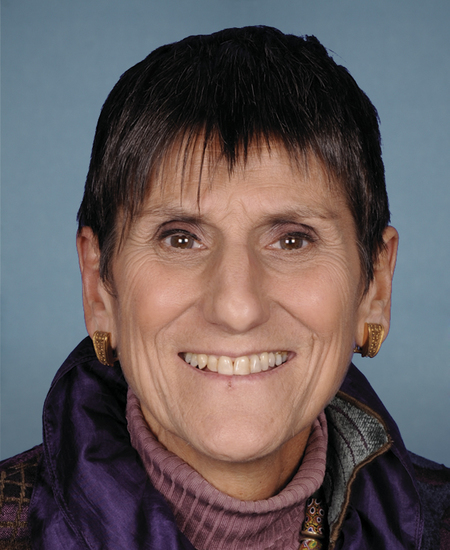
Rep. Rosa L. DeLauro
Sponsored bills
Maddy summaryThis resolution (HRES 1012) is a ceremonial recognition, not a policy bill. It honors Cristina M. Rodríguez for her historic appointment as the first Latina dean of Yale Law School, acknowledging her role as the first tenured Hispanic law professor at Yale and her leadership as a trailblazer for Hispanic legal scholars. The resolution expresses the House's appreciation for her academic achievements, public service (including her role cochairing the Presidential Commission on the Supreme Court), and commitment to mentoring students. It does not create new laws or alter policy; it solely serves to formally recognize her appointment through a House resolution.
Maddy summaryHR 7101, the "No Delay in Representation Act," requires the House of Representatives to seat members elected in special elections within five legislative days of certification of results. It mandates that newly elected members be sworn in and seated as House Members by this deadline, overriding any existing rules or laws that might delay the process. If a member declines the oath during this period, the Speaker must administer it on a mutually agreed date. This bill directly affects individuals elected to fill House vacancies through special elections, ensuring faster integration into the legislative body.
Maddy summaryThe Jumpstart Savings Act creates a new tax-advantaged savings program for state-run accounts that help individuals save for career-specific training and expenses. It directly affects workers, apprentices, and students pursuing certified trades or occupations by allowing tax-free contributions to accounts covering costs like community college tuition, apprenticeship fees, certification exams, trade tools, and business startup expenses. The bill enables rollovers from existing 529 college savings plans into these accounts and requires states to administer the programs with reporting rules similar to current 529 plans. The program will apply to taxable years beginning after December 31, 2025, and is designed to support career advancement in regulated fields.
Maddy summaryThe Find It Early Act requires most health insurance plans, Medicare, Medicaid, TRICARE, and VA benefits to cover certain breast cancer screenings without cost-sharing for specific at-risk groups. It affects individuals at increased breast cancer risk (as determined by medical guidelines), those with dense breast tissue (as defined by the American College of Radiology), and others requiring screening due to factors like age, race, ethnicity, or family history. The bill mandates coverage for various screening methods including mammograms, ultrasounds, MRI, and other technologies at frequencies recommended by the National Comprehensive Cancer Network. This requirement takes effect for plan years beginning January 1, 2026, removing financial barriers to early detection.
Maddy summaryHRES 996 is a resolution introduced by multiple House members to impeach Kristi Lynn Arnold Noem, the Secretary of Homeland Security, for alleged violations of law and the Constitution. It outlines three articles of impeachment: obstructing congressional oversight by denying access to detention facilities and withholding funds, violating public trust through warrantless arrests and excessive force (including tear gas on children), and self-dealing by awarding federal contracts to associates without competitive bidding. If approved by the House, this resolution would formally charge Noem, triggering a Senate trial to determine her removal from office. The resolution itself does not enact new policy but initiates the constitutional impeachment process against a sitting Cabinet official.
Maddy summaryThis symbolic House resolution expresses U.S. congressional support for Iranian protesters demanding democracy and human rights. It condemns the Iranian regime's violent suppression of protests, including killings, mass arrests, and internet restrictions, while urging the regime to release political prisoners and restore communication access. The resolution reaffirms the Iranian people's right to self-determination through free elections and echoes a 2023 resolution (HCR 7) that similarly praised protesters. As a non-binding expression of support, it does not impose new policies or alter U.S. government actions.
Maddy summaryThis bill prohibits the interstate trade and possession of captive mink raised for fur production, directly affecting fur farmers and businesses involved in the mink fur supply chain. It includes an exception for entities covered under existing Lacey Act provisions and authorizes the Secretary to buy out mink farms at a price based on the farmer's recent mink population and farm infrastructure value. The law aims to end commercial mink farming for fur by banning related commerce while offering a voluntary transition option for affected farms. It does not apply to wild mink or non-fur-related mink uses.
Maddy summaryHR 6088, the *Restoring Food Security for American Families and Farmers Act of 2025*, repeals specific sections (10101-10108) from a prior reconciliation law. This action revives previous provisions related to food security programs that were modified by those repealed sections. The bill directly affects federal food assistance and agricultural support programs by restoring their prior legal framework. It does not create new policies but reverses recent changes to existing food security measures.
Maddy summaryThis bill updates federal nutrition law to include Puerto Rico in the Supplemental Nutrition Assistance Program (SNAP), allowing it to transition from its current funding method to the same SNAP benefits available to U.S. states. Puerto Rico must submit a 180-day plan to the USDA detailing its transition to SNAP, with approval required within another 180 days. The transition period lasts up to 5 years from the bill's effective date, during which Puerto Rico would continue receiving block grants while preparing for full SNAP participation. This change directly affects Puerto Rico's 1.4 million residents who currently receive nutrition assistance under a separate funding structure.