

Camp Lejeune Justice Act of 2021 This bill allows certain individuals to sue and recover damages for harm from exposure to contaminated water at Camp Lejeune in North Carolina between August 1, 1953, and December 31, 1987. This action is available only to individuals who were exposed to contaminated water for at least 30 days. The bill prohibits the U.S. government from asserting specified immunity from litigation in response to such a lawsuit. The bill also prohibits an individual who brings such an action from bringing a separate tort action against the United States based on the same harm.
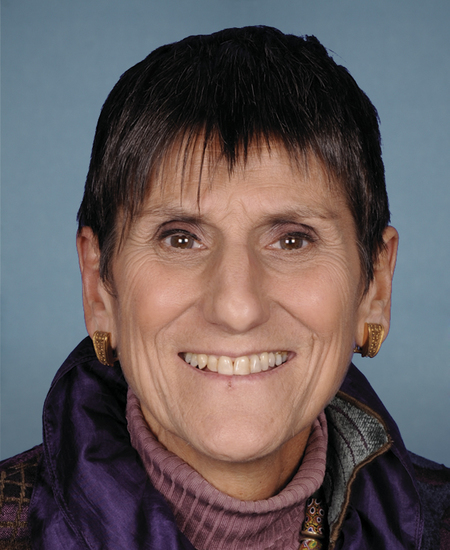
Rep. Rosa L. DeLauro
Sponsored bills
Dignity for Detained Immigrants Act of 2021 This bill directs the Department of Homeland Security (DHS) to establish standards for facilities holding aliens in its custody, phases out using non-DHS facilities for such purposes, and contains other related provisions. The standards shall comply with the American Bar Association's Civil Immigration Detention Standards. The DHS Office of Inspector General (OIG) shall conduct periodic unannounced inspections of each facility and shall take various actions against noncompliant facilities, including imposing fines, cancelling contracts, and closing facilities. DHS shall report to Congress any death of an alien in its custody within 24 hours and conduct an investigation within 30 days that identifies policy changes that could reduce the likelihood of such a death. DHS is prohibited from entering into contracts for third parties to operate detention facilities or alternatives to detention programs and shall terminate existing contracts within three years of the bill's enactment. The bill establishes that OIG facility inspection reports and contracts for an outside entity to operate a detention facility are records available to the public under the Freedom of Information Act. DHS shall maintain certain information relating to detained aliens, including the alien's location and whether the alien was separated from family. The bill provides for various requirements and procedures related to detaining aliens, including (1) prohibiting DHS from detaining children, (2) imposing a presumption that an alien should be released, and (3) establishing that aliens in custody shall be subject to the least restrictive conditions. The bill also abolishes mandatory detention for asylum seekers.
Equal Access to Abortion Coverage in Health Insurance Act of 2021 or the EACH Act of 2021 This bill requires federal health care programs to provide coverage for abortion services and requires federal facilities to provide access to those services. The bill also permits qualified health plans to use funds attributable to premium tax credits and reduced cost sharing assistance to pay for abortion services.
Prescription Drug Price Relief Act of 2021 This bill establishes a series of oversight and disclosure requirements relating to the prices of brand-name drugs. Specifically, the bill requires the Department of Health and Human Services (HHS) to review at least annually all brand-name drugs for excessive pricing; HHS must also review prices upon petition. If any such drugs are found to be excessively priced, HHS must (1) void any government-granted exclusivity; (2) issue open, nonexclusive licenses for the drugs; and (3) expedite the review of corresponding applications for generic drugs and biosimilar biological products. HHS must also create a public database with its determinations for each drug. Under the bill, a price is considered excessive if the domestic average manufacturing price exceeds the median price for the drug in Canada, the United Kingdom, Germany, France, and Japan. If a price does not meet this criteria, or if pricing information is unavailable in at least three of the aforementioned countries, the price is still considered excessive if it is higher than reasonable in light of specified factors, including development cost, revenue, and the size of the affected patient population. The bill also requires drug manufacturers to report specified financial information for brand-name drugs, including research and advertising expenditures.
Stop shielding Assets from Corporate Known Liability by Eliminating non-debtor Releases Act or the SACKLER Act This bill prohibits a bankruptcy court from releasing claims against non-debtors brought by states, tribes, municipalities, or the federal government. However, the bankruptcy court may issue a stay not exceeding 90 days regarding such a claim. Complex bankruptcies may involve creditor claims against non-debtors associated with the debtor, such as the debtor's officers, directors, or employees. Currently, in carrying out a bankruptcy plan, certain courts may release non-debtors from liability (there is a circuit split regarding this practice).
This resolution urges the people of the United States to acknowledge an Italian and Italian-American Heritage Month in recognition of the contributions Italians and Italian Americans have made to this country and the world.
Fresh Produce Procurement Reform Act of 2021 This bill requires the Agricultural Marketing Service of the Department of Agriculture to procure domestically grown, fresh produce for distribution to food banks, schools, tribal organizations, and other qualifying nonprofits that serve individuals at risk of food and nutrition insecurity. The service must procure the produce from growers, packers, distributors, food-hubs, nonprofits, or cooperatives.
Minks in Narrowly Kept Spaces are Superspreaders Act or the MINKS are Superspreaders Act This bill makes it unlawful to import, export, transport, sell, receive, acquire, or purchase American mink ( Neovison vison ) raised in captivity for fur production, whether dead or alive.
Extending Government Funding and Delivering Emergency Assistance Act This act provides continuing FY2022 appropriations for federal agencies, provides supplemental appropriations, and extends several expiring programs and authorities. Specifically, the act provides continuing FY2022 appropriations to federal agencies through the earlier of December 3, 2021, or the enactment of the applicable appropriations act. It is known as a continuing resolution (CR) and prevents a government shutdown that would otherwise occur if the FY2022 appropriations bills have not been enacted when FY2022 begins on October 1, 2021. The CR funds most programs and activities at the FY2021 levels with several exceptions that provide funding flexibility and additional appropriations for various programs. In addition, the act provides supplemental appropriations to several federal agencies for activities related to natural disasters and the evacuees from Afghanistan. The act also extends several expiring programs and authorities, including the National Flood Insurance Program, the Temporary Assistance for Needy Families (TANF) program, the National Advisory Committee on Institutional Quality and Integrity, the United States Advisory Commission on Public Diplomacy, the temporary scheduling order issued by the Drug Enforcement Administration to place fentanyl-related substances in Schedule I of the Controlled Substances Act, and the authority for the Department of Agriculture to waive certain requirements for the school meal programs.
Iron Dome Supplemental Appropriations Act, 2022 This bill provides $1 billion in supplemental appropriations for the Department of Defense to provide to the government of Israel for the procurement of the Iron Dome defense system to counter short-range rocket threats.