

Maddy summaryHR 770, the ESP Family Leave Act, amends the Family and Medical Leave Act (FMLA) to create specific eligibility rules for education support professionals and school support staff in public schools and public higher education institutions. It changes the standard FMLA work-hour requirement (1,250 hours) to a new threshold: these workers qualify if they've worked at least 60% of their expected monthly hours for the previous school year. Employers must maintain records of each employee's expected monthly hours, and the bill defines "education support professionals" to include roles like paraeducators, secretaries, custodians, food service workers, security staff, and health support staff. The bill directly affects these support staff members, making it easier for them to qualify for FMLA leave under the revised hours calculation.
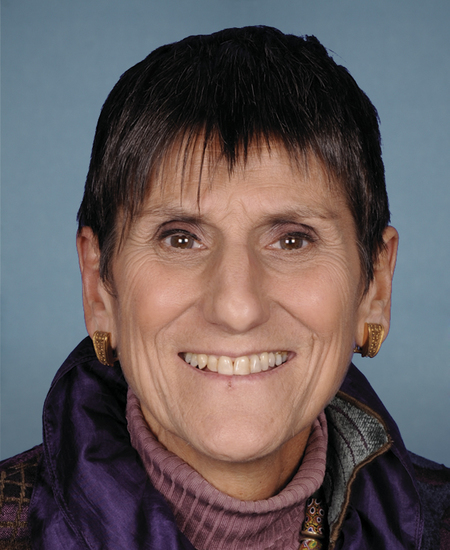
Rep. Rosa L. DeLauro
Sponsored bills
Maddy summaryHR 789, the Caring for All Families Act, expands the Family and Medical Leave Act to allow employees to take leave for a wider range of family members, including domestic partners, son-in-law, daughter-in-law, parent-in-law, adult children, grandparents, grandchildren, siblings, and others with "close association equivalent to family." The bill adds new provisions for employees to take up to 4 hours of leave per 30 days (24 hours annually) for school activities, routine medical appointments for family members, or visiting nursing homes for elderly individuals considered family. This legislation directly affects private sector workers covered by FMLA and federal employees, broadening who qualifies for leave and what types of family care can be accommodated. The bill amends existing FMLA definitions and requirements to include these expanded family relationships and care needs.
Maddy summaryHR 715, the Bipartisan Background Checks Act of 2023, requires background checks for all firearm transfers between private individuals, not just those through licensed dealers. It mandates that unlicensed sellers must involve a licensed dealer to conduct a background check before transferring a firearm, with exceptions for family transfers (like spouses or parents/children), law enforcement, temporary safety transfers, and certain hunting or range activities. The bill also requires licensed dealers to provide a notice and certification form in both English and Spanish to buyers. It explicitly states it won't create a national gun registry or override state laws on the same topic. The law would take effect 180 days after enactment.
Maddy summaryHR 694, the Job Protection Act, expands access to family and medical leave under the FMLA by reducing eligibility requirements. It lowers the required employment period from 12 months to 90 days for most workers and removes the 50-employee threshold, requiring all employers (including small businesses with one or more employees) to provide leave. Federal, presidential, and congressional employees also see their eligibility thresholds reduced to 90 days. The bill directly affects millions of private-sector workers and small businesses nationwide by making existing leave protections more widely available. It makes no changes to leave duration or pay, only to who qualifies and which employers must comply.
Maddy summaryHR 660, "Ethan's Law," requires gun owners in homes where minors (under 18) or individuals prohibited from owning firearms under federal/state law reside to store firearms securely. It makes unsecured storage unlawful if a minor or prohibited person could access the firearm, with fines of $500 per violation and enhanced penalties (up to 5 years in prison) if injury or death occurs. The bill also establishes a federal grant program to help states implement similar secure storage laws and provides funding incentives for states that already have such laws in place.
Maddy summaryThis bill prohibits the possession, sale, or transfer of most large-capacity ammunition magazines (holding more than 15 rounds) for the general public, while exempting law enforcement officers (including campus security officers), retired officers, and certain licensed entities like nuclear facility security. It requires new magazines manufactured after enactment to have serial numbers and manufacturing dates, and allows federal grant funds to support buy-back programs for these devices. Existing owners of such magazines lawfully possessed before the law's enactment are exempt from the prohibition. The law applies to devices not already covered under current exemptions for law enforcement, nuclear security, and retired officers.
Maddy summaryThe American Apprenticeship Act provides federal grants to states to fund pre-apprenticeship programs that prepare individuals for qualified apprenticeships in underrepresented industries (occupations making up less than 10% of apprenticeship opportunities). States receive competitive grants covering 20-50% of tuition, materials, and related instruction costs for these pre-apprenticeship programs, requiring them to partner with industry and leverage existing workforce funds. The bill specifically targets expanding access for underrepresented groups - including minorities, veterans, individuals with disabilities, and those with employment barriers - and mandates states to identify in-demand occupations lacking apprenticeships. It authorizes $15 million annually from 2024-2029 to support these programs while requiring states to report on outcomes and ensure funds supplement, not replace, existing workforce development resources.
Maddy summaryThis bill prohibits the export or sale of petroleum products drawn from the U.S. Strategic Petroleum Reserve to specific countries and entities, including China, Russia, North Korea, Iran, and any nation under U.S. sanctions. It also bans exports to entities owned or controlled by these countries or the Chinese Communist Party. The Secretary of Energy must enforce this ban, though they may issue a national security waiver for specific exports. The bill requires the Secretary to issue implementing rules within 60 days of enactment. It directly affects the Secretary of Energy, oil exporters seeking to use the Strategic Petroleum Reserve, and the listed countries/entities.
This resolution urges all participants in the Good Friday agreement and subsequent agreements to honor their obligations. The resolution also supports efforts to (1) prevent a hard border within the island of Ireland and (2) promote peace and prosperity for all communities. (The island of Ireland is divided between Northern Ireland, which is part of the United Kingdom, and the Republic of Ireland, a European Union member state.)
Maddy summaryHR 396, the Closing the Bump Stock Loophole Act of 2023, defines "bump stock" as any device or modification that increases the firing rate of a semi-automatic weapon to mimic a machine gun. The bill amends federal tax and firearms laws to classify bump stocks as prohibited devices under the National Firearms Act, requiring existing owners to register them within one year of enactment. It directly affects individuals who currently own bump stocks by mandating registration to avoid future possession prohibitions. The law takes effect immediately for new sales but provides a one-year grace period for existing owners to comply with registration requirements.